
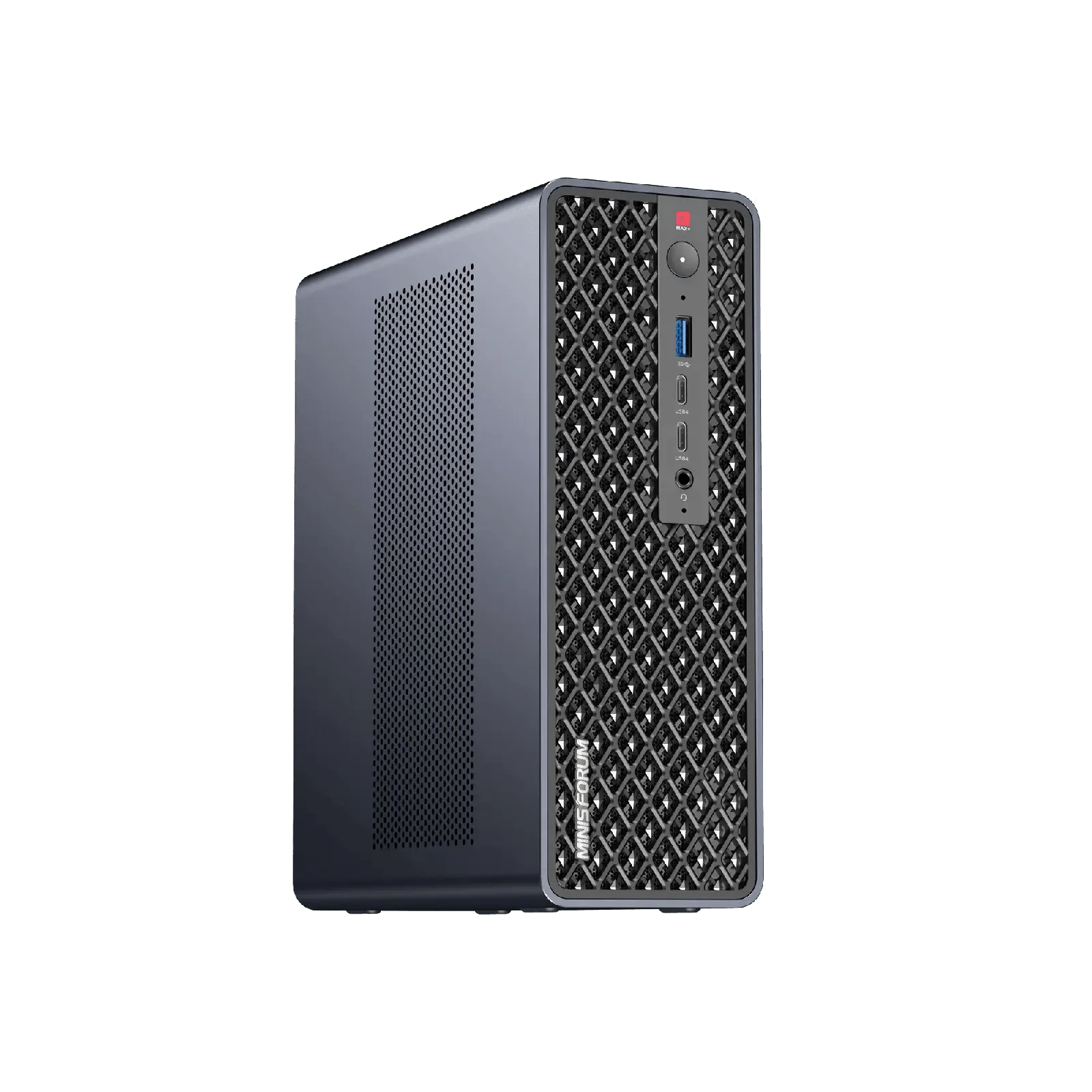
MINISFORUM MS-S1 MAX AMD Ryzen™ AI Max+ 395

$2,599.00
 Amazon.com
| Processor | 9.6 |
|---|---|
| RAM | 9.6 |
| Hard Disk | 8.8 |
| Connectivity | 9.8 |
MINISFORUM MS-S1 MAX: AI workstation with AMD Ryzen™ AI Max+ 395 (16C/32T, up to 5.1 GHz), Radeon™ 8060S (40 CUs), 50 TOPS NPU (126 TOPS platform), 64 or 128 GB LPDDR5x-8000 unified memory (soldered), 2–4 TB SSD + second M.2, PCIe x16 slot (PCIe 4.0 ×4), 2× USB4 v2 80 Gbps, 2× USB4, dual 10GbE, Wi-Fi 7, HDMI 2.1, built-in 320 W PSU, rack and cluster support, Windows 11 Pro.

$2,599.00
MINISFORUM MS-S1 MAX AMD Ryzen™ AI Max+ 395 Prices

Price History
Description
MINISFORUM MS-S1 MAX
AI Workstation With AMD Ryzen™ AI Max+ 395, Radeon™ 8060S, up to 128 GB LPDDR5x-8000, USB4 v2 80 Gbps, Dual 10GbE and a PCIe x16 Slot
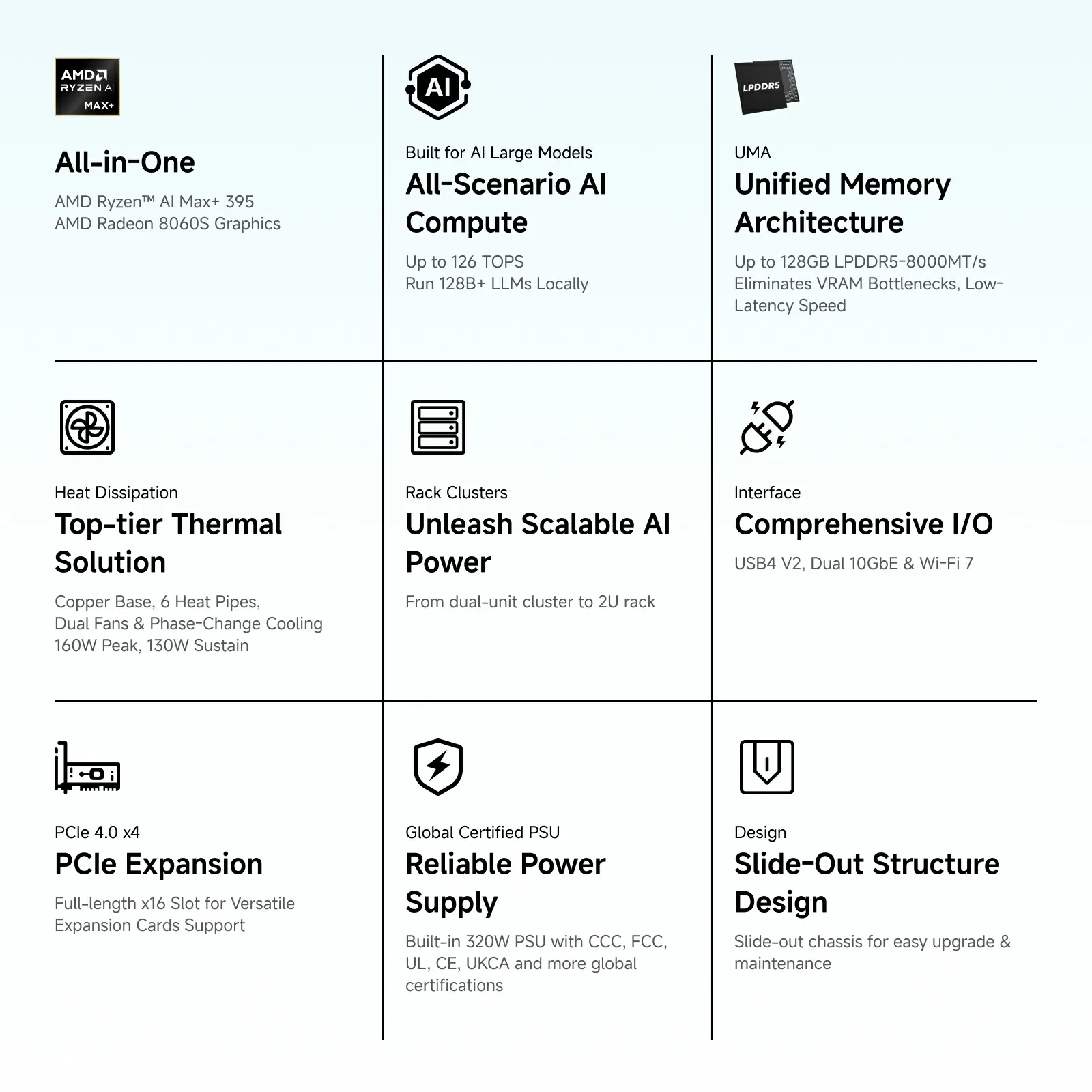
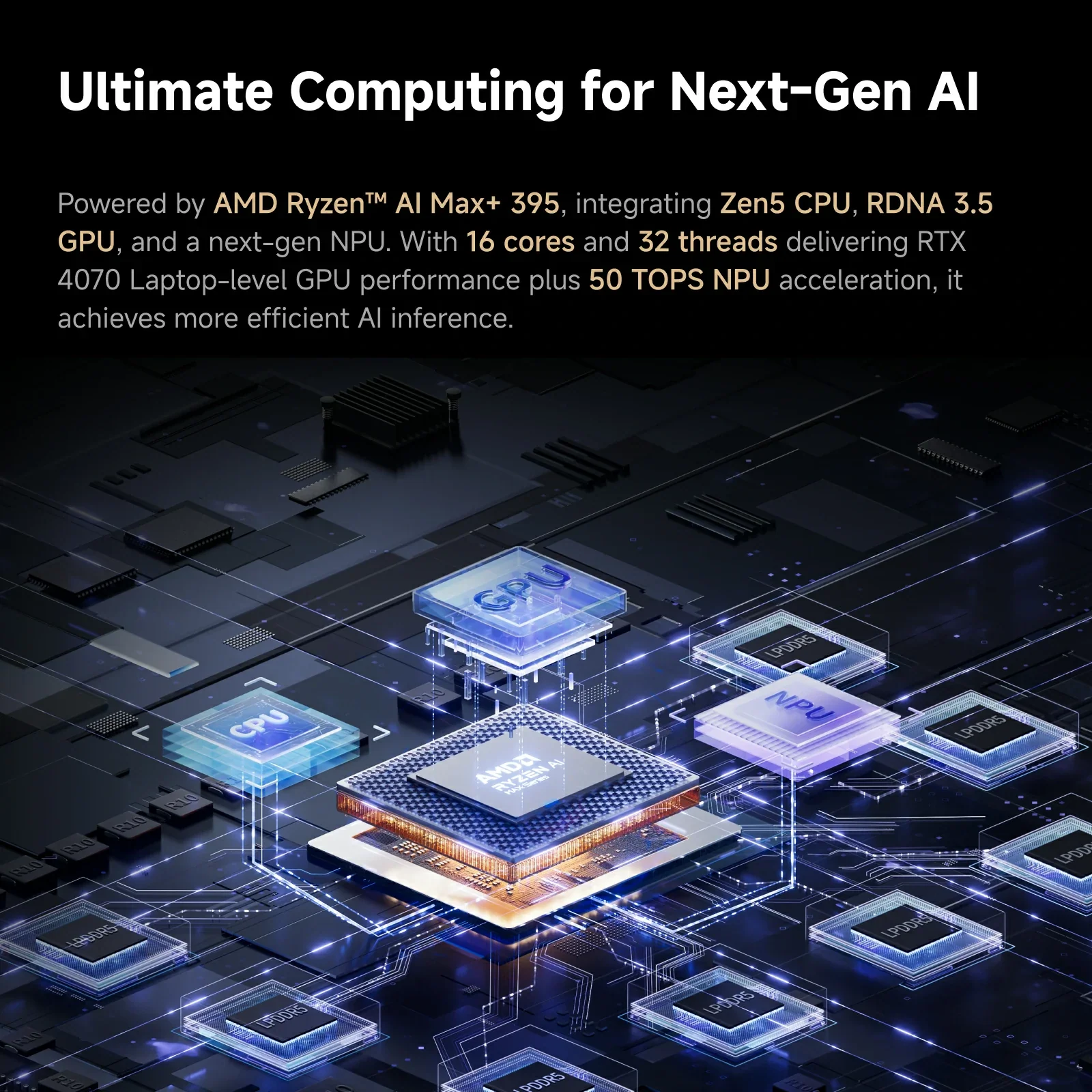
The MINISFORUM MS-S1 MAX is MINISFORUM’s compact AI workstation built around the AMD Ryzen™ AI Max+ 395 “Strix Halo” processor: 16 Zen 5 cores and 32 threads, a Radeon™ 8060S GPU with 40 compute units and an XDNA 2 NPU, sharing up to 128 GB of LPDDR5x-8000 unified memory on a 256-bit bus. Around that chip MINISFORUM adds features that are rare in a small form factor PC: two USB4 v2 ports at 80 Gbps, two 10 Gigabit Ethernet ports, a full-length PCIe x16 slot (PCIe 4.0 ×4 electrical), a built-in 320 W power supply and a chassis that works on a desk or in a 2U rack, with support for clustering several units.
It is sold in two memory configurations: 64 GB with a 2 TB SSD (US $2,599, list price US $3,249) and 128 GB with a 2 TB SSD (US $3,959, list US $4,949) or 4 TB SSD (US $4,199, list US $5,249) in MINISFORUM’s US store (November 2026 prices; they change frequently). Windows 11 Pro is pre-installed.
| MINISFORUM MS-S1 MAX — AMD Ryzen™ AI Max+ 395 (128 GB / 2 TB) | |
|---|---|
| CPU | AMD Ryzen™ AI Max+ 395 (Strix Halo, Zen 5) — 3.0 GHz base, up to 5.1 GHz — 16 Cores / 32 Threads — 64 MB L3 cache — 4 nm — NPU: Yes |
| GPU | AMD Radeon™ 8060S (integrated, RDNA 3.5) — 40 compute units — up to 2,900 MHz — uses the unified memory pool |
| AI Engine | AMD XDNA 2 NPU — 50 TOPS — up to 126 TOPS total platform (CPU + GPU + NPU) — Copilot+ PC |
| Memory | 64 GB or 128 GB LPDDR5x-8000 MT/s, 256-bit, unified (UMA) — SOLDERED — non-upgradeable |
| Storage | 2 TB or 4 TB M.2 2280 PCIe 4.0 NVMe SSD (pre-installed) |
| Storage Expansion | 2× M.2 2280 slots (1× PCIe 4.0 ×4 + 1× PCIe 4.0 ×1), up to 8 TB each — 16 TB total — RAID 0 / RAID 1 |
| Wireless Connectivity | Wi-Fi 7 (802.11be) + Bluetooth 5.4 |
| Ethernet | 2× 10 Gigabit Ethernet RJ45 (Realtek RTL8127) |
| Video Output | 1× HDMI 2.1 FRL (8K@60 Hz / 4K@120 Hz) + 2× USB4 v2 (DP 2.0) + 2× USB4 (DP 2.0) — five video-capable ports |
| Audio Output | 3.5 mm combo jack (front) + HDMI / USB4 — dual digital microphones with AI noise cancelling |
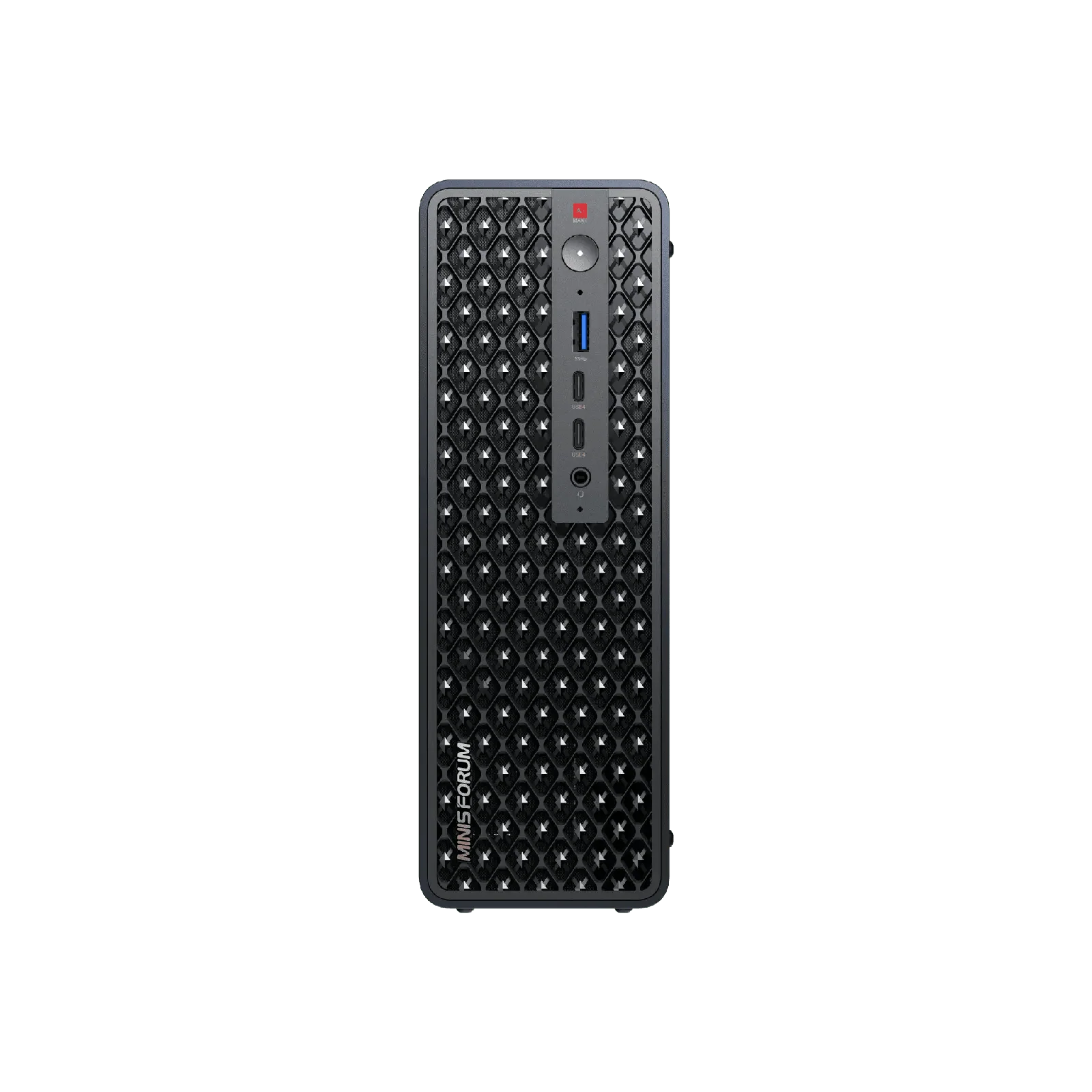
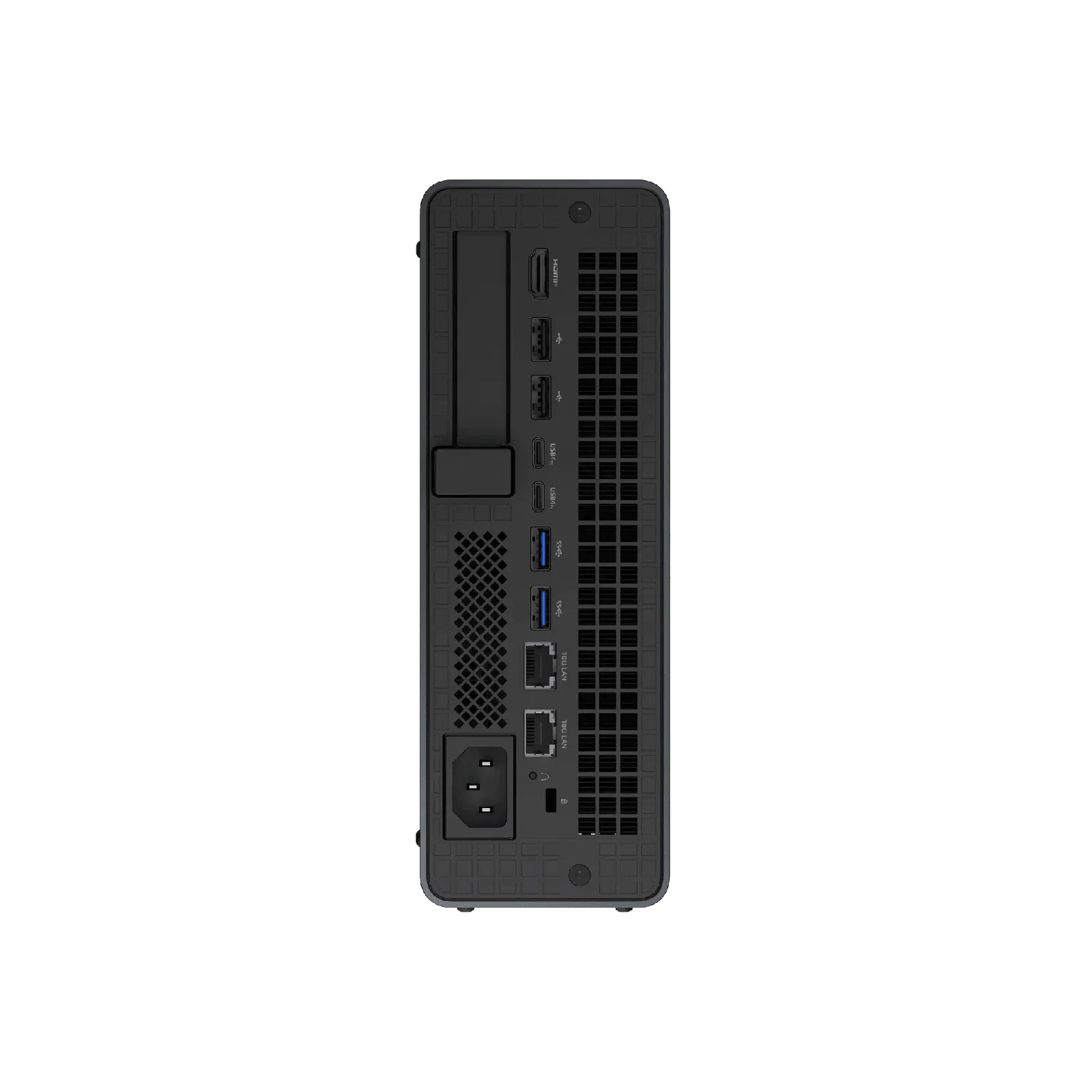
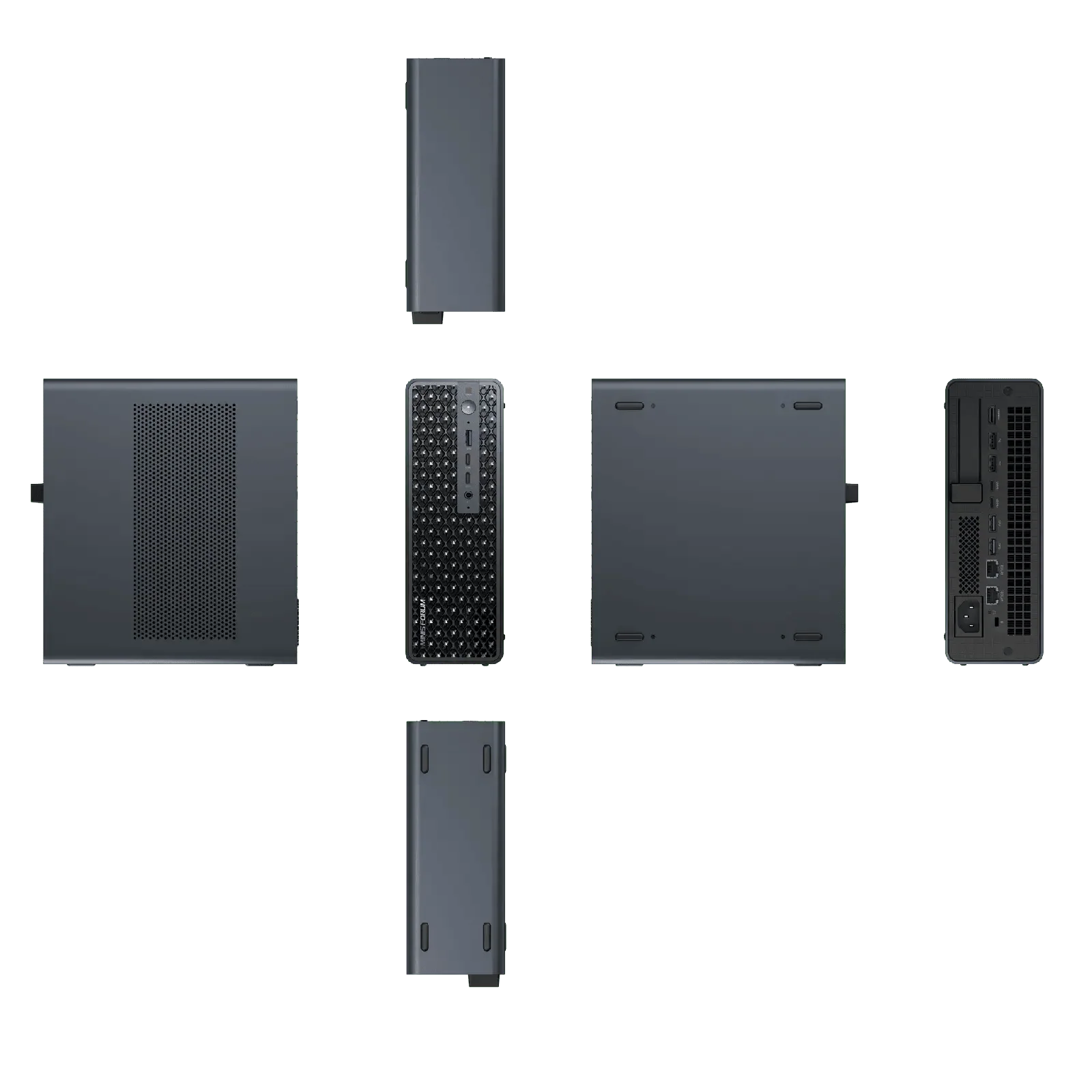
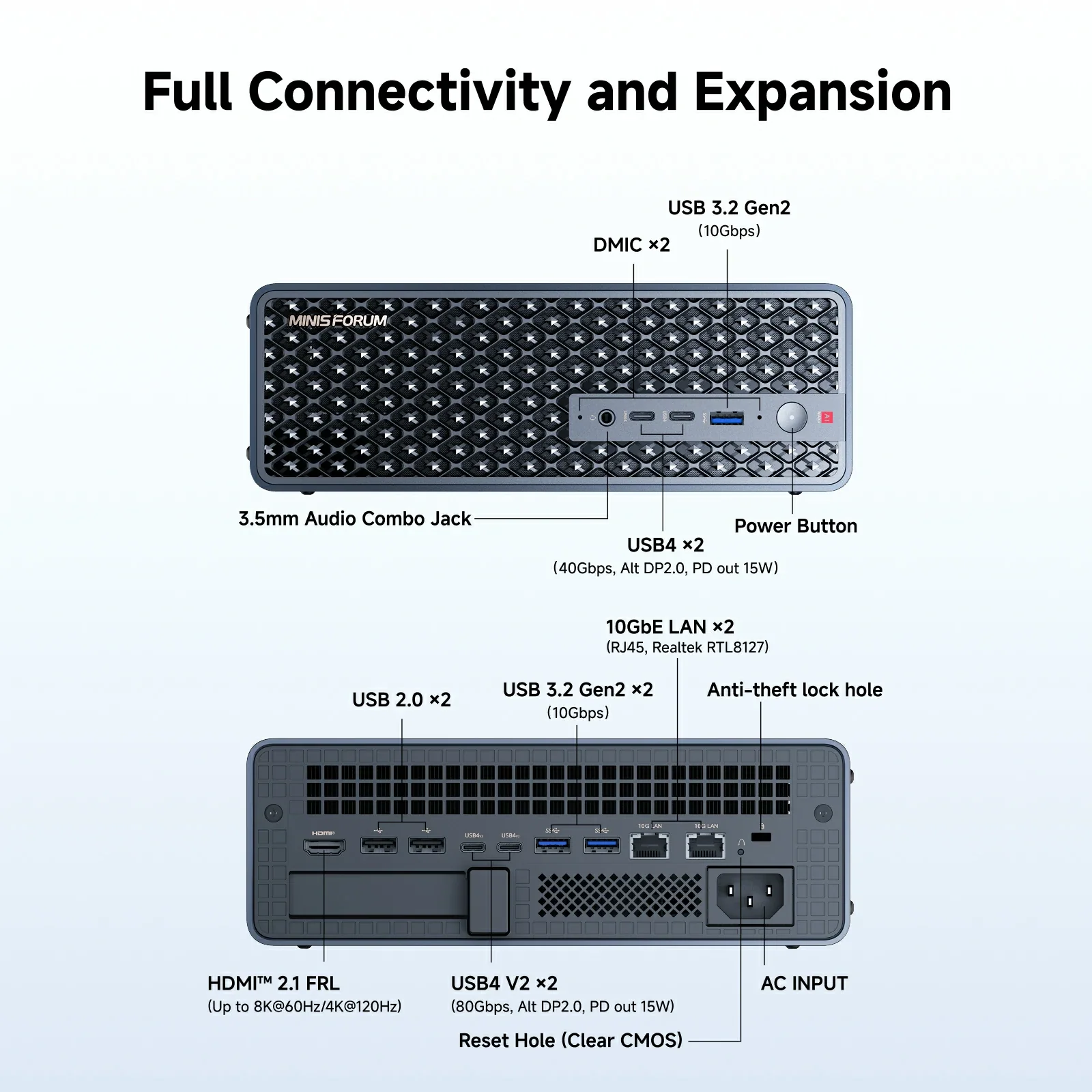
| Ports & Buttons | Front: 2× USB4 (40 Gbps, DP 2.0, PD 15 W out), 1× USB 3.2 Gen 2 (10 Gbps), 3.5 mm jack, power button. Rear: 2× USB4 v2 (80 Gbps, DP 2.0, PD 15 W out), 2× USB 3.2 Gen 2, 2× USB 2.0, HDMI 2.1, 2× 10GbE, AC input, reset (Clear CMOS) hole, lock slot. Internal: full-length PCIe x16 slot (PCIe 4.0 ×4) |
| Performance Modes | Performance 130 W (160 W peak) · Balanced 95 W · Quiet 60 W · Rack mode |
| System | Windows 11 Pro |
| Product Dimension | 222.1 × 206.3 × 77.1 mm — 2.8 kg — desktop (vertical/horizontal) or 2U rack |
| Power | Built-in 320 W power supply (CCC, FCC, UL, CE, UKCA) — standard AC cable |
Available Configurations
| Processor | Memory | Storage | MINISFORUM US price |
|---|---|---|---|
| Ryzen AI Max+ 395 | 64 GB LPDDR5x-8000 | 2 TB | US $2,599 (list US $3,249) |
| Ryzen AI Max+ 395 | 128 GB LPDDR5x-8000 | 2 TB | US $3,959 (list US $4,949) |
| Ryzen AI Max+ 395 | 128 GB LPDDR5x-8000 | 4 TB | US $4,199 (list US $5,249) |
Processor: Ryzen AI Max+ 395
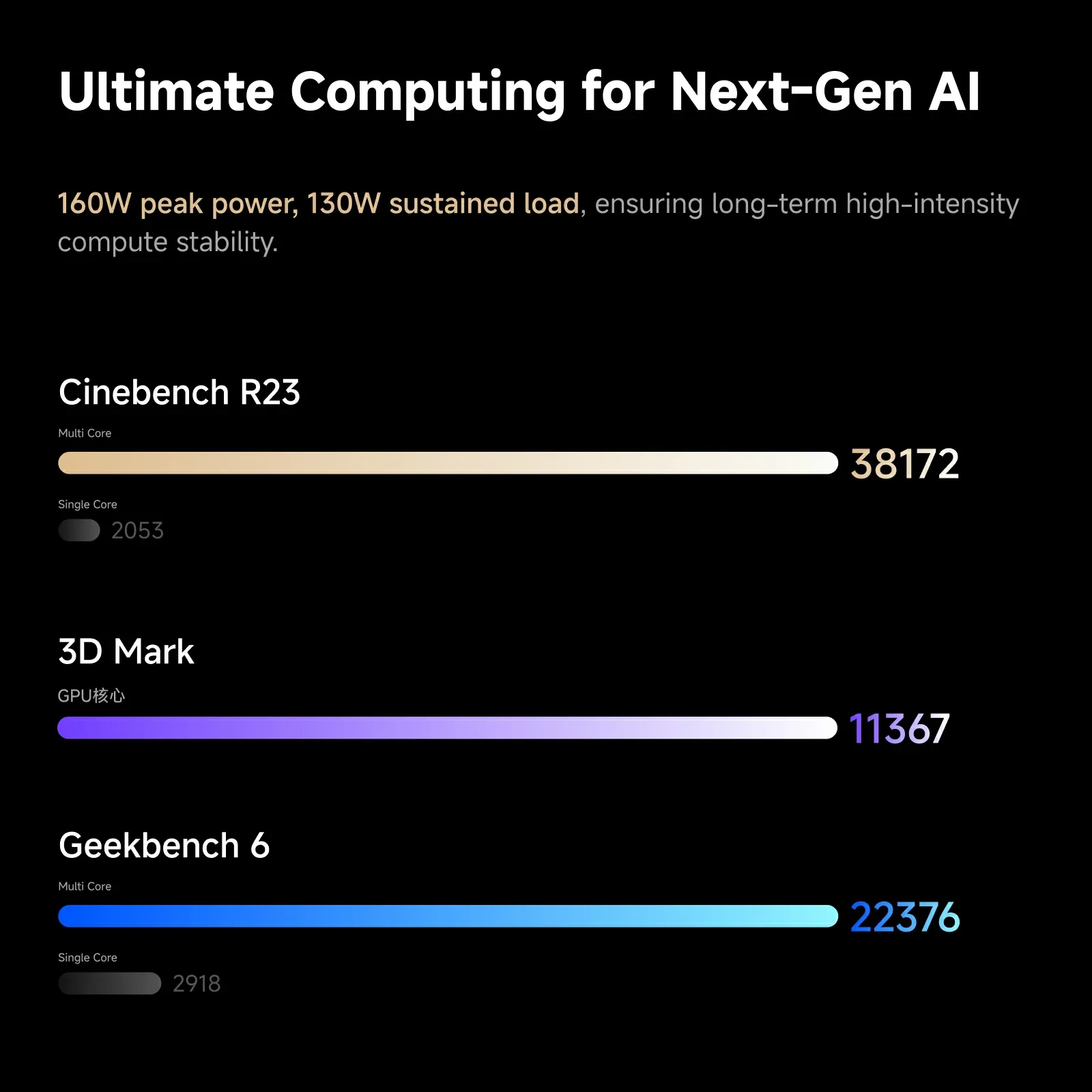
The Ryzen AI Max+ 395 is AMD’s most powerful mobile-class APU. Its 16 Zen 5 cores and 32 threads run from 3.0 GHz up to 5.1 GHz with 64 MB of L3 cache, which puts multi-threaded performance in the range of desktop processors. MINISFORUM quotes 38,172 points in Cinebench R23 multi-core (2,053 single-core) and 22,376 points in Geekbench 6 multi-core (2,918 single-core) in Performance mode. Those figures make the MS-S1 MAX suitable for code compilation, 3D rendering, video encoding and virtualisation as well as AI work.
AI: NPU, GPU and 128 GB of unified memory
The XDNA 2 NPU delivers 50 TOPS on its own — above the 40 TOPS Microsoft requires for Copilot+ PCs — and MINISFORUM rates the whole platform at up to 126 TOPS. The real strength for local AI, however, is the unified memory: CPU and GPU share one LPDDR5x-8000 pool on a 256-bit bus, so a large part of the 128 GB can be used by the GPU for model weights. That removes the VRAM ceiling of consumer graphics cards and allows large language models to run locally with tools such as llama.cpp, Ollama or LM Studio.
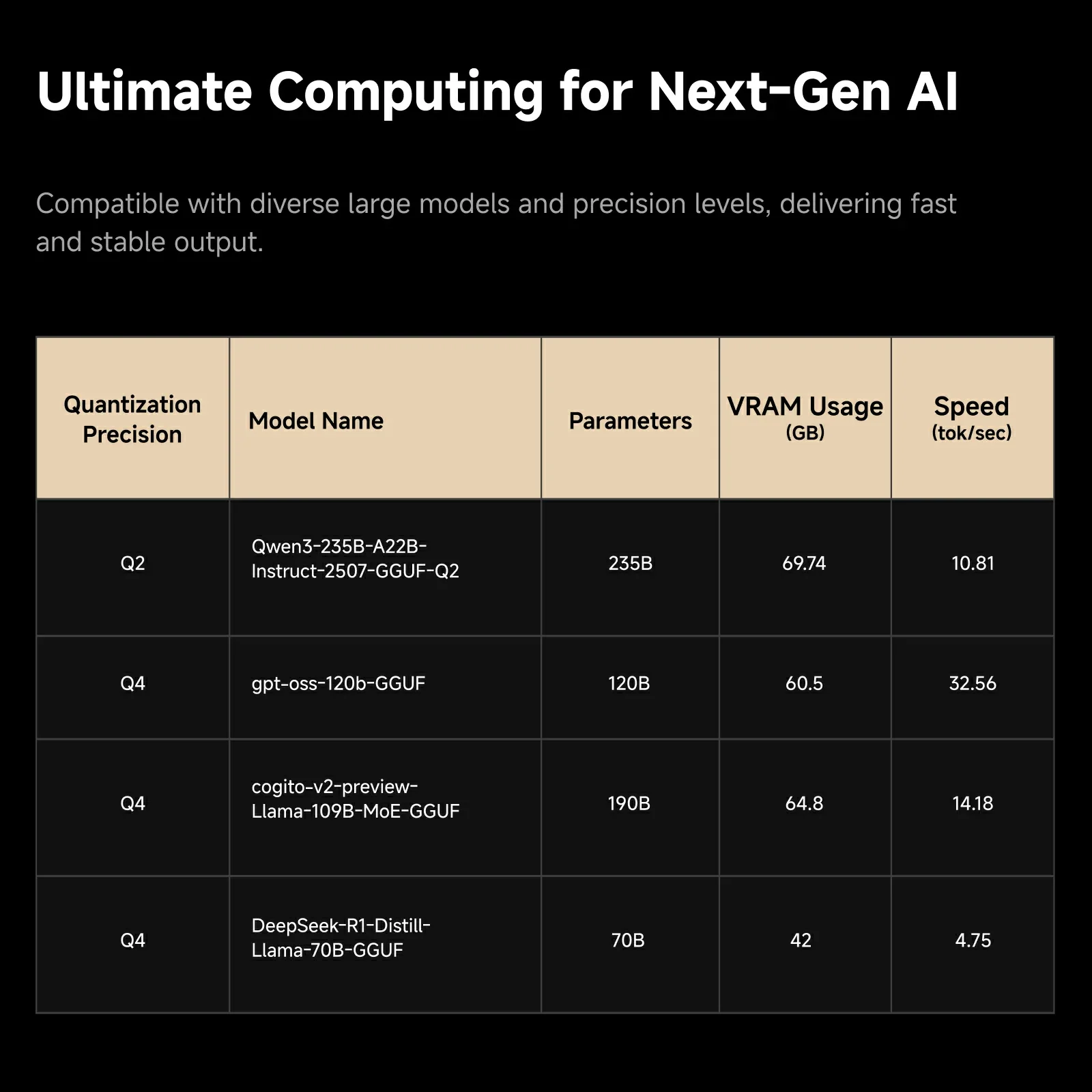
MINISFORUM’s own measurements with the 128 GB model include: gpt-oss-120b (Q4) at 32.56 tokens/s using 60.5 GB; Qwen3-235B-A22B (Q2) at 10.81 tokens/s using 69.74 GB; a Llama-based 109B MoE model (Q4) at 14.18 tokens/s; and DeepSeek-R1-Distill-Llama-70B (Q4) at 4.75 tokens/s using 42 GB. Mixture-of-experts models run much faster than dense models of similar size, which is typical of this platform. With clustering, MINISFORUM reports a 235B-parameter model running across two units at 10.87 tokens/s, and DeepSeek-R1 671B (Q4, about 380 GB) across four units.
Graphics: Radeon 8060S
The Radeon 8060S has 40 RDNA 3.5 compute units at up to 2,900 MHz — the largest integrated GPU AMD has made. MINISFORUM quotes a 3DMark GPU score of 11,367 (test not specified). In practice this class of GPU handles many current games at 1080p and 1440p with medium-to-high settings and upscaling, and it accelerates AI image generation, video editing and 3D work. It cannot match a high-end desktop graphics card in raw throughput, but it can address far more memory.
Memory
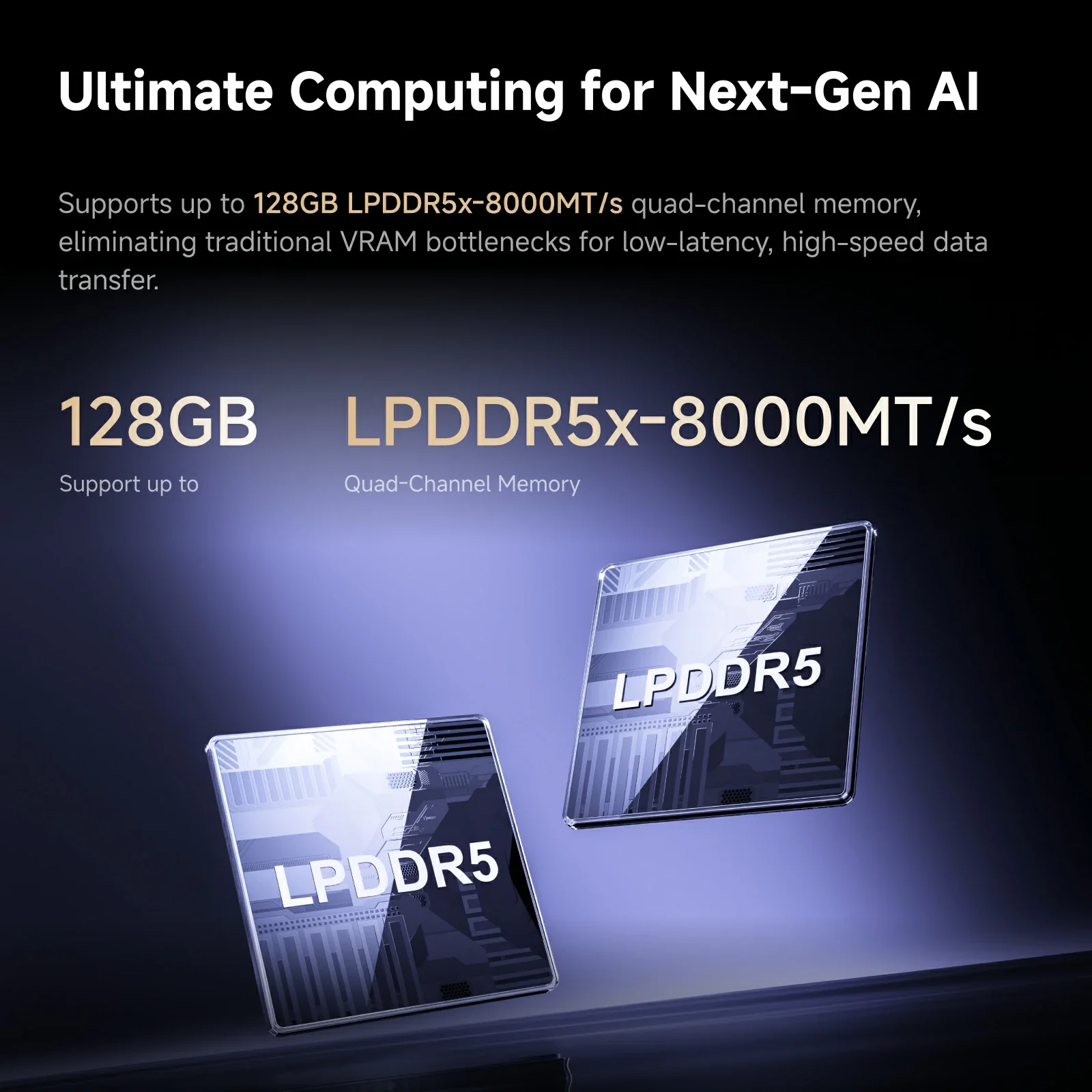
Memory is 64 GB or 128 GB LPDDR5x-8000, SOLDERED — non-upgradeable. This is a requirement of the Strix Halo platform rather than a MINISFORUM choice, but it means you must choose the capacity at purchase. For local language models, the 128 GB version is the one to buy: the 64 GB edition is suitable for models up to about 30–40 GB plus the operating system and applications.
Storage
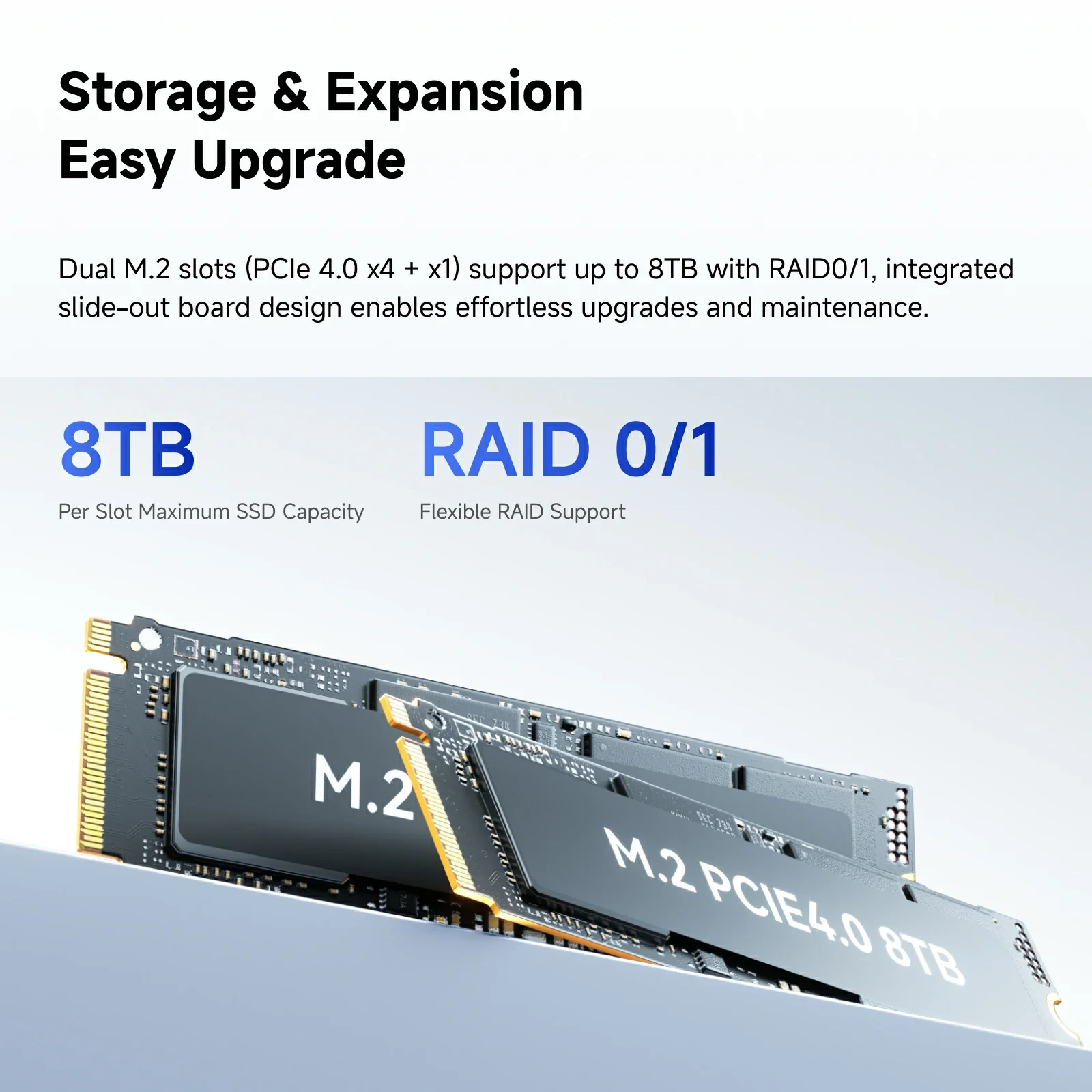
The system ships with a 2 TB or 4 TB M.2 2280 PCIe 4.0 SSD and offers two M.2 slots with up to 8 TB each (16 TB in total) and RAID 0 or RAID 1. Note that only the first slot is PCIe 4.0 ×4; the second slot is PCIe 4.0 ×1, which limits a drive there to roughly 2 GB/s — fine for a model library or backups, but not for maximum speed. A slide-out chassis with a board tray gives easy access to both slots.
PCIe x16 expansion slot
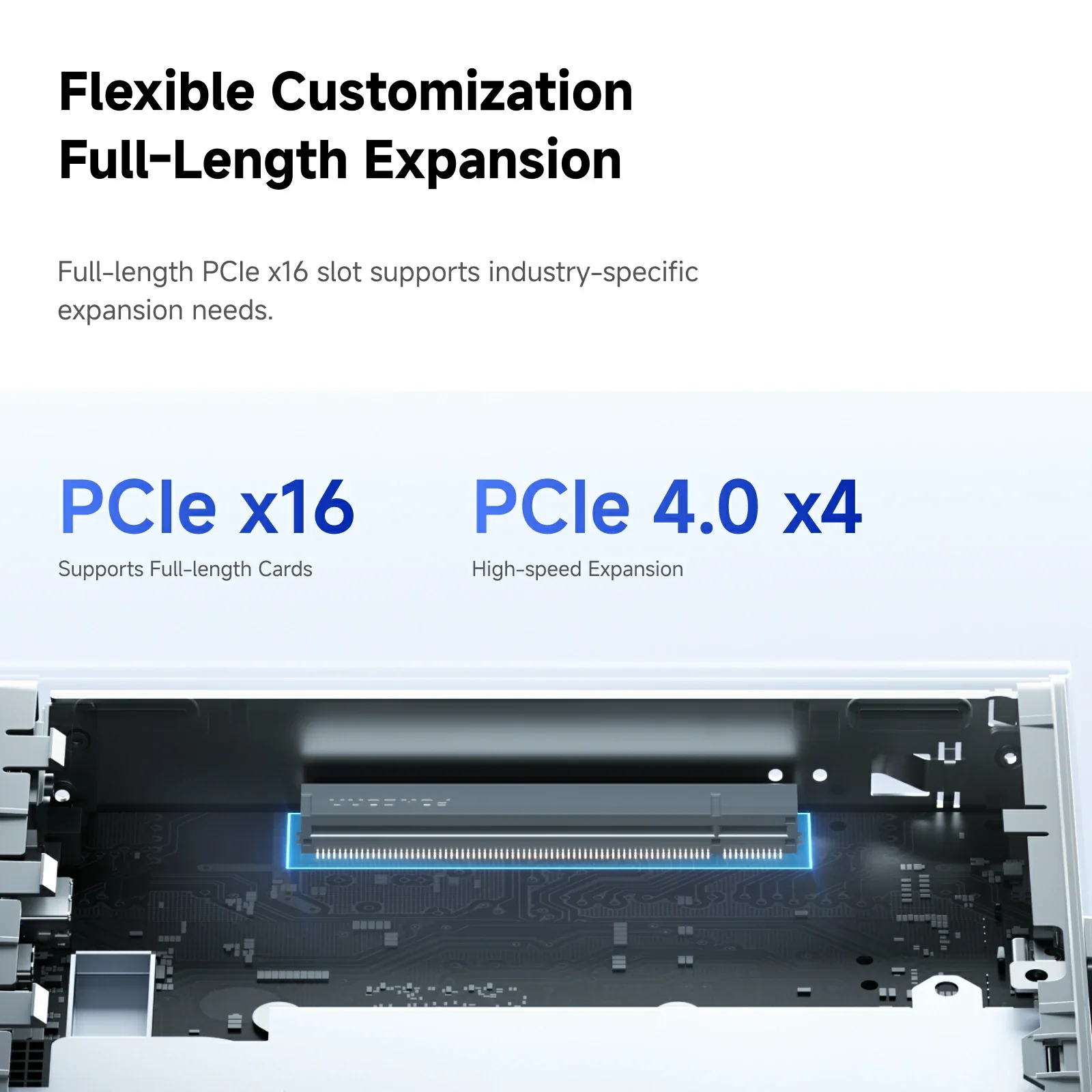
Unusually for a compact PC, the MS-S1 MAX includes a full-length PCIe x16 slot wired as PCIe 4.0 ×4. It accepts expansion cards such as capture cards, storage controllers, SFP+ or faster network adapters. Large dual-slot graphics cards are not the intended use: space and the 320 W power budget are designed for low-profile, low-power cards.
Connectivity
Connectivity is the most complete we have seen on a Strix Halo system: two USB4 v2 ports at 80 Gbps on the rear and two USB4 ports at 40 Gbps on the front, all with DisplayPort 2.0 and 15 W power output; three USB 3.2 Gen 2 ports and two USB 2.0; HDMI 2.1 FRL with 8K@60 Hz or 4K@120 Hz; and two 10GbE RJ45 ports on Realtek RTL8127 controllers that connect directly to copper 10GbE switches. Wireless is Wi-Fi 7 with Bluetooth 5.4, and two front microphones with AI noise cancelling help with video calls.
Ventilation and power modes
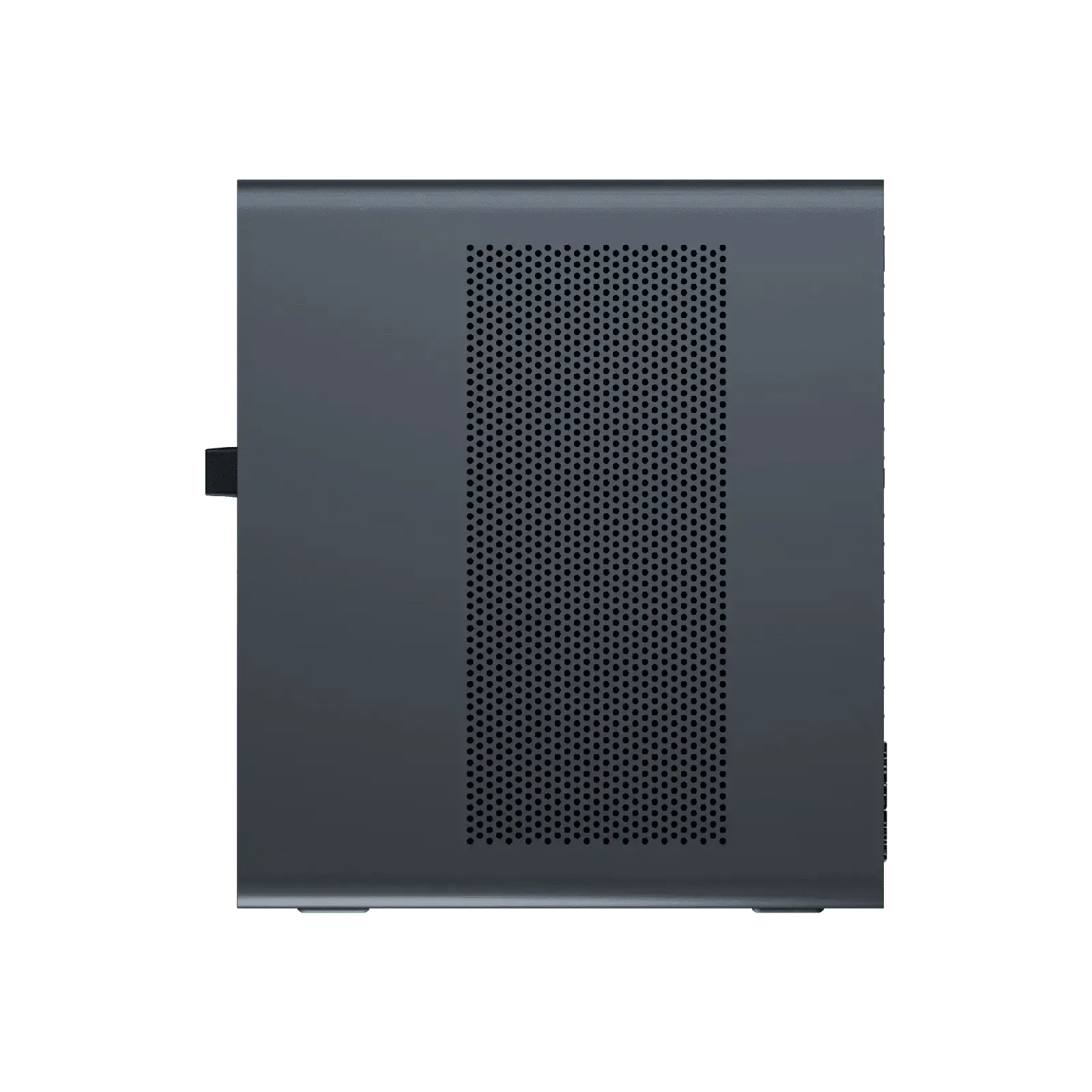
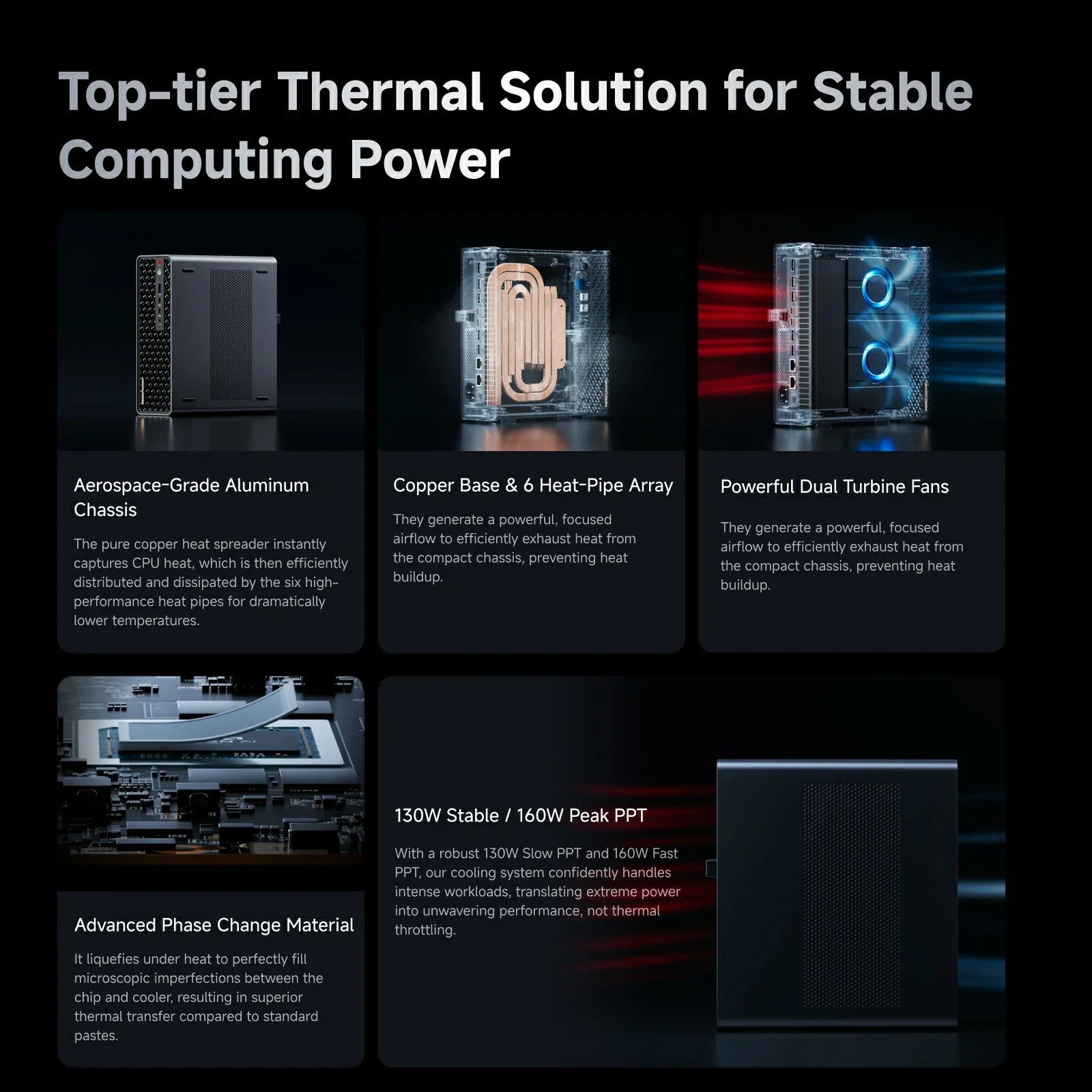
Cooling uses a pure copper base, six heat pipes, phase-change thermal material instead of paste and two turbine fans up to 3,600 rpm, sized for 130 W sustained and 160 W peak in Performance mode. Four modes let you trade performance for noise: Performance (130 W), Balanced (95 W), Quiet (60 W) and a Rack mode for dense installations. Expect audible fans under sustained AI or rendering loads in Performance mode; Balanced is the sensible default for a desk.
Design, power supply and rack use
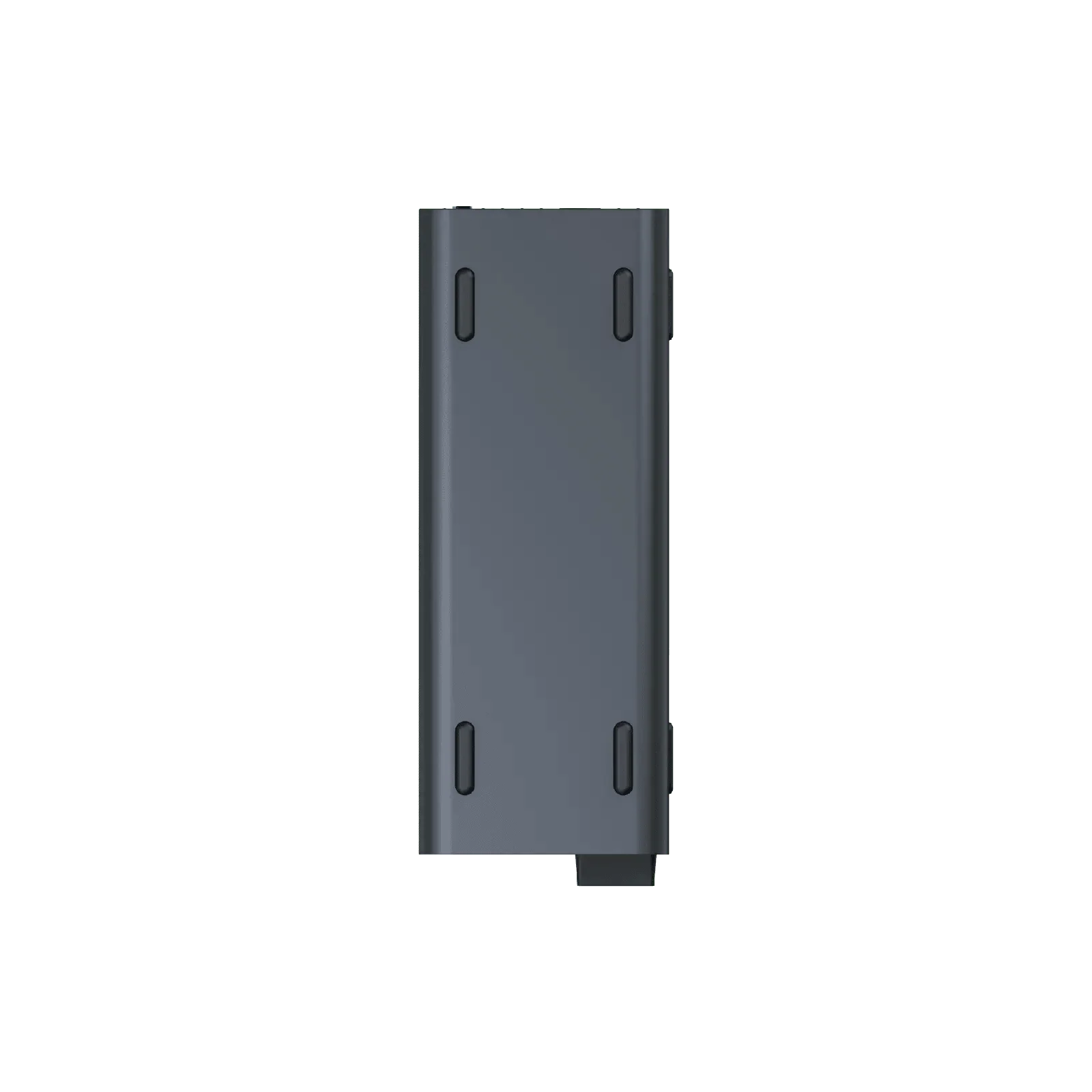
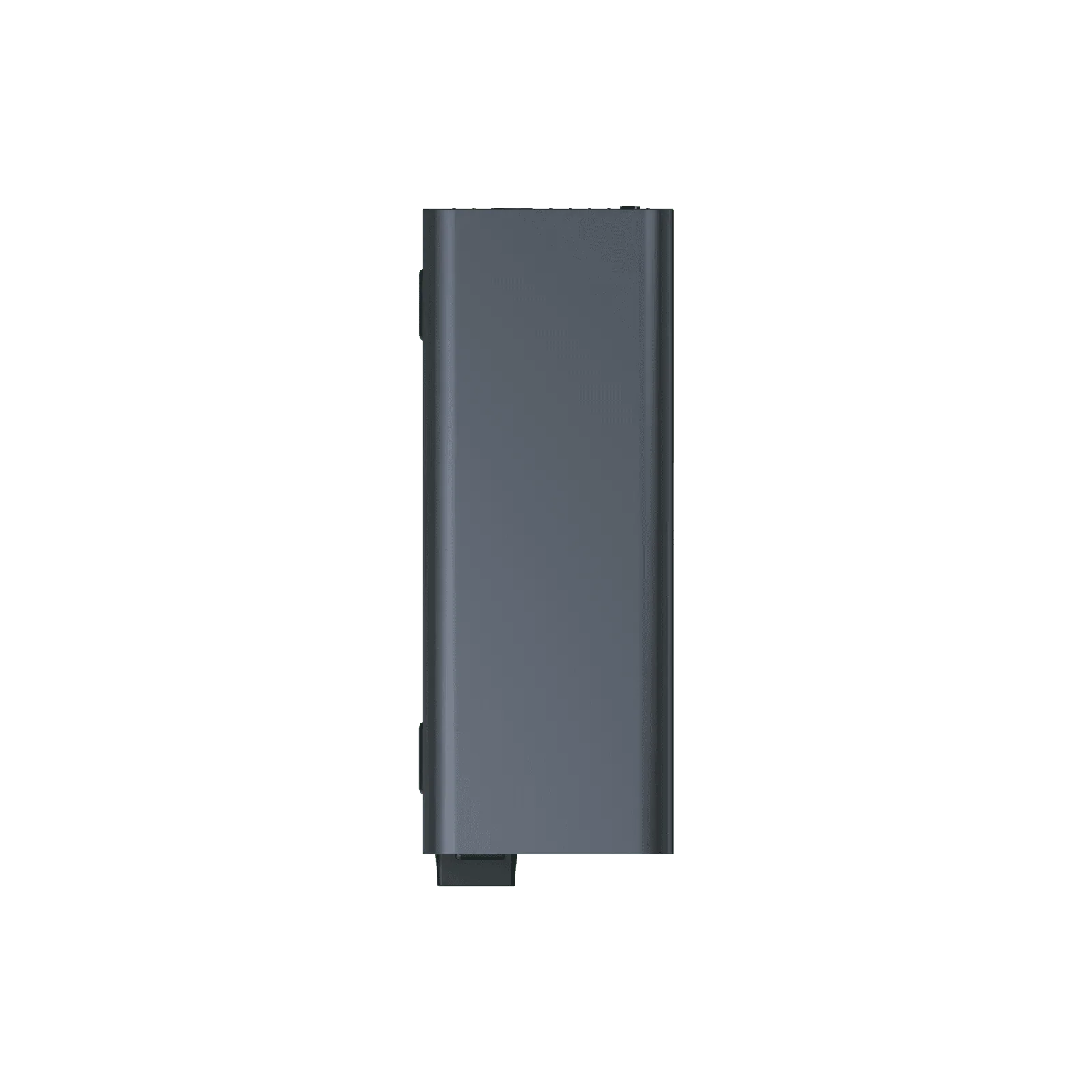
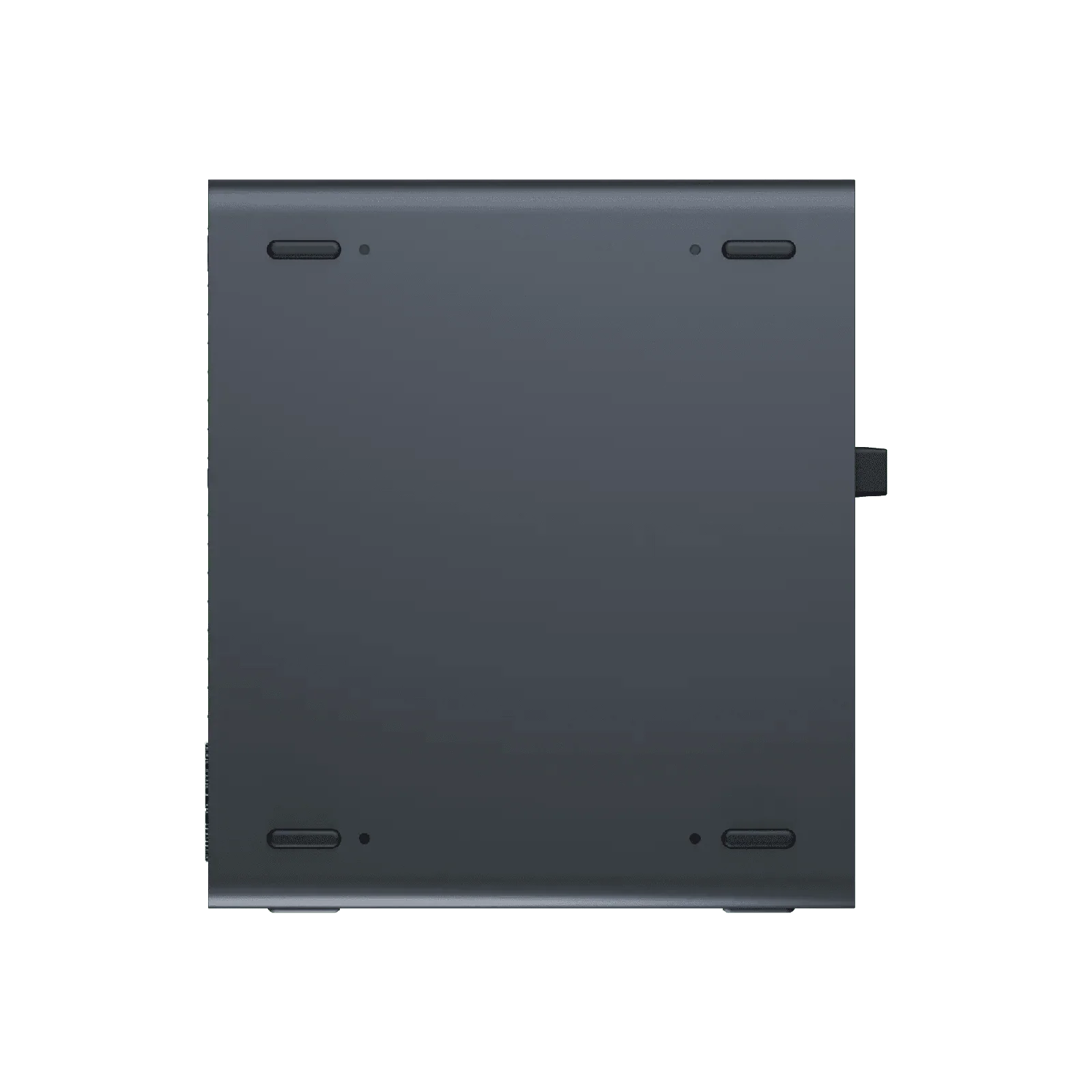
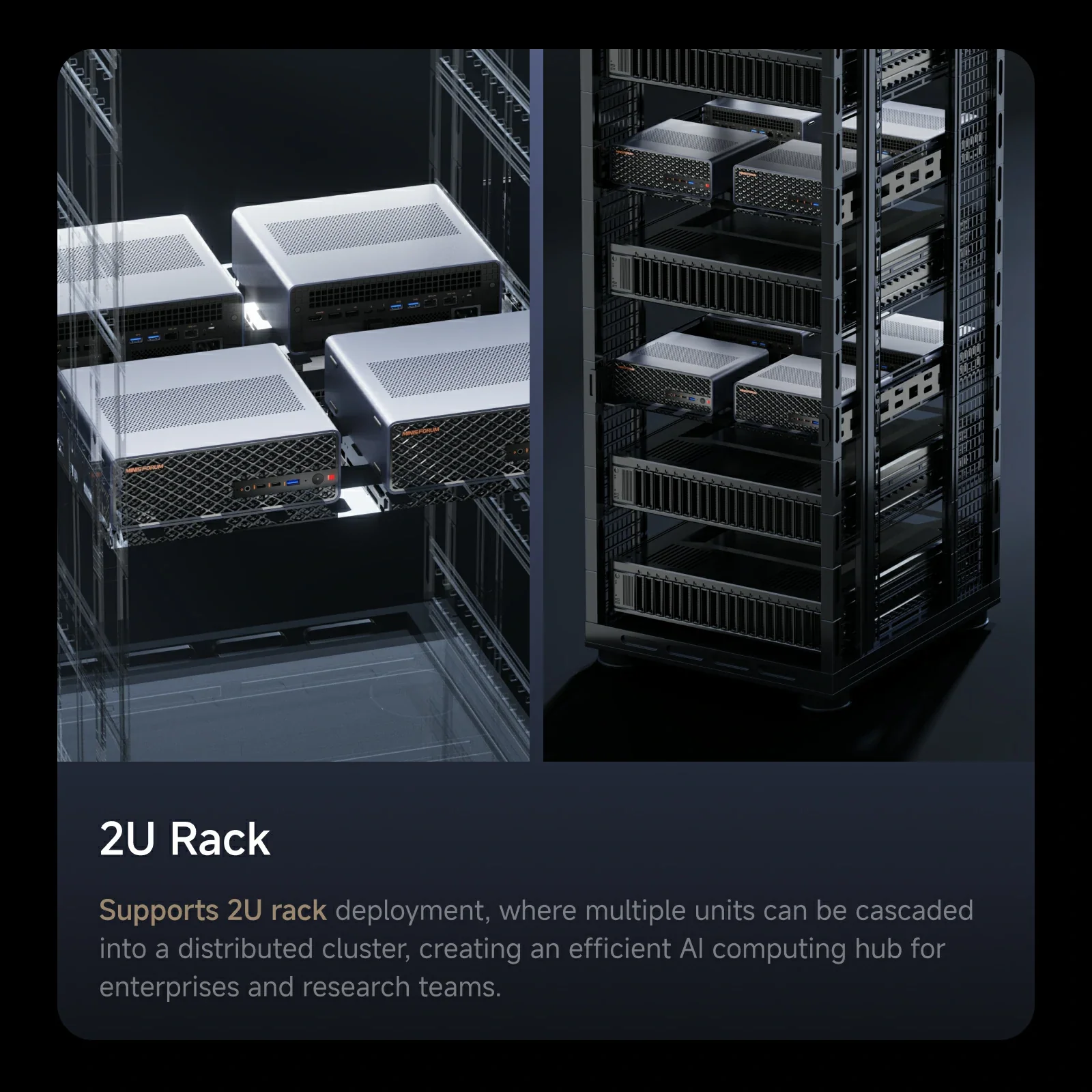
The aluminium chassis measures 222.1 × 206.3 × 77.1 mm and weighs 2.8 kg — larger than a typical mini PC, closer to a small desktop — because it integrates a certified 320 W power supply, so there is no external power brick. It can stand vertically, lie horizontally or be installed in a 2U rack, and a cascade power header lets several units power on and off together as a cluster.
Who is it for?
Ideal for: developers and researchers running large language models locally, small studios building private AI clusters, creators who need lots of memory for video and 3D, and home-lab users who want 10GbE, USB4 v2 and a PCIe slot in one quiet box.
Not for: buyers on a budget, users who want upgradeable RAM, gamers who need the throughput of a high-end discrete GPU, or anyone looking for a truly tiny mini PC.
Compatible upgrades & accessories
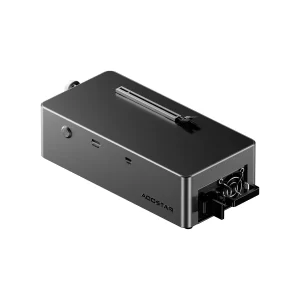 AOOSTAR AG02 OCuLink & USB4 eGPU Dock (800 W PSU)
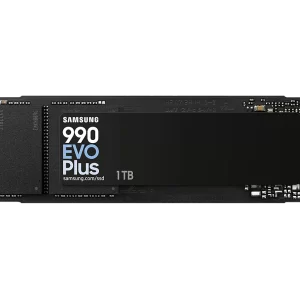 Samsung 990 EVO Plus NVMe M.2 SSD PCIe 4.0 ×4 / 5.0 ×2
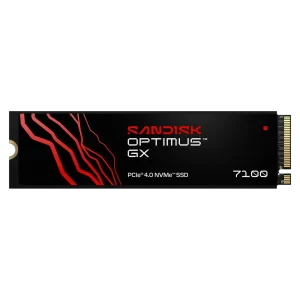 SANDISK Optimus GX 7100 NVMe M.2 2280 SSD PCIe 4.0 ×4
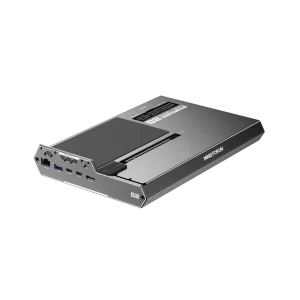 MINISFORUM DEG2 OCuLink & Thunderbolt 5 eGPU Dock
Selected by matching this mini PC's specifications (memory type, M.2 slots and ports). Always check compatibility with the manufacturer before buying.
Disclaimer: The specifications, features, prices and availability shown on this page are provided for information purposes only. They may contain errors or change without notice. Please always check them on the manufacturer's official product page before buying.
Additional information
Specification: MINISFORUM MS-S1 MAX AMD Ryzen™ AI Max+ 395
| AI Capabilities | ||||||||||||||||
|---|---|---|---|---|---|---|---|---|---|---|---|---|---|---|---|---|
|
||||||||||||||||
| Processor | ||||||||||||||||
|
||||||||||||||||
| Ports | ||||||||||||||||
|
||||||||||||||||
| Network | ||||||||||||||||
|
||||||||||||||||
| GPU | ||||||||||||||||
|
||||||||||||||||
| Internal Ports | ||||||||||||||||
|
||||||||||||||||
| Storage & RAM | ||||||||||||||||
|
||||||||||||||||
| Power | ||||||||||||||||
|
||||||||||||||||
| Others Specifications | ||||||||||||||||
|
||||||||||||||||
Related Products


