
There are two types of product launches in the mini PC market. The first is the familiar announcement: a new model number, a processor upgrade, a slightly revised chassis, a press release that reads like a datasheet. The second type stops you mid-scroll. The ACEMAGIC Retro X5 is emphatically, defiantly, the second type.
A Market That Forgot to Have Fun
Walk through the mini PC section of any major retailer’s website in 2026 and you will see a sea of rectangles. Black ones. Silver ones. Dark grey ones. Some have RGB strips. Some have aggressive angular vents. Almost all of them, at a distance of two metres, are indistinguishable from each other. The mini PC market has become extraordinarily capable and extraordinarily anonymous in equal measure.
This is not entirely a criticism. The anonymity serves a purpose — these machines are designed to disappear behind monitors, under desks, and into server racks. They are tools, and tools do not need personalities. But somewhere along the way, the idea that a compact desktop computer could be something more than a spec sheet in a box got quietly forgotten.
Interest around retro games and the hardware that can run them has exploded in 2026, and maybe not for the reasons you expect. The retro gaming scene has been quietly building momentum for years, and in 2026 it has reached a kind of cultural tipping point. The global retro gaming market is estimated to be worth around $4.18 billion in 2026, up from approximately $3.8 billion the previous year, with analysts projecting the market could reach more than $8 billion by 2033 — currently growing faster than some traditional console markets.
In the United States alone, an estimated 26.7 million people regularly play retro games, with the largest portion falling within the 35 to 49 age range — the generation that grew up during the golden era of gaming, when consoles like the NES, Sega Genesis, and early PlayStation systems dominated the market.
That is the audience ACEMAGIC has decided to build a product for. And the result is the Retro X5.

First Impressions: The Box That Stops a Room
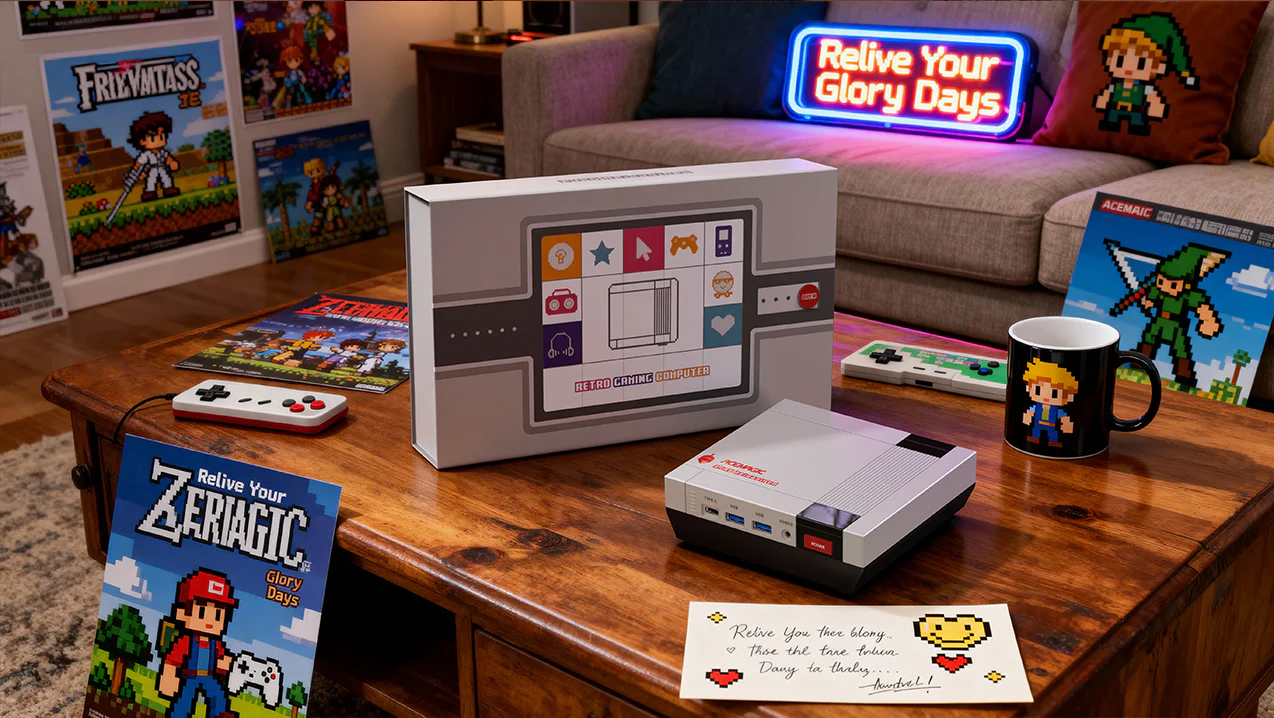
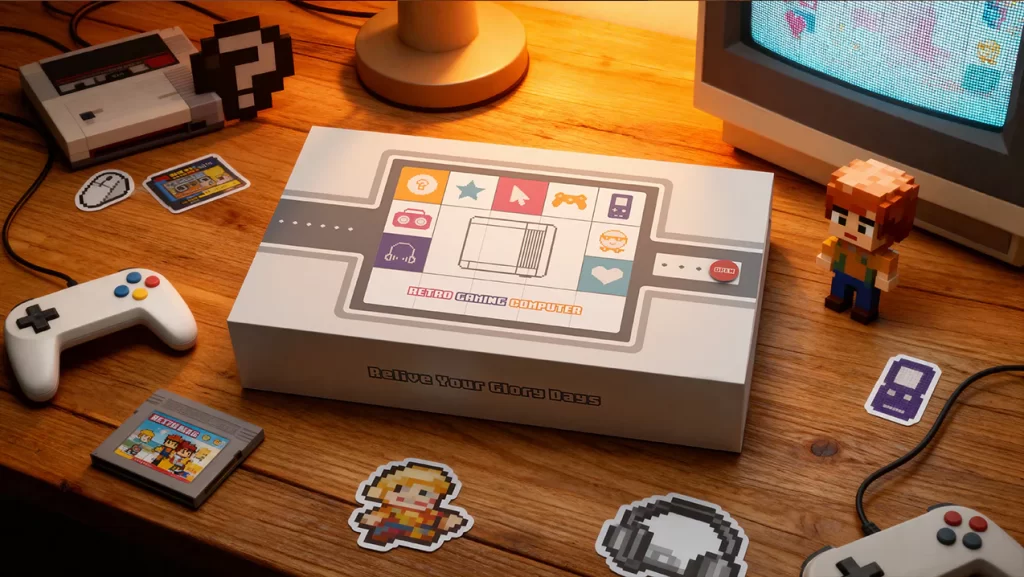
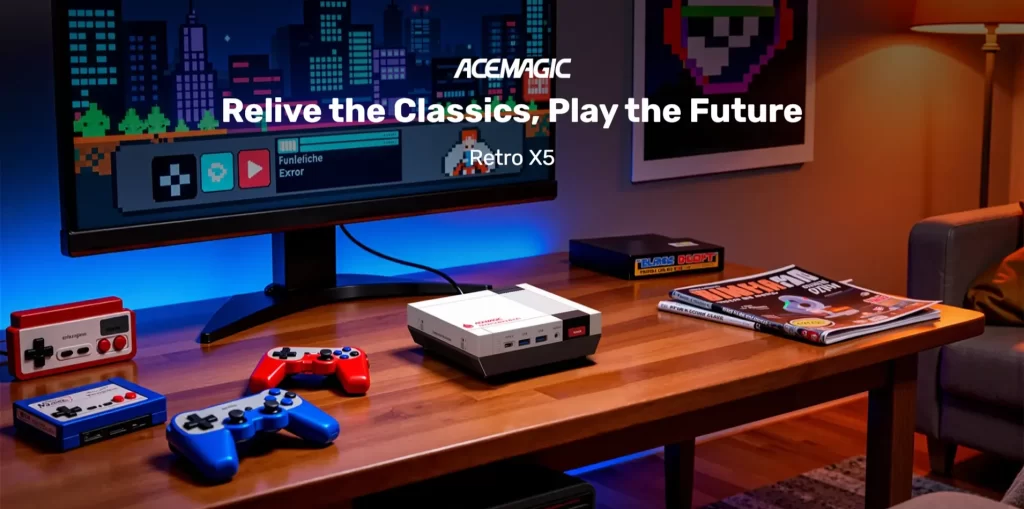
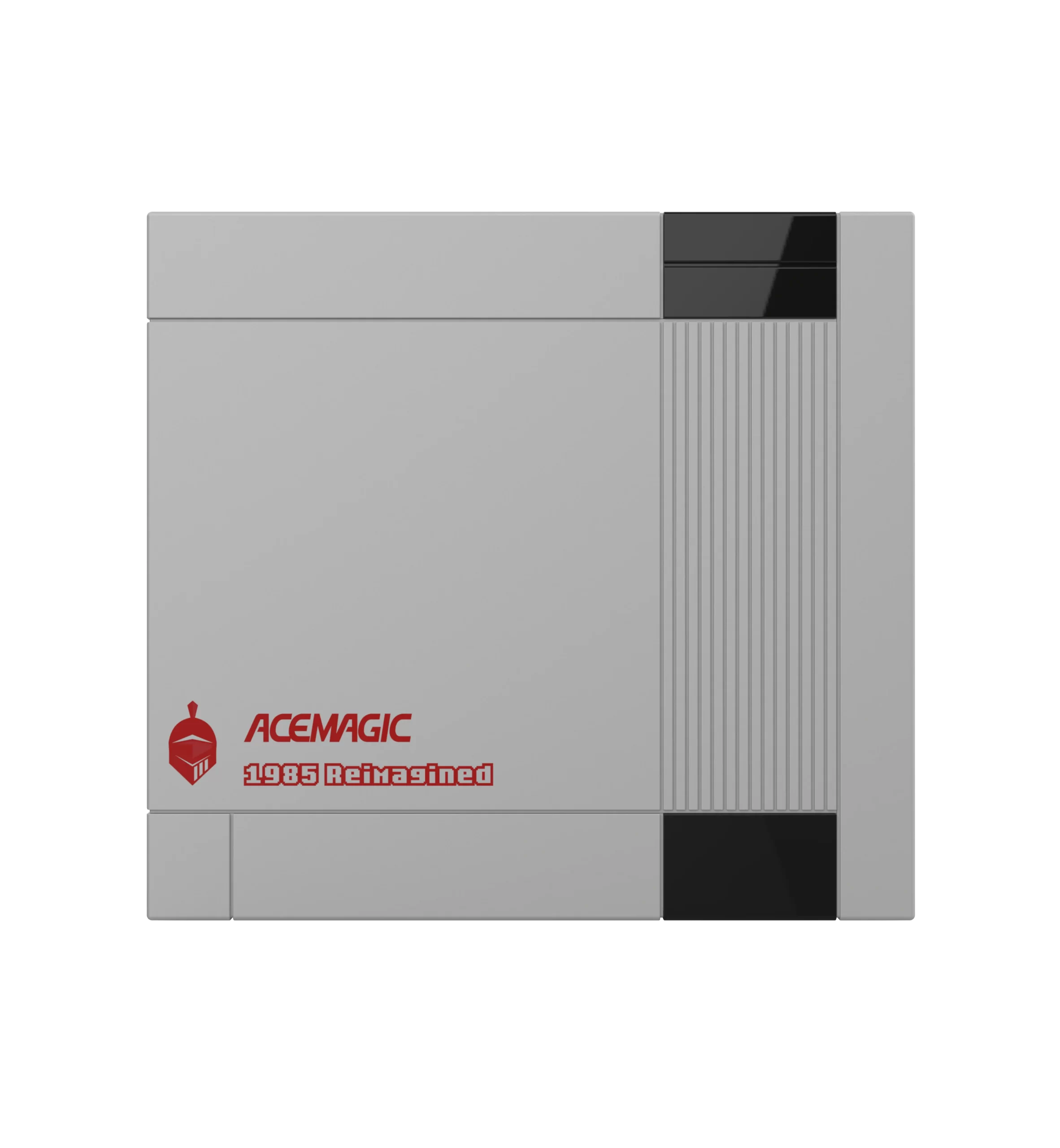
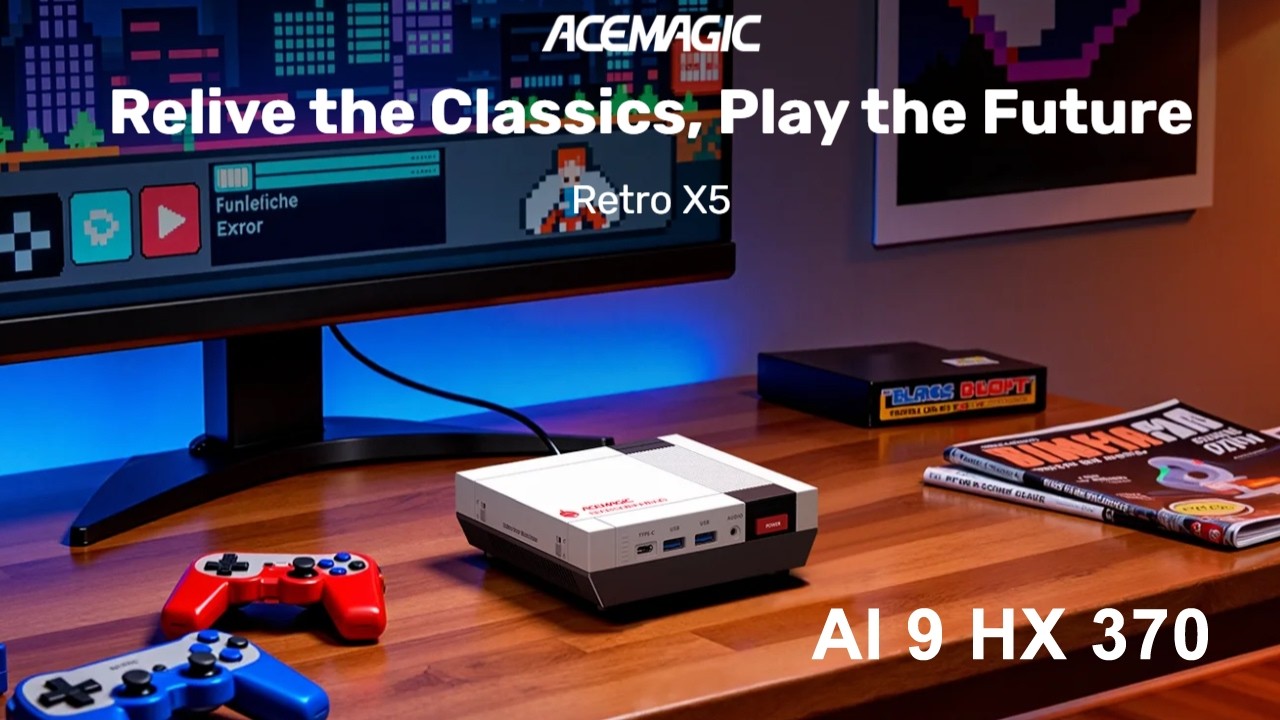
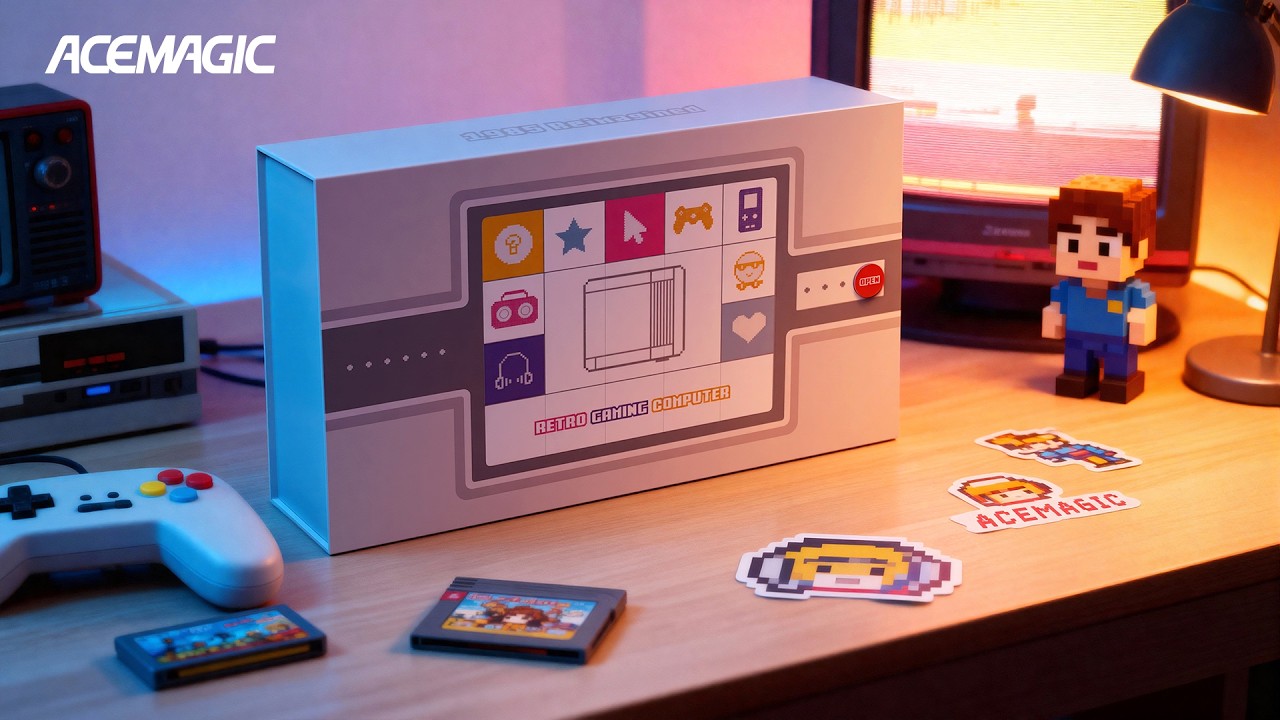
The ACEMAGIC Retro X5 does not look like a mini PC. It looks like a Nintendo Entertainment System. Not vaguely, not as a loose aesthetic reference, but with deliberate, considered precision. The matte grey and dark grey dual-tone chassis, the rectangular proportions, the black accent lines running horizontally across the front panel, the ventilation grilles that echo the NES cartridge loading slot — every visual element has been chosen to place this machine in a specific cultural moment: North America, 1985, a living room, a CRT television, a grey plastic controller with a directional pad and two red buttons.
There are mini PCs that try to disappear into the desk, and then there is the ACEMAGIC Retro X5, a product that does the exact opposite. It is chunky, playful, and deliberately evocative, and in a market saturated with small black or silver boxes that all begin to blur together, the Retro X5 stands out immediately.
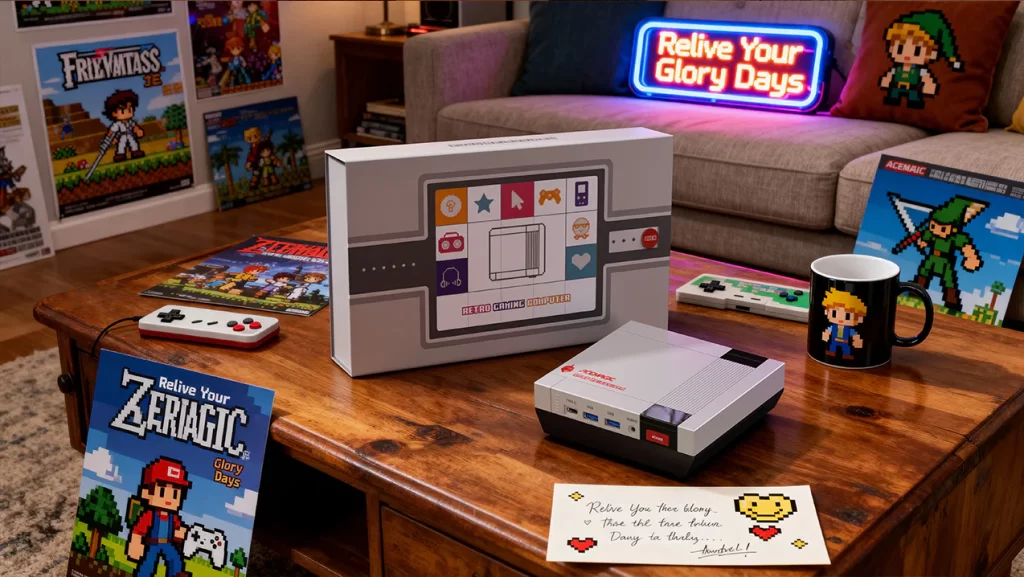
What makes the design successful rather than merely clever is its restraint. There is no RGB lighting fighting the retro aesthetic. There is no gaming logo stamped aggressively across the top panel. The shell feels deliberate rather than cheap, and the color blocking gives the whole unit a toy-like quality that somehow works in a workspace setting. This is a machine you place on your desk where it can be seen — not tucked behind a monitor stand and forgotten.
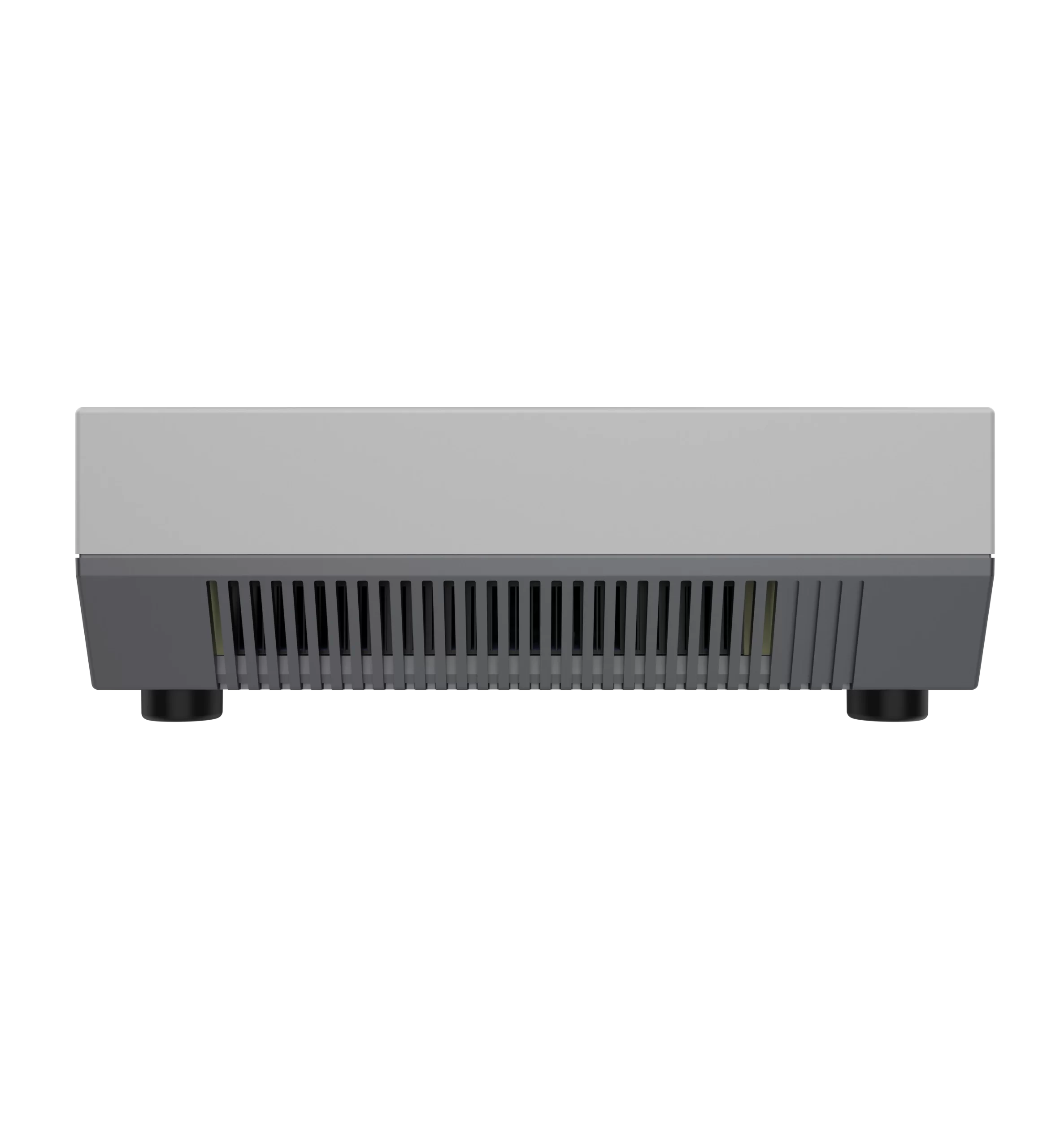
The ventilation grilles that run along the sides are not decorative. They are functional intake and exhaust paths for the Fresh Air Cooling System 3.0, which we will discuss in detail shortly. The fact that they look like the NES cartridge slot area is a design achievement, not an accident — ACEMAGIC has managed to make engineering necessity serve an aesthetic purpose simultaneously. That is harder than it sounds.
Inside the Time Machine: AMD Ryzen AI 9 HX 370
Here is where the time-travel joke reverses direction. The original Nintendo Entertainment System ran at 1.789 MHz. The AMD Ryzen AI 9 HX 370 inside the Retro X5 comes with a clock speed of up to 5.1 GHz, 12 CPU cores, and an NPU. The gap between those two numbers — 1.789 MHz versus 5,100 MHz — represents the entire arc of fifty years of semiconductor progress, contained in a chassis that makes you think of cartridges and composite video cables.
The heart of the system is AMD’s Ryzen AI 9 HX 370, a 12-core, 24-thread processor built around a hybrid Zen 5 and Zen 5c arrangement, with boost frequencies up to 5.1 GHz. Paired with that is the Radeon 890M integrated graphics engine, complete with 16 compute units and enough graphics horsepower to push well beyond what most people traditionally expect from an iGPU.
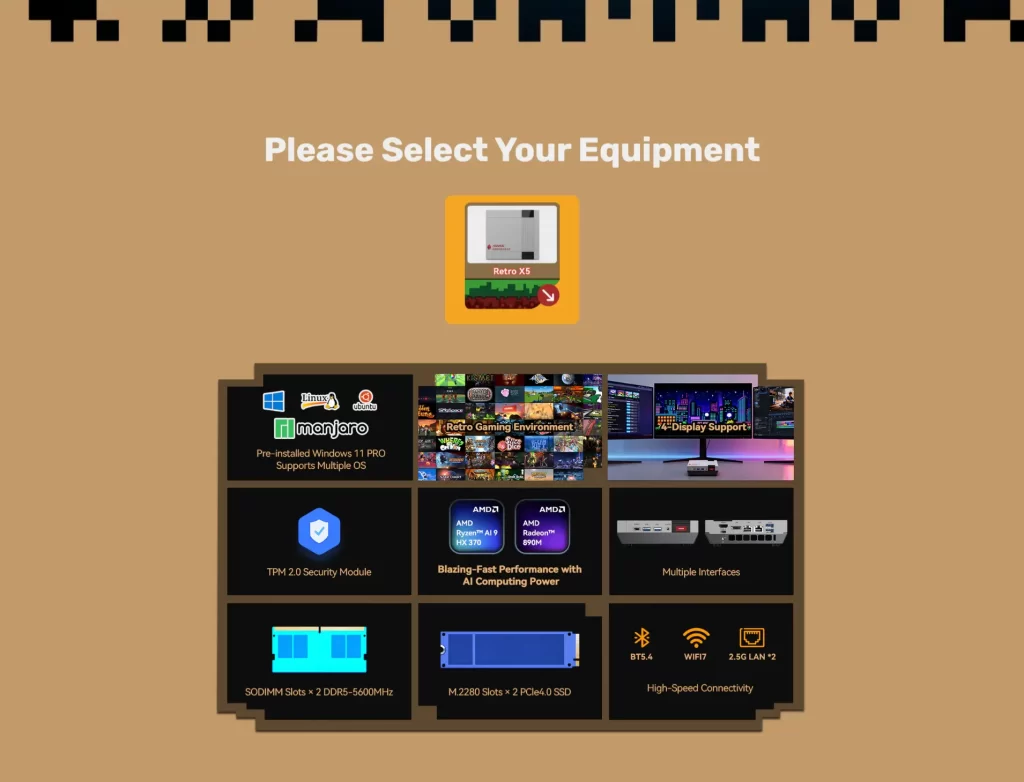
The HX 370 uses four full Zen 5 performance cores for demanding single-threaded work and eight Zen 5c efficiency cores for parallel and background tasks — a hybrid architecture that delivers strong single-threaded responsiveness while managing power consumption intelligently across the workload. At 65W TDP in the Retro X5 — higher than the 28W to 54W window typical of laptop-tuned configurations of the same chip — the machine can sustain higher clock speeds for longer under demanding applications than a notebook with the same silicon would manage.
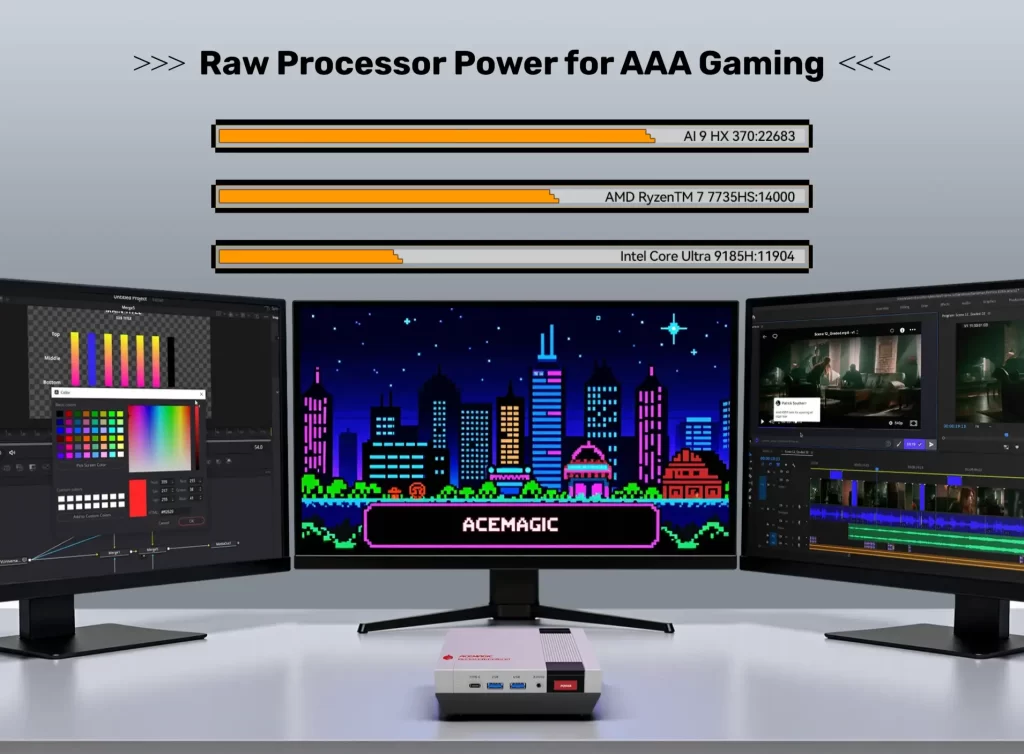
The AMD Ryzen AI 9 HX 370 is one of the most capable mobile and compact processors on the market in 2026. Its hybrid architecture combines four high-performance Zen 5 cores for demanding tasks with eight efficient Zen 5c cores for light workloads. In the context of retro gaming, this level of CPU performance is — and this is said with genuine affection — absolute overkill. PlayStation 2 games upscaled to 4K, GameCube titles at 1080p, Nintendo 64 with high-resolution texture packs, PlayStation 3 via RPCS3, original Xbox via Xemu — the HX 370 handles all of these with computational headroom to spare. The more demanding the emulator, the more comfortable the margin.
For productivity workloads — which is what most buyers will use this machine for most of the time — the HX 370 delivers multi-core performance that competes directly with high-end laptop chips costing considerably more, and decisively outperforms the 12th and 13th generation Intel Core i7 chips that power many competing mini PCs at lower price points. Compared to i9-13900HK, it offers approximately 30% better performance.
AMD Radeon 890M: The iGPU That Makes Retro Emulation Genuinely Impressive
The Retro X5 includes AMD Radeon 890M integrated graphics with RDNA 3.5 architecture, running at 2,900 MHz, with 16 compute units. The 890M is the best integrated GPU available in any standard-TDP APU at the time of the Retro X5’s launch, and its performance characteristics make it particularly well-suited to the retro gaming and emulation use case.
Modern emulators — PCSX2 for PlayStation 2, Dolphin for GameCube and Wii, RPCS3 for PlayStation 3, Yuzu and Ryujinx for Nintendo Switch — are increasingly GPU-accelerated. Texture upscaling, shader compilation, anti-aliasing, post-processing filters, and internal resolution enhancement all depend on GPU throughput as much as CPU speed. The 890M’s RDNA 3.5 architecture supports AMD FidelityFX Super Resolution (FSR), hardware AV1 encode and decode, DirectX 12 Ultimate, and Vulkan — the full modern API stack that newer emulators increasingly require.
Performance is similar to entry-level discrete GPUs like the GeForce RTX 2050. In practical emulation terms, this means PlayStation 2 games run at 4K upscaling without frame drops, GameCube and Wii titles run at 1080p and higher in Dolphin, and Nintendo Switch games perform at native resolution in Ryujinx. The Retro X5 can emulate, in a single compact device, effectively the entire history of mainstream gaming from the Atari 2600 through to the Nintendo Switch — forty-five years of gaming history accessible from one machine that sits on a desk and looks like the console that started it all.
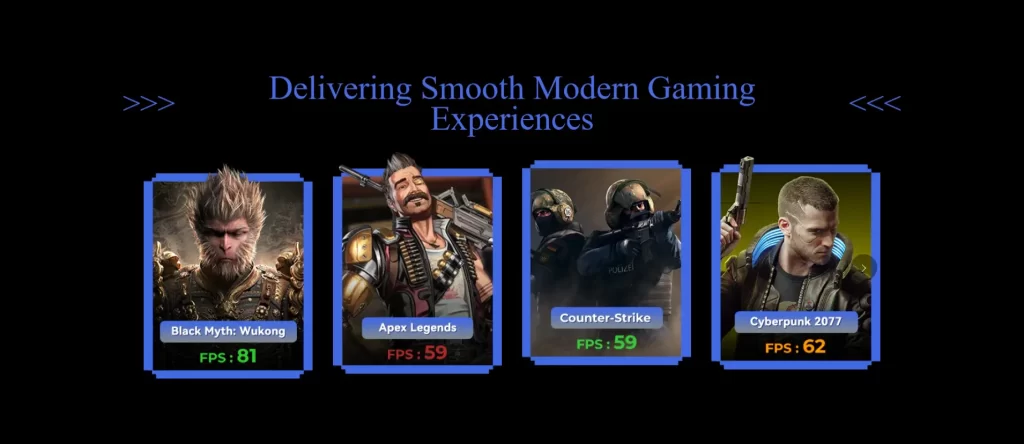
For modern PC gaming, the 890M handles eSports titles and lighter AAA games at 1080p with medium-to-high settings and playable frame rates. It is not a substitute for a dedicated GPU in demanding AAA titles at high settings — but combined with the OCuLink-adjacent eGPU support via USB4, users who eventually need discrete graphics power have a clear upgrade path without replacing the base machine.
XDNA 2 NPU and RetroPlay Box: Where Retro Aesthetic Meets Future Technology
Additionally, the Retro X5 integrates an AMD XDNA 2 NPU, offering up to 50 TOPS of computational power to support future feature enhancements. Combined with the GPU’s and CPU’s AI contributions, total system AI throughput reaches 80 TOPS — double the 40 TOPS threshold required for Microsoft Copilot+ PC certification. All Windows 11 Copilot+ features are active from first boot, running locally on the NPU without cloud dependency.
The more interesting application of the NPU in the Retro X5’s context is ACEMAGIC’s RetroPlay Box software platform — a pre-configured emulation front end that ships with the machine and aims to provide an all-in-one retro gaming environment requiring minimal user configuration. According to the manufacturer, RetroPlay Box will be continuously developed further and is set to receive AI features that are not just limited to gaming recommendations. Comparable AI features include AI-based translations, which could be particularly useful for games that were never officially localised into Western languages.
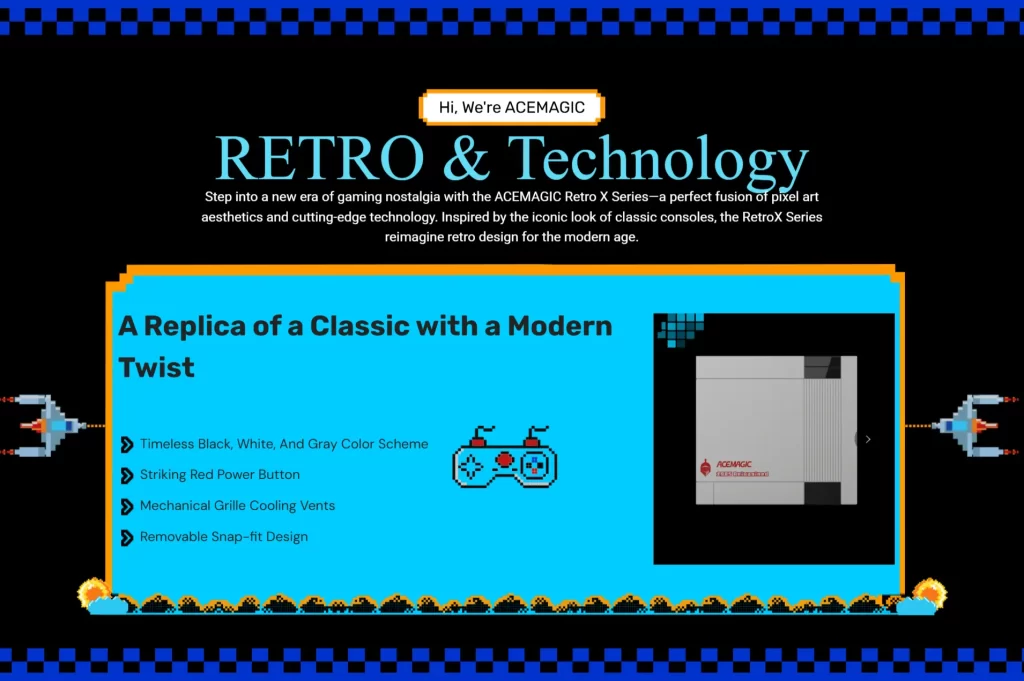
The translation angle is genuinely novel. The NES and Super Nintendo libraries contain thousands of Japanese-language games that never received official English releases — RPGs, adventure games, strategy titles, and visual novels that remain inaccessible to Western players without fan translations that can take years to produce. Using the XDNA 2 NPU to provide real-time AI translation of on-screen text and dialogue — running locally, without internet connectivity, without a subscription, using the dedicated neural processing hardware that would otherwise sit idle during gaming — is a compelling and practically useful application of the technology that no other mini PC is currently targeting.
Gameplay assistance would also be possible. These features should use the aforementioned NPU that is integrated into the AMD Ryzen AI 9 HX 370, meaning gamers would not have to rely on cloud services.
It is important to note — and honesty demands this — that at the time of the Retro X5’s launch, RetroPlay Box is still in early development. Some users report that the promised AI recommendation features are not yet available in the shipping version. ACEMAGIC has committed to continued updates, but users who want a fully polished emulation front end from day one will find the established alternatives — RetroArch, Launchbox, EmulationStation Desktop Edition — more mature options that run without limitation on the Windows 11 Pro base installation.
Tool-Free Upgrades: Up to 128 GB of DDR5 in Seconds
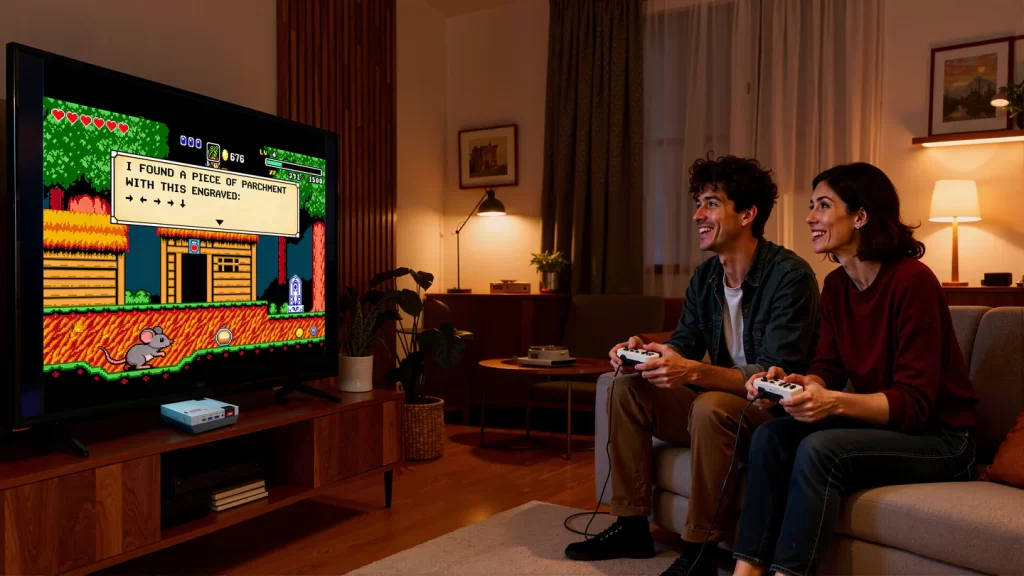
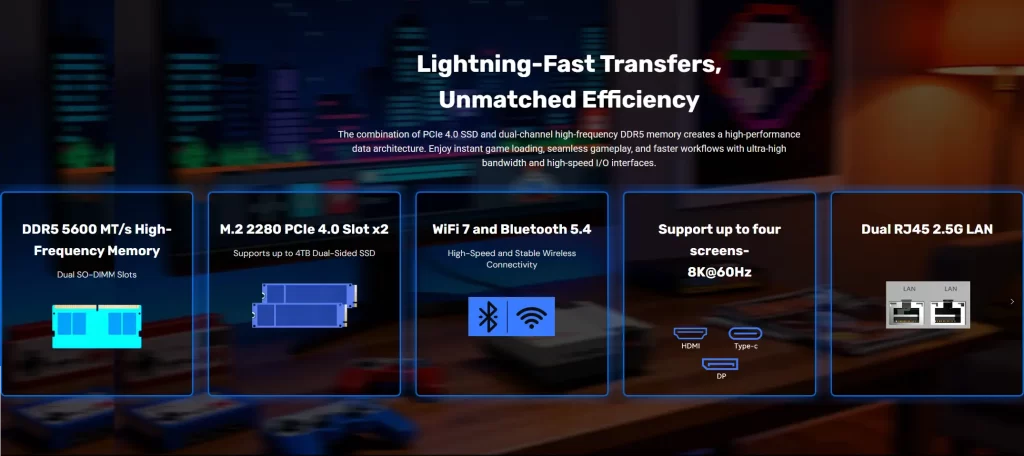
Dual SO-DIMM slots accept DDR5-5600 MHz RAM in dual-channel configuration, giving users the option to start modest and scale up later. Two M.2 2280 PCIe 4.0 ×4 NVMe slots support up to 4 TB of solid-state storage, which opens up room for large creative project files, multiple dev environments, or a generously stocked game library. The tool-free removable top cover grants instant access to SO-DIMM slots and PCIe slots. Upgrade in seconds without tools — future-proof your storage and memory with ease.
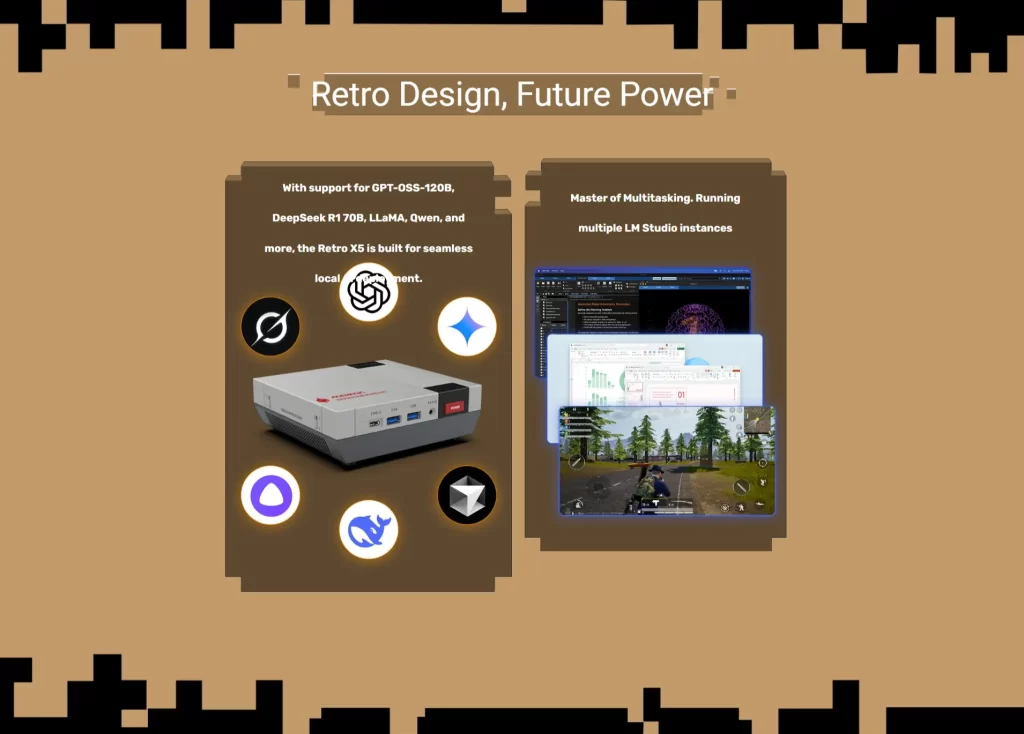
The tool-free top cover deserves specific praise because it is a genuinely user-friendly design decision that most competing mini PCs — including the GEEKOM A9 Max, which requires screwdriver disassembly to access its SO-DIMM slots — do not provide. Lift the panel, slot in new DDR5 modules or additional M.2 drives, replace the cover. The process takes under a minute and requires no tools of any kind. For the retro gaming use case specifically, upgrading to 64 GB or 128 GB of RAM enables running the largest available local AI models — LLaMA 3.3 70B, DeepSeek R1 70B — entirely on-device, which ACEMAGIC has demonstrated in their own published testing.
The barebone version ships without RAM, SSD, or an operating system licence, and the option alone signals that ACEMAGIC understands its audience is not just casual buyers looking for a cute desk ornament. The DIY community — builders who want to spec their own memory and storage, or run Linux rather than Windows — has been explicitly catered for, which is an unusual and welcome acknowledgement from a brand that largely sells to consumers rather than enthusiasts.
Connectivity: Nothing Compromised for the Aesthetic
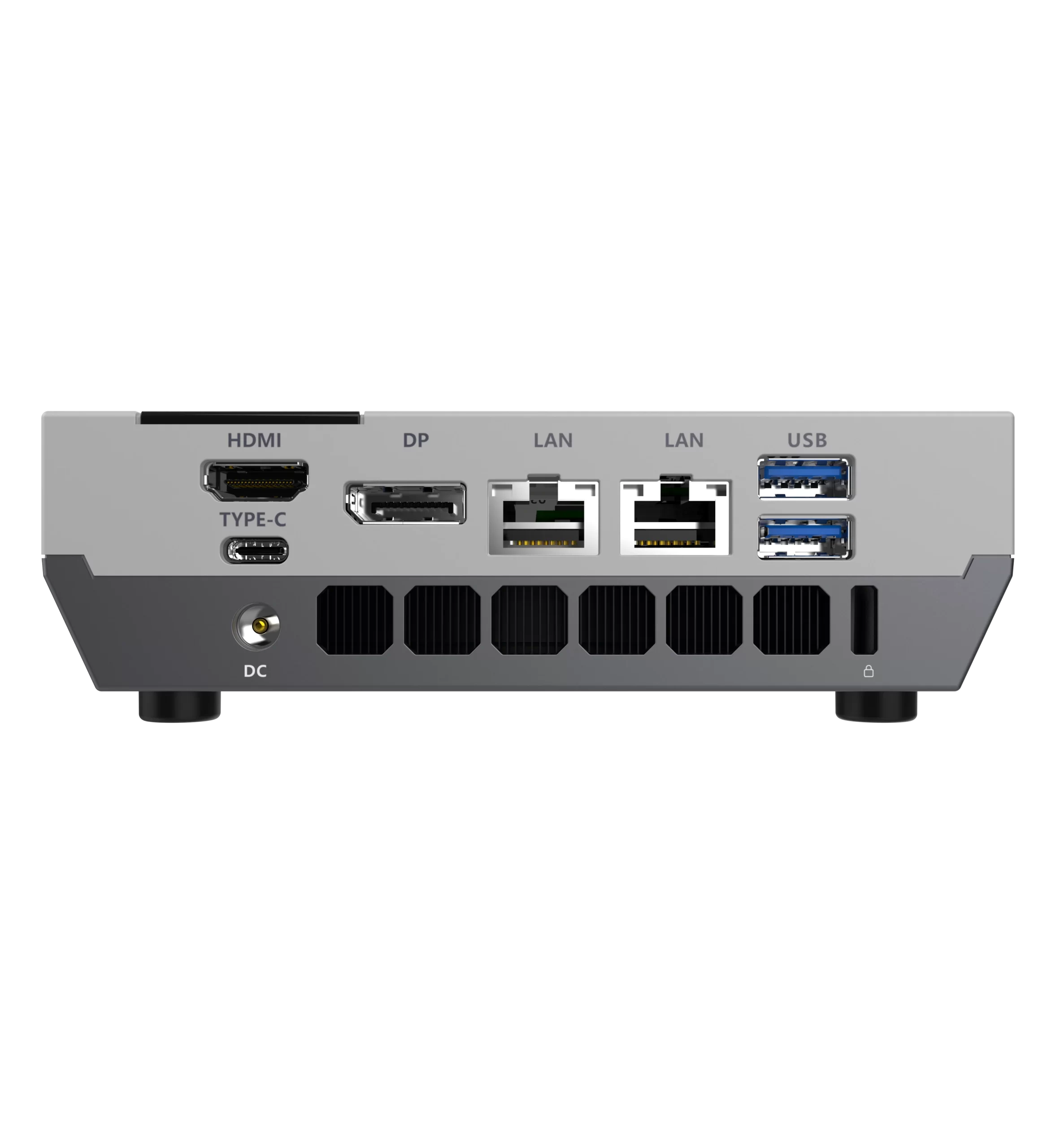
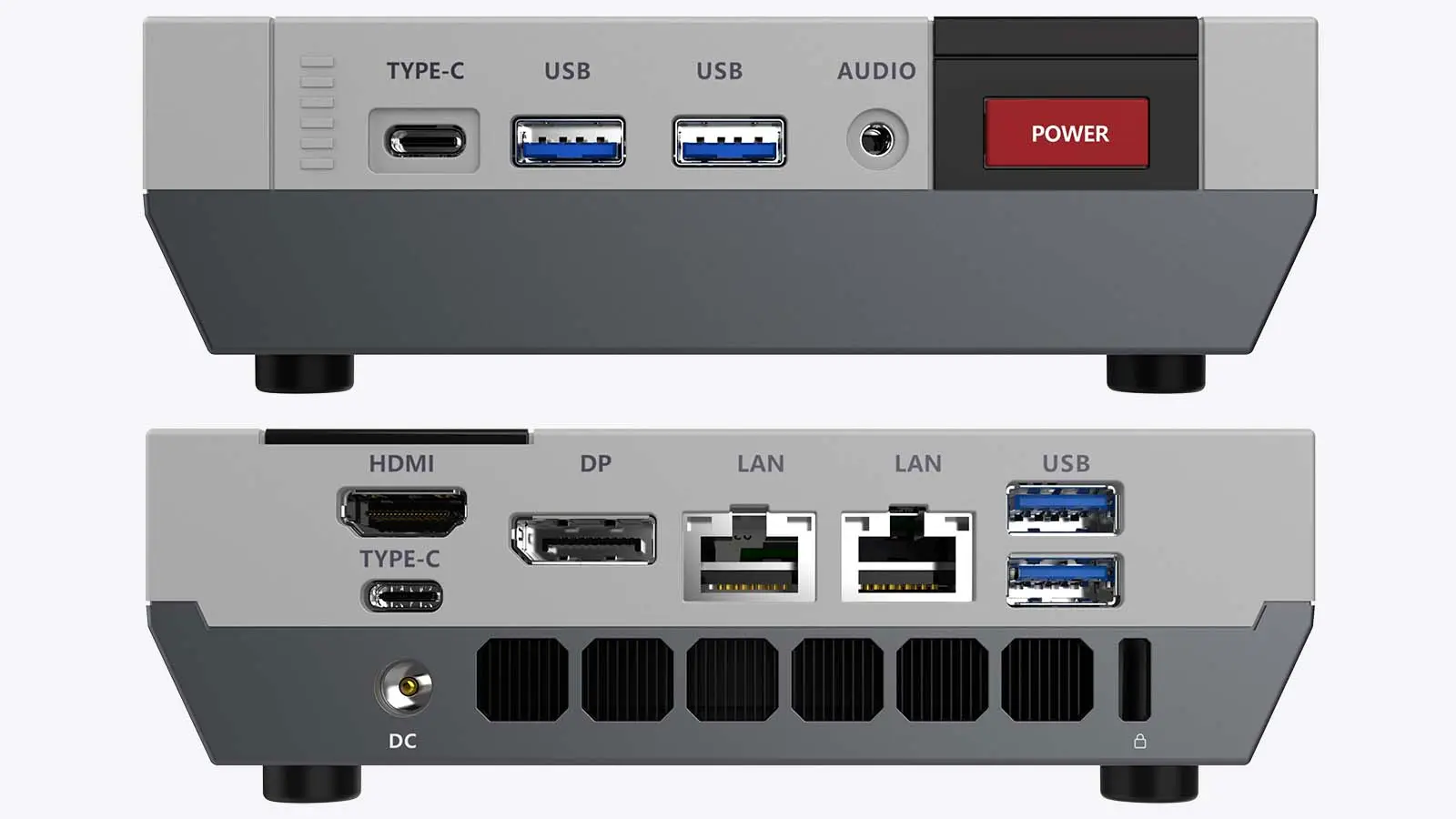
The Retro X5’s connectivity specification would be competitive in any conventional HX 370 mini PC, and the fact that it achieves this inside a NES-inspired chassis without visible compromise is worth noting explicitly:
Display outputs: HDMI 2.1 (8K@60Hz), DisplayPort 2.0 (8K@60Hz), and two USB4 ports with DisplayPort Alt Mode (8K@60Hz each) — four simultaneous 8K displays, surpassing competitors like the Beelink SER9 Pro (three displays, 4K@240Hz maximum) and matching the GEEKOM A9 Max’s quad-display capability.
Networking: Network options include dual 2.5 Gb Ethernet, WiFi 7, and Bluetooth 5.4. Dual 2.5 GbE is particularly notable — the Beelink SER9 Pro provides only a single 2.5 GbE port, which is a meaningful limitation for NAS-connected setups or multi-network configurations.
Power Delivery: The front USB4 port supports 100W Power Delivery input, meaning the Retro X5 can be operated entirely from a 100W USB-C power bank or hub. With a TDP of 65W, the Retro X5 is surprisingly efficient for the power it delivers. For context, a mid-range gaming laptop consumes between 80 and 150W; this mini PC offers comparable performance while consuming significantly less.
eGPU: External GPU support via USB4 provides a discrete graphics upgrade path for users who eventually find the Radeon 890M’s performance ceiling.
Fresh Air Cooling System 3.0: Engineering That Wears a Costume
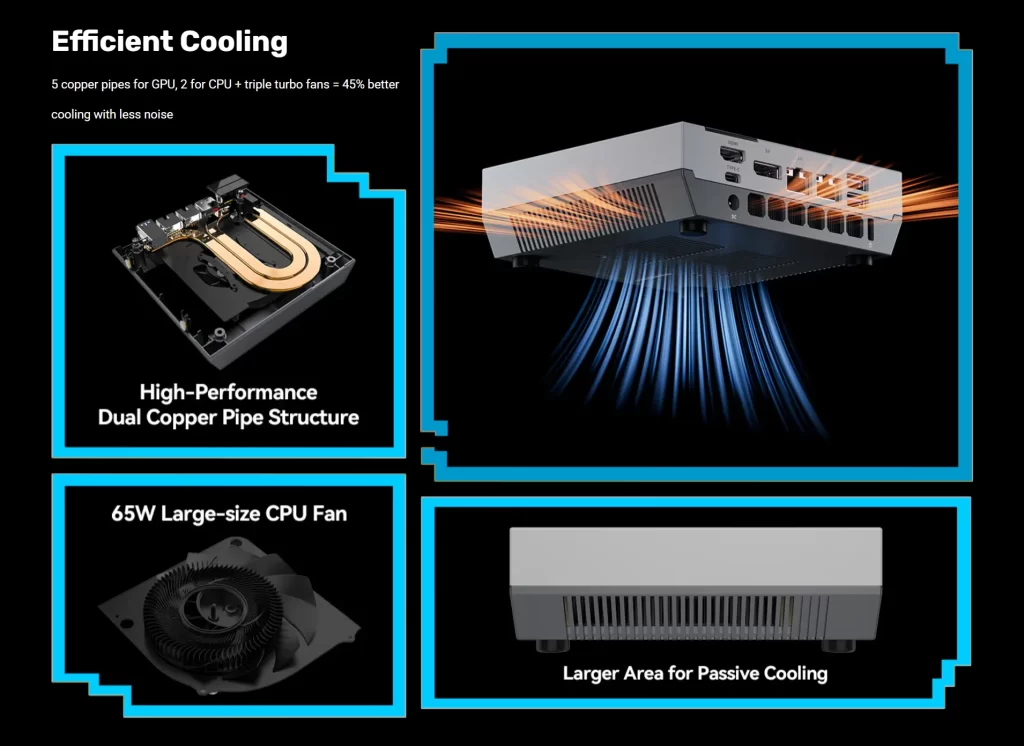
ACEMAGIC says the cooling system uses five copper pipes for the GPU, two for the CPU, and triple turbo fans that together deliver 45 percent better cooling with less noise. The ventilation grilles on the sides of the chassis — which, as noted, deliberately echo the NES aesthetic — are the intake and exhaust paths for this system. Functional design and visual design are working in the same direction rather than against each other, which is the hallmark of genuinely considered industrial design.
The honest caveat here is that sustained thermal performance under prolonged high-TDP loads remains the Retro X5’s primary open question at launch. ACEMAGIC advertises an upgraded cooling solution for the Retro X5, but standardised noise and sustained load temperature metrics have not yet been widely disclosed. Thermals will ultimately determine how effectively the Ryzen AI 9 HX 370 maintains boost clocks under prolonged workloads. The copper heat pipe count and triple-fan configuration are encouraging indicators, but extended benchmark data under sustained AI inference, video rendering, and PS3 emulation loads will tell the complete story as more reviews arrive.
Exploring a New Niche: Where Does the Retro X5 Fit?
This is a question worth addressing directly, because the Retro X5 occupies a position in the market that genuinely did not exist before its arrival.
The mini PC market has established niches: productivity machines (Beelink, GEEKOM, Minisforum standard lines), AI-focused systems (GMKtec EVO-X2, Bosgame M5, GEEKOM A9 Max), gaming-capable mini PCs with discrete GPUs (ACEMAGIC M1A Tank 03), and ultra-compact systems (Beelink Mini S series). What the Retro X5 creates is something different: a design-first AI mini PC with an integrated retro gaming software platform targeting buyers for whom the machine’s personality is as important as its performance metrics.
The closest aesthetic competitors are not other mini PCs at all. They are products like the Ayaneo AM01 — a mini PC with a design inspired by the Game Boy — and the broader category of retro-inspired compact computers from brands like Maingear and GPD. But none of these combines the aesthetic coherence of the Retro X5 with hardware at the HX 370 level and a purpose-built emulation software layer.
Retro design has moved well beyond a simple nod to older players. In 2025 and 2026, it has become one of gaming’s most reliable ways to cut through noise, connect generations, signal identity, and make familiar ideas feel current again. According to ESA’s 2025 data, more than 205 million Americans play video games, the average player is 36, with 28% of players being 50 or older. This gives manufacturers a huge audience who have memories of cartridges, arcades, early PCs and the first wave of home consoles.
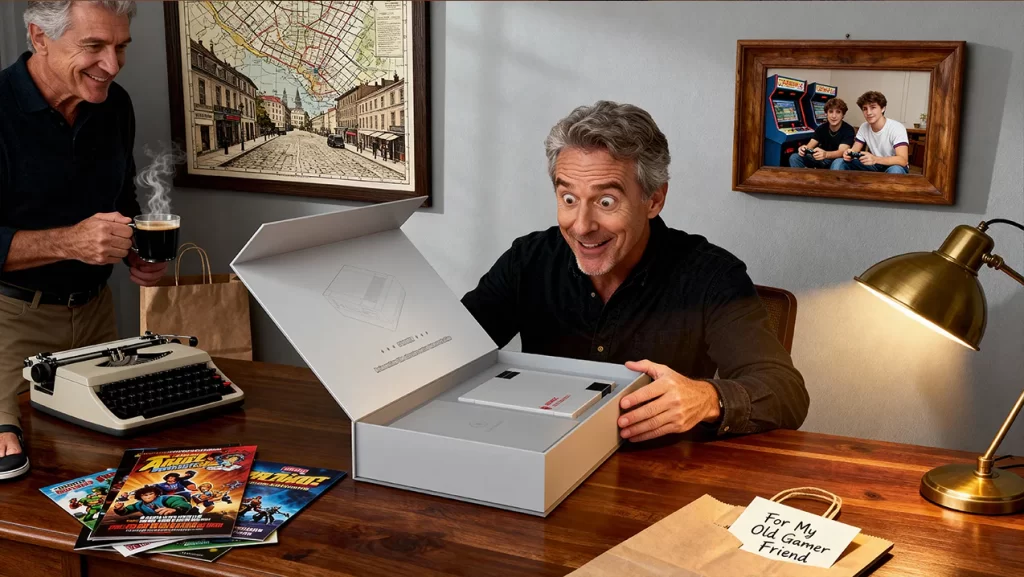
The Retro X5 is reaching directly into that demographic. A 40-year-old buyer who grew up with a NES in the living room, who now has a budget for a premium compact desktop, who wants something capable of running LLM AI models locally and also wants to play Super Mario Bros. 3 upscaled to 4K on a Sunday afternoon — that buyer has never had a product made specifically for them until now. The Retro X5 is not just a mini PC with a retro skin. It is the first product to coherently address this intersection of nostalgia, modern computing power, and retro gaming capability as a unified design brief.
Price, Warranty, and Value
At approximately $940 for the 32 GB / 1 TB configuration, the Retro X5 sits above entry-level and mid-range mini PCs but below many competing HX 370 systems when premium features are factored in — particularly the tool-free upgrade path, the dual 2.5 GbE, the 65W TDP configuration, the RetroPlay Box software, and the unique design language that no price comparison can fully capture.
ACEMAGIC backs the Retro X5 with a two-year warranty and a 30-day money-back guarantee. Both commitments are meaningful in a market where warranty support is inconsistent. The 30-day return window in particular reduces the risk for buyers who are uncertain whether the design will work for their desk setup.

The Verdict: Hardware Can Be Fun Again
The ACEMAGIC Retro X5 makes a strong impression because it understands something many small PCs forget: hardware can be fun. This is a compact desktop that embraces visual identity without giving up modern relevance. It pairs a genuinely potent AMD APU with upgradeable internals, current-generation connectivity, local AI capability, and a design language that instantly triggers recognition. For buyers who want something more memorable than another anonymous mini box, the Retro X5 looks like one of the more entertaining and potentially compelling compact desktops to surface this year. It is retro on the outside, but under the hood it is unmistakably a 2026 machine.
If you want a mini PC that disappears, buy something else. There are fifty excellent options. If you want one that your guests notice, that your children will ask about, that sits on your desk and tells a story about who you are and what you care about — and that runs every console emulator in existence while simultaneously handling your workday productivity and local AI inference — the ACEMAGIC Retro X5 is the only machine on the market that does all of that.
The NES launched in North America in October 1985. Forty years later, a machine wearing its face contains twelve processor cores, fifty TOPS of dedicated neural compute, and can run PlayStation 3 games upscaled to 4K. That is not nostalgia. That is progress wearing a very good costume.

| Configuration Options | ||||||||||||||||||||||||
|---|---|---|---|---|---|---|---|---|---|---|---|---|---|---|---|---|---|---|---|---|---|---|---|---|
|
||||||||||||||||||||||||
| AI Capabilities | ||||||||||||||||||||||||
|
||||||||||||||||||||||||
| Processor | ||||||||||||||||||||||||
|
||||||||||||||||||||||||
| Ports | ||||||||||||||||||||||||
|
||||||||||||||||||||||||
| Network | ||||||||||||||||||||||||
|
||||||||||||||||||||||||
| GPU | ||||||||||||||||||||||||
|
||||||||||||||||||||||||
| Internal Ports | ||||||||||||||||||||||||
|
||||||||||||||||||||||||
| Storage & RAM | ||||||||||||||||||||||||
|
||||||||||||||||||||||||
| Power | ||||||||||||||||||||||||
|
||||||||||||||||||||||||
| Others Specifications | ||||||||||||||||||||||||
|
||||||||||||||||||||||||
| Specification | ||||||||||||||||||||||||
|
||||||||||||||||||||||||





More information: ACEMAGIC Retro X5 on minis-pc.com
Discover our full Mini PC comparison: minis-pc.com
Article written for minis-pc.com — Mini PC Comparisons and Reviews