
GMKtec NucBox K12 Mini PC AMD Ryzen™ 7 H 255





$879.99
 Amazon.com
| Processor | 8 |
|---|---|
| RAM | 8.2 |
| Hard Disk | 9.5 |
| Connectivity | 9 |
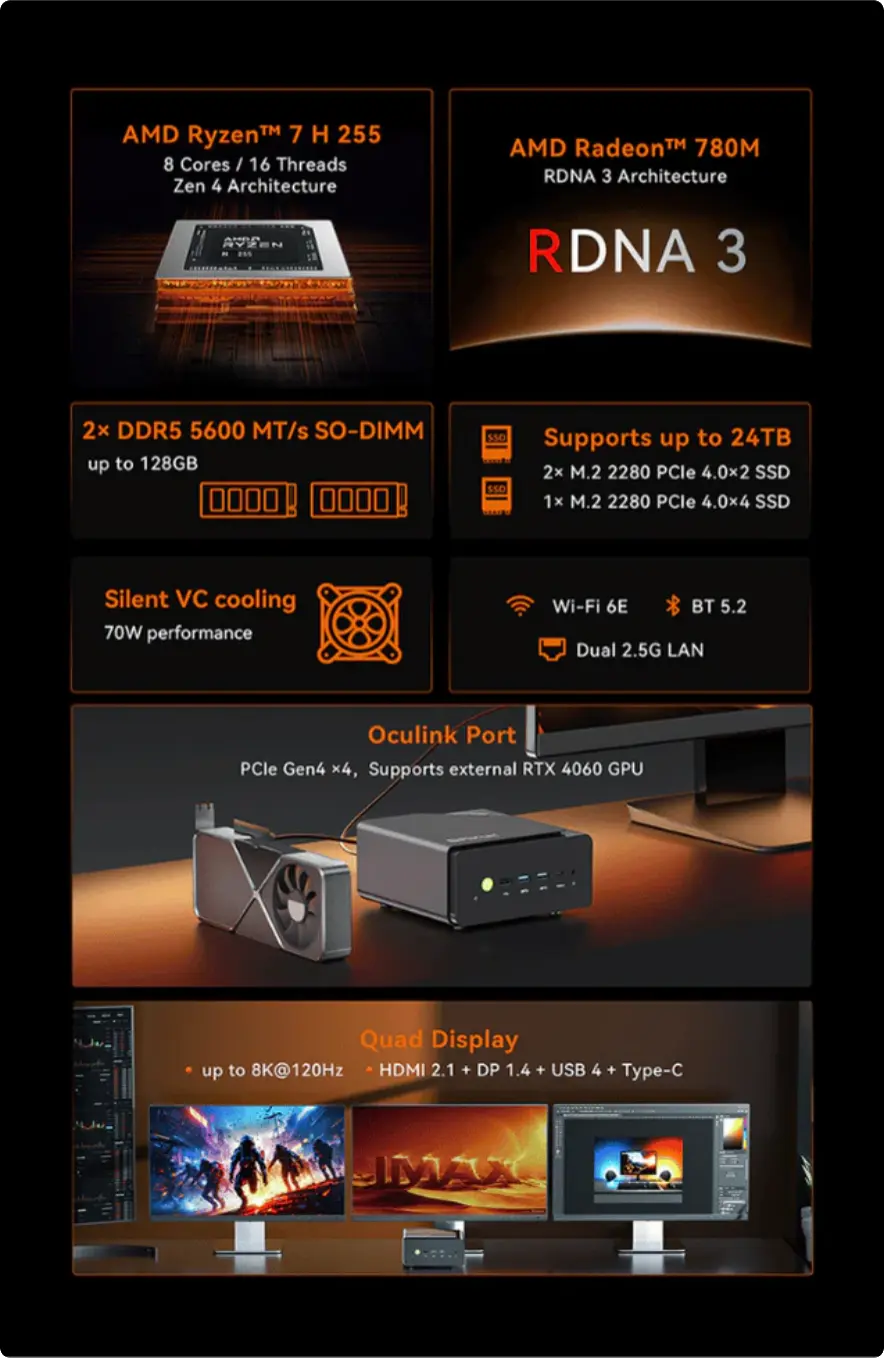
GMKtec NucBox K12 — Gaming Mini PC with AMD Ryzen™ 7 H 255 (Hawk Point, Zen 4). 8 cores / 16 threads up to 4.9 GHz. No NPU — not a Copilot+ PC. AMD Radeon™ 780M — 12 RDNA 3 CUs at 2.6 GHz — FSR 3 + Frame Generation + AFMF2. 32 GB DDR5-5600 SO-DIMM UPGRADEABLE (2 slots, up to 96 GB). 3× M.2 2280 PCIe 4.0 — up to 24 TB total storage. OCuLink PCIe 4.0 ×4 for eGPU. 1× USB4 40 Gbps. Quad display: HDMI 2.1 (8K) + DP 1.4 + USB4 + USB-C. Dual 2.5 GbE. Wi-Fi 6E + BT 5.2. 3 performance modes: Silent 35W / Balanced 45W / Performance 65W. Dual-fan vapor chamber cooling. RGB lighting. Red Dot Award 2025 winner. Vertical stand built-in. 195 × 195 × 48 mm. ~1.58 L. From $409.

$879.99
GMKtec NucBox K12 Mini PC AMD Ryzen™ 7 H 255 Prices

Price History
| Price history for GMKtec K12 Gaming Mini PC Oculink AMD Ryzen 7 H 255 (Upgraded 8745HS) 32GB DDR5 RAM 512GB SSD, Desktop Computer Radeon 780M Graphics, 3X M.2 2280 Storage Expansion, Dual NIC 2.5G, HDMI 2.1, USB4 | |
|---|---|
|
Latest updates:
|
|
Description
GMKtec NucBox K12
Gaming Mini PC — AMD Ryzen™ 7 H 255 + OCuLink + Triple M.2
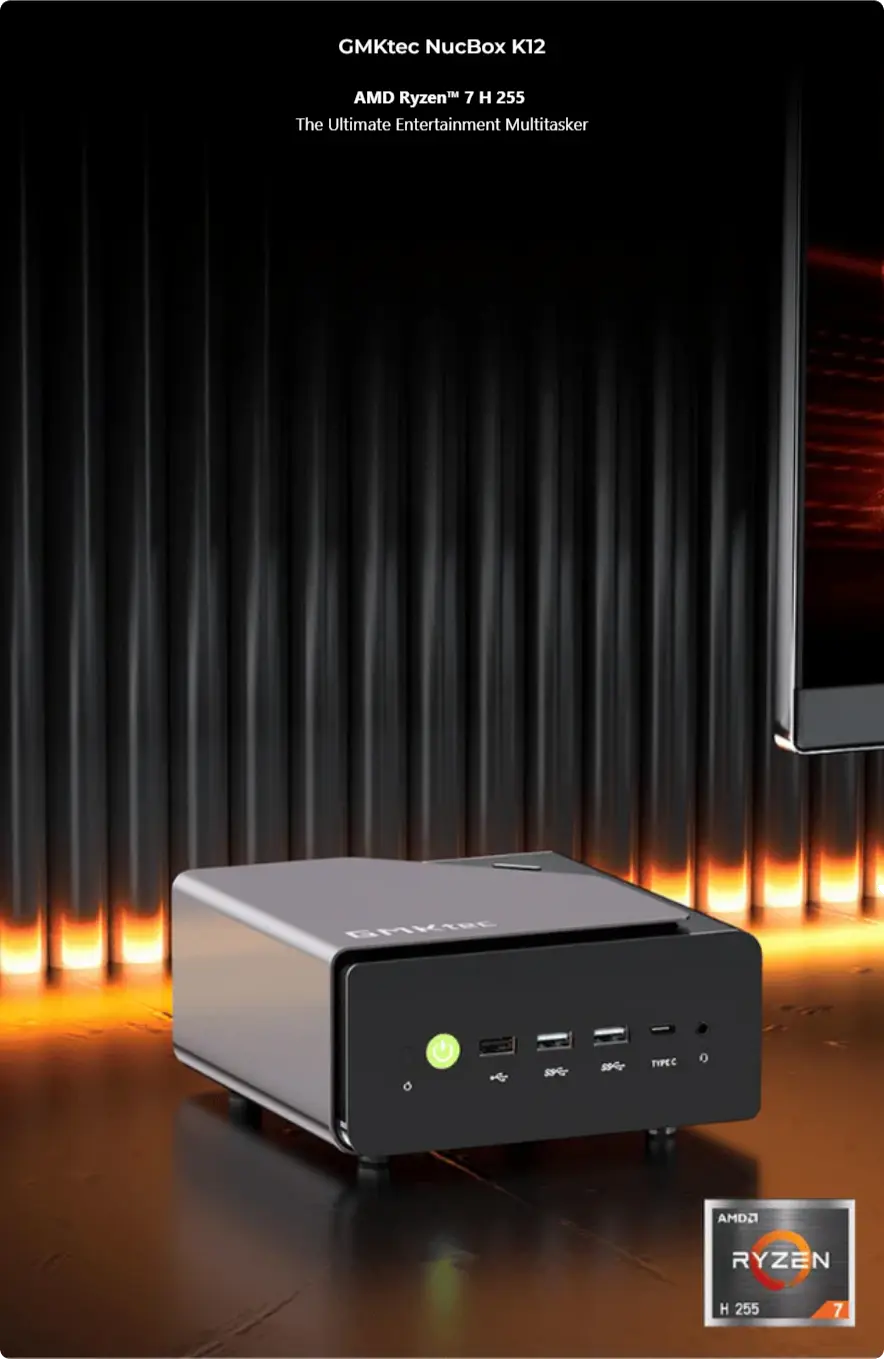
The GMKtec NucBox K12 is one of the most feature-rich gaming mini PCs available at its price point, combining an AMD Ryzen 7 H 255 processor, three M.2 storage slots supporting up to 24 TB, OCuLink PCIe 4.0 ×4 for external GPU support, dual 2.5 Gigabit Ethernet, USB4, and a dual-fan vapor chamber cooling system in a chassis that won the Red Dot Design Award 2025. Co-developed with Red Dot Award-winning designers, the K12 is GMKtec’s most ambitious compact gaming system, targeting users who want desktop-class connectivity and expandability in a form factor that fits on any desk. WCCFTech reviewed the K12 as “strong specs and IO for just $409 US,” noting its compelling combination of processor performance, storage flexibility, and connectivity breadth at an accessible price point.
One important technical clarification before purchase: the Ryzen 7 H 255 is a China-market-specific processor that is functionally equivalent to the Ryzen 7 8745HS but with the NPU disabled, CPU boost reduced from 5.1 GHz to 4.9 GHz, and GPU clock reduced from 2.7 GHz to 2.6 GHz. This means the K12 is not a Copilot+ PC and does not support Windows 11 AI features such as Recall or live AI caption translation. For the K12’s primary audience of gaming enthusiasts, creative professionals, and power users who want maximum storage and connectivity rather than AI acceleration, this distinction has no practical impact on day-to-day use.
| GMKtec NucBox K12 — AMD Ryzen™ 7 H 255 | |
|---|---|
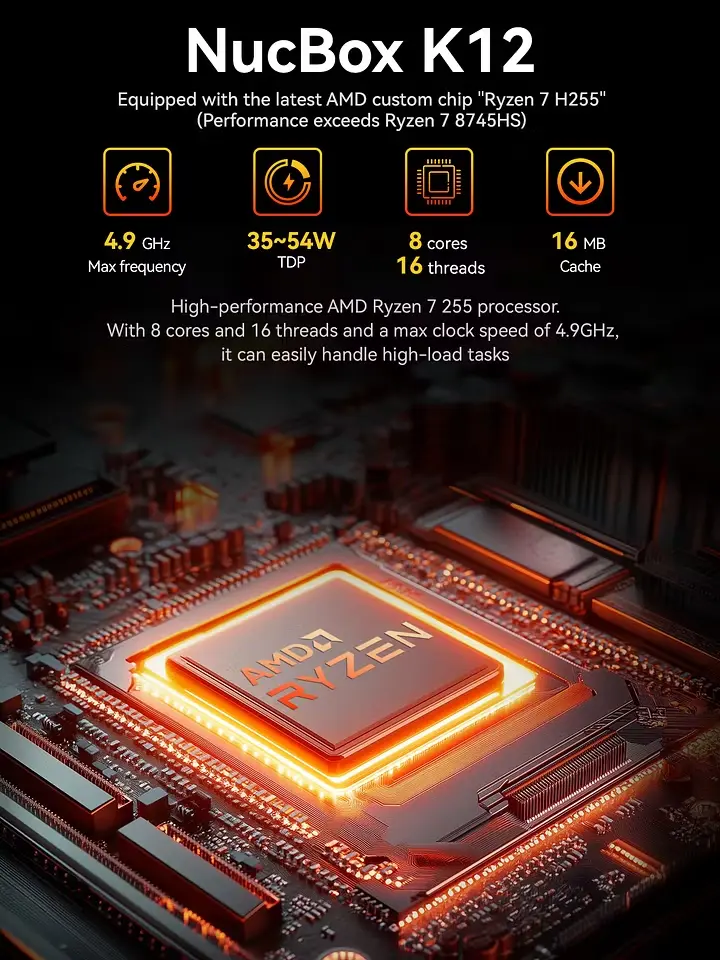
| CPU | AMD Ryzen™ 7 H 255 (Hawk Point — Zen 4) — 3.8 GHz base, up to 4.9 GHz boost — 8 Cores / 16 Threads — 24 MB Cache (L2: 8 MB + L3: 16 MB) — 4 nm TSMC — TDP: Silent 35W / Balanced 45W / Performance 65W. No NPU — not a Copilot+ PC. |
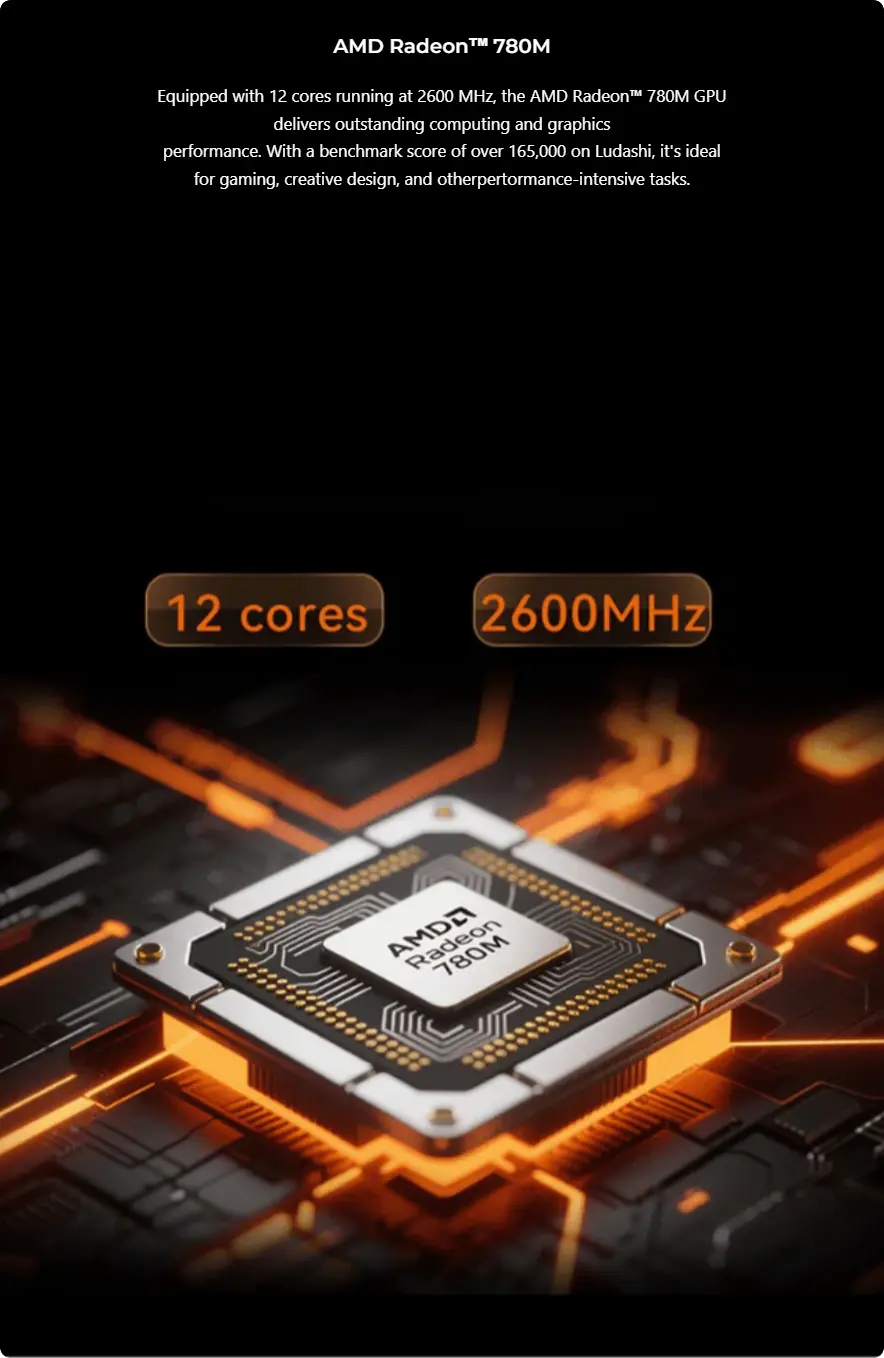
| GPU | AMD Radeon™ 780M — 12 RDNA 3 Compute Units — up to 2.6 GHz — DirectX 12 Ultimate — FSR 3 + Frame Generation + AFMF2 — AV1 encode/decode |
| Memory | 32 GB DDR5-5600 MHz Dual Channel (2× SO-DIMM slots — expandable up to 96 GB — fully user-upgradeable) |
| Storage | 1 TB M.2 2280 PCIe 4.0 ×4 NVMe SSD (primary) + 2× M.2 2280 PCIe 4.0 ×2 NVMe slots (secondary — empty) — up to 24 TB total |
| Storage Expansion | 2× M.2 2280 PCIe 4.0 ×2 NVMe slots (secondary — empty) — up to 16 TB additional storage |
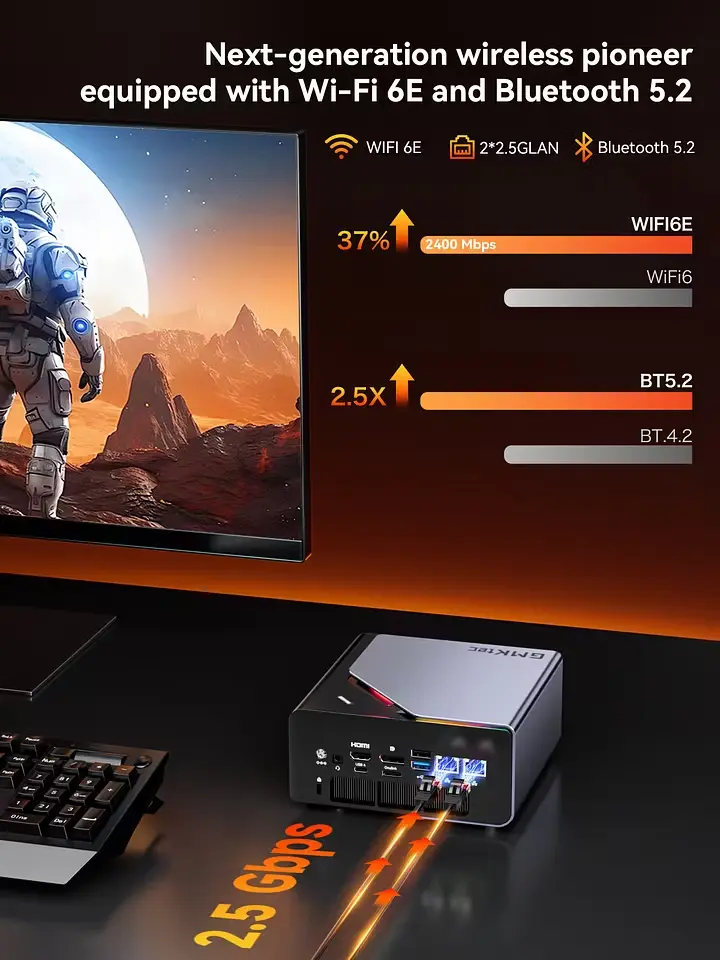
| Wireless Connectivity | Wi-Fi 6E (802.11ax) — tri-band 2.4 GHz + 5 GHz + 6 GHz + Bluetooth 5.2 |
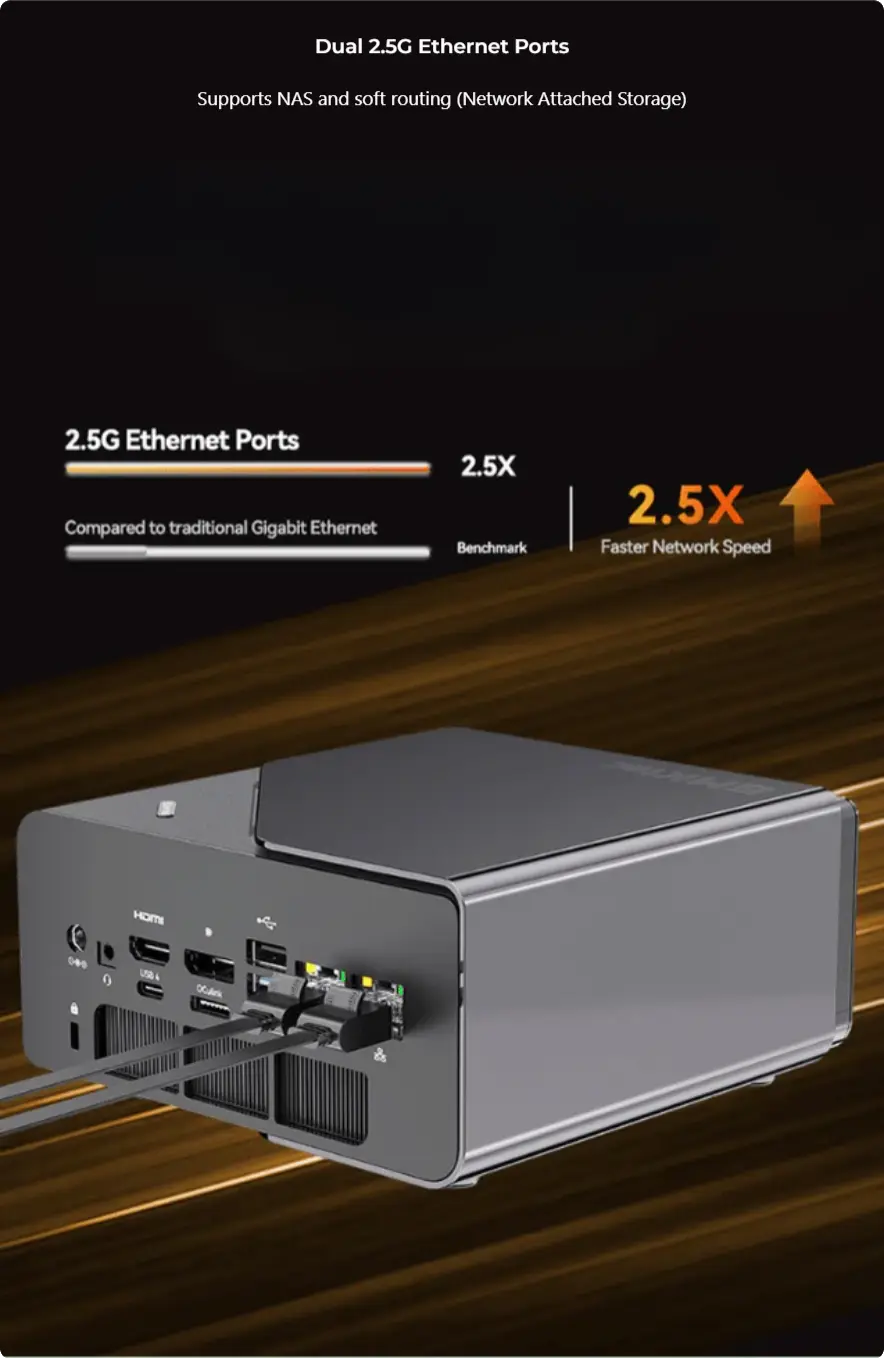
| Ethernet | 2× 2.5 Gigabit Ethernet Ports (dual independent networks) |
| Video Output |
|
| Audio Output | 2× 3.5mm combo audio jack (1× front, 1× rear) |
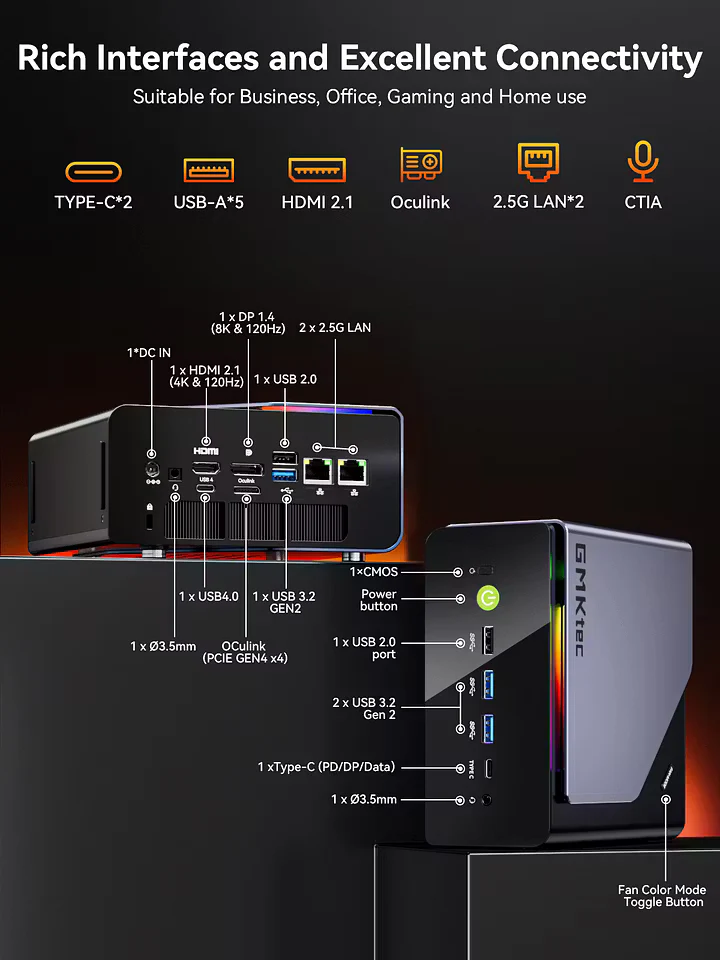
| Ports & Buttons | Front:
Rear: 1× HDMI 2.1 1× DisplayPort 1.4 1× USB4 (40 Gbps, DP Alt Mode / Data) 1× USB 3.2 Gen2 Type-A (10 Gbps) 1× USB 2.0 Type-A · 2× RJ45 2.5 GbE 1× OCuLink PCIe 4.0 ×4 1× 3.5mm audio jack DC power input (19.5V) |
| Performance Modes | Silent ~35W / Balanced ~45W / Performance ~65W — switchable via hardware button or software |
| System | Windows 11 Pro (pre-installed) — Barebone option available (no RAM / no SSD / no OS) |
| Product Dimension | 195 × 195 × 48 mm — Volume: ~1.58 L — Weight: ~1.1 kg (without power adapter) |
| Power | DC 19.5V — 120W external power adapter (included) — TDP: 35W Silent / 45W Balanced / 65W Performance |
Processor — AMD Ryzen™ 7 H 255: Zen 4, 65W, Eight Cores at 4.9 GHz
The Ryzen 7 H 255 is based on AMD’s Zen 4 architecture and TSMC’s 4 nm process node, delivering eight cores and sixteen threads with a boost frequency of 4.9 GHz. While technically distinct from the 8845HS — with a disabled NPU and slightly reduced clock ceilings — the H 255 shares the same Zen 4 core design and delivers comparable CPU throughput in the workloads that matter for gaming and content creation. The K12’s most significant processor differentiation is its 65W Performance TDP mode — substantially higher than the 45–54W that most competing Hawk Point mini PCs operate at, and one that provides meaningfully more sustained CPU and GPU performance under heavy load. In WCCFTech’s sustained benchmark testing, the K12 maintained boost clocks without throttling for extended periods, demonstrating that the vapor chamber cooling system can sustain the higher power envelope without thermal compromise. In gaming benchmarks including Baldur’s Gate 3 and Borderlands 3, the 65W mode produced noticeably higher frame rates than the same chip operating at 45W in competing systems.
- 8 cores / 16 threads (Zen 4 — Hawk Point)
- Base 3.8 GHz — Boost up to 4.9 GHz
- L2 Cache: 8 MB | L3 Cache: 16 MB
- 4 nm TSMC process node
- TDP: 35W Silent / 45W Balanced / 65W Performance
- No NPU — not a Copilot+ PC
Graphics — AMD Radeon™ 780M: RDNA 3, FSR 3, Frame Generation, AFMF2
The integrated Radeon 780M GPU features 12 RDNA 3 compute units running at up to 2.6 GHz. In the K12’s 65W Performance mode, the GPU has access to more power than in standard Hawk Point configurations, which translates to higher sustained GPU clock speeds and better frame rates in gaming benchmarks. The RDNA 3 architecture supports FSR 3 with Frame Generation and AMD Fluid Motion Frames 2 (AFMF2), which can multiply effective frame rates in supported titles beyond what the underlying rendered frame rate would produce — making the Radeon 780M more capable for gaming than its compute unit count alone suggests. Hardware AV1 encode and decode through AMD’s media engine accelerates video workflows in DaVinci Resolve, Handbrake, and streaming applications. For users who find the 780M’s iGPU ceiling insufficient, the OCuLink port provides direct PCIe 4.0 ×4 connectivity to a discrete external GPU — with GMKtec’s own eGPU dock (GVP7600) or any compatible third-party enclosure — delivering near-native discrete GPU performance without the protocol overhead of USB4 or Thunderbolt eGPU solutions.
Triple M.2 PCIe 4.0 — Up to 24 TB of NVMe Storage
The K12’s three M.2 2280 slots are its most distinctive storage specification. The primary slot runs at PCIe 4.0 ×4, delivering sequential read speeds exceeding 6,000 MB/s. The two secondary slots run at PCIe 4.0 ×2, providing sequential read speeds of approximately 3,000–4,000 MB/s each — fast enough for secondary storage, game libraries, and video project files without the latency of mechanical drives. Each slot supports drives up to 8 TB, giving a theoretical maximum of 24 TB of internal NVMe storage. For video editors working with large raw footage libraries, developers maintaining multiple VM environments, or photographers archiving large collections, this storage density in a 1.58-litre chassis is genuinely exceptional and unavailable in most competing mini PCs. A barebone version allows buyers to supply their own RAM, storage, and OS configuration.
OCuLink PCIe 4.0 ×4 — Genuine eGPU Upgrade Path
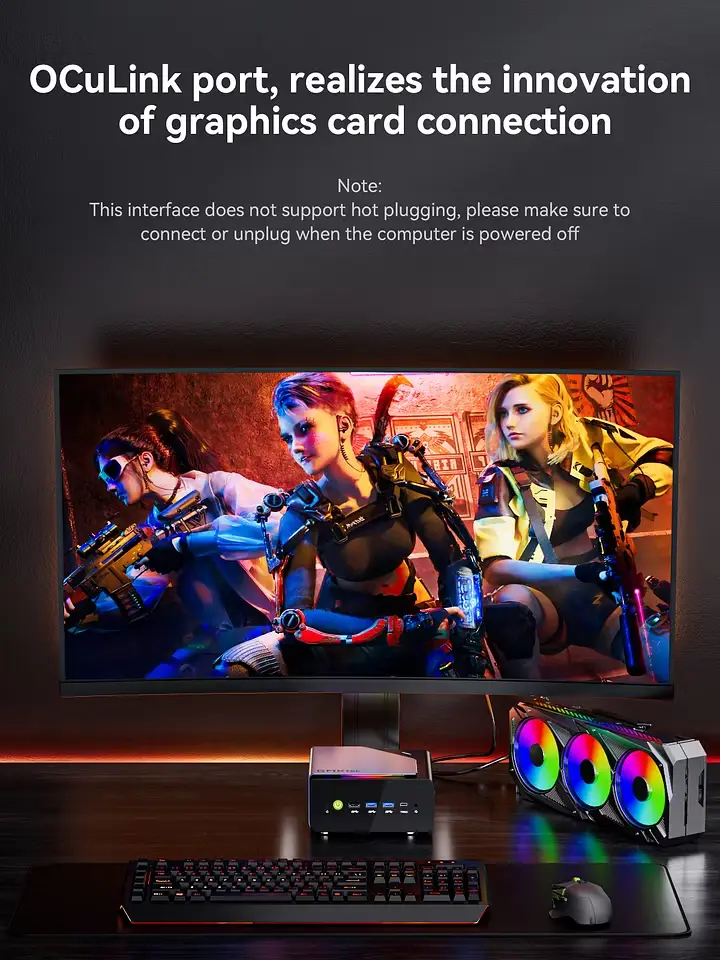
The OCuLink port delivers PCIe 4.0 ×4 bandwidth — a direct electrical connection that provides dramatically higher throughput than USB4 or Thunderbolt eGPU solutions, which introduce protocol conversion overhead. Connected to GMKtec’s GVP7600 dock (which includes an AMD Radeon RX 7600M XT GPU alongside additional storage), the K12 transforms from a capable iGPU gaming system into a machine competitive with mid-range discrete GPU desktop builds. In GMKtec’s own published testing, the frame rate improvement from connecting the OCuLink eGPU in Baldur’s Gate 3 and Borderlands 3 was substantial — moving from playable-but-limited iGPU performance to smooth gaming at higher settings. Third-party enclosures accepting full-size cards are also compatible, making the upgrade path flexible and future-proof as GPU generations advance.

Vapor Chamber Cooling — Dual Fan, 65W Sustained, Near-Silent at Idle
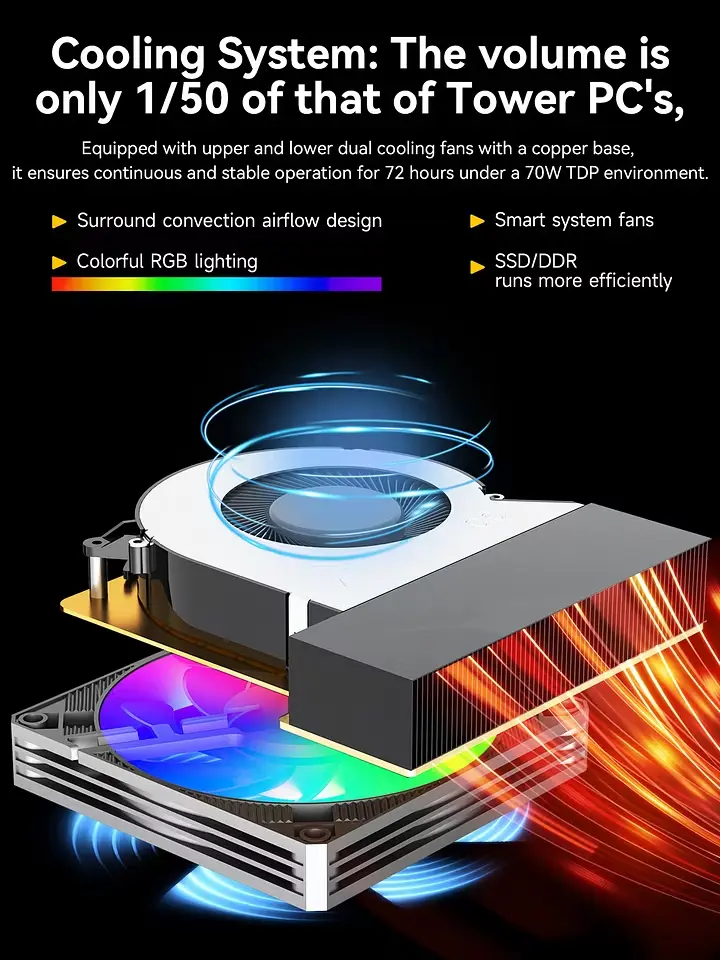
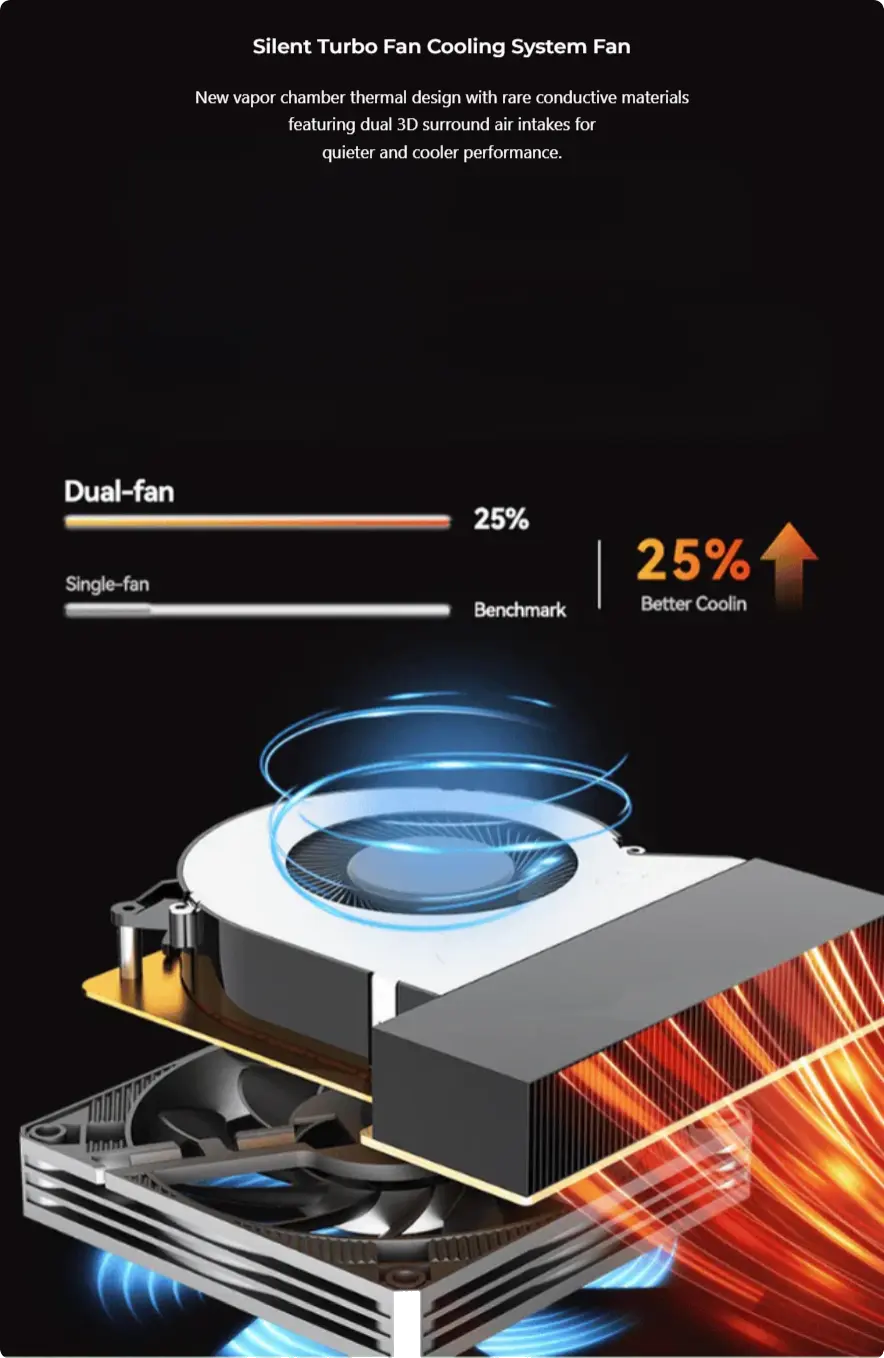
The K12’s cooling system uses a vapor chamber heat spreader directly contacting the CPU/GPU die, dual copper heat pipes conducting heat to aluminium fin stacks, and two independent high-speed fans exhausting through perforations on the top and rear panels. This configuration is designed specifically to sustain the 65W Performance TDP for extended periods — the cooling challenge that differentiates the K12 from competing Hawk Point mini PCs that limit TDP to 45–54W due to thermal constraints. In WCCFTech’s sustained load testing, the K12 maintained stable temperatures without throttling under the Performance profile. At the Silent 35W profile, the fans operate at low speeds and are effectively inaudible at desk distance. At the Balanced 45W profile, fan noise is low and consistent with a quiet home office environment. At the Performance 65W profile under sustained gaming or rendering load, fans become audible but remain within acceptable levels for a gaming scenario where headphones or external speakers mask them. A dedicated CLR CMOS button on the front panel provides convenient access to BIOS reset functionality without opening the chassis.

Connectivity — USB4, Dual 2.5 GbE, Wi-Fi 6E
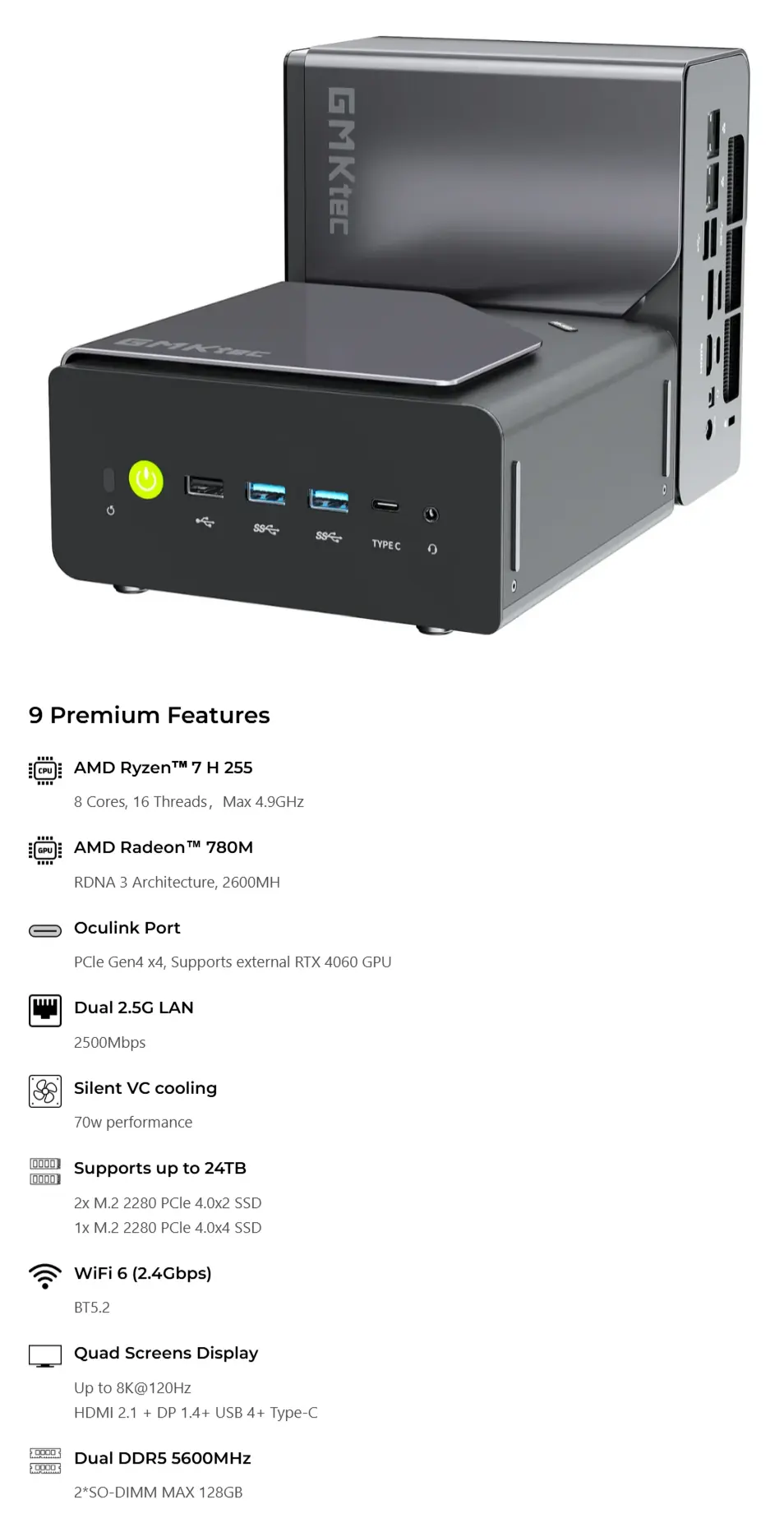
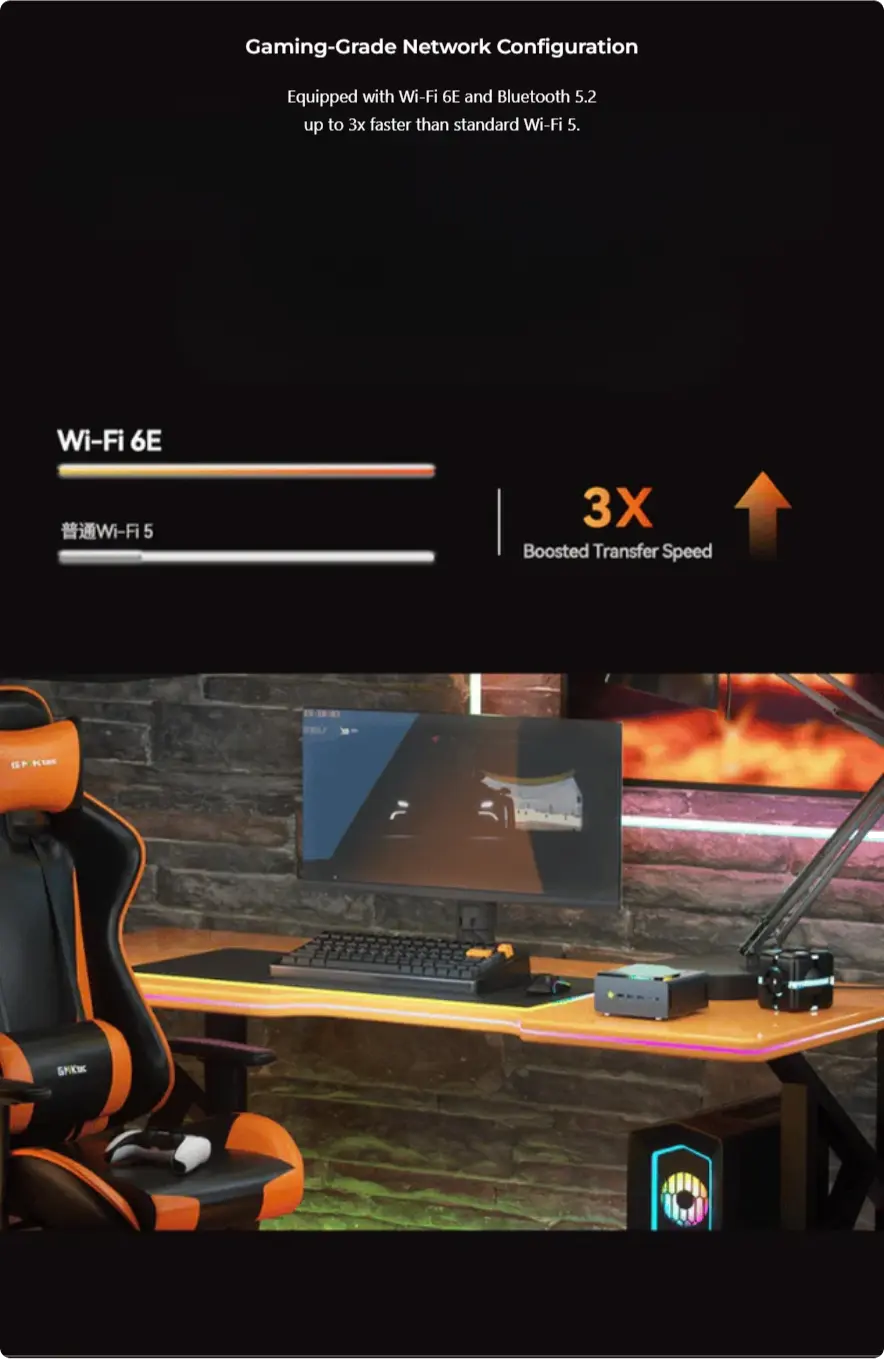
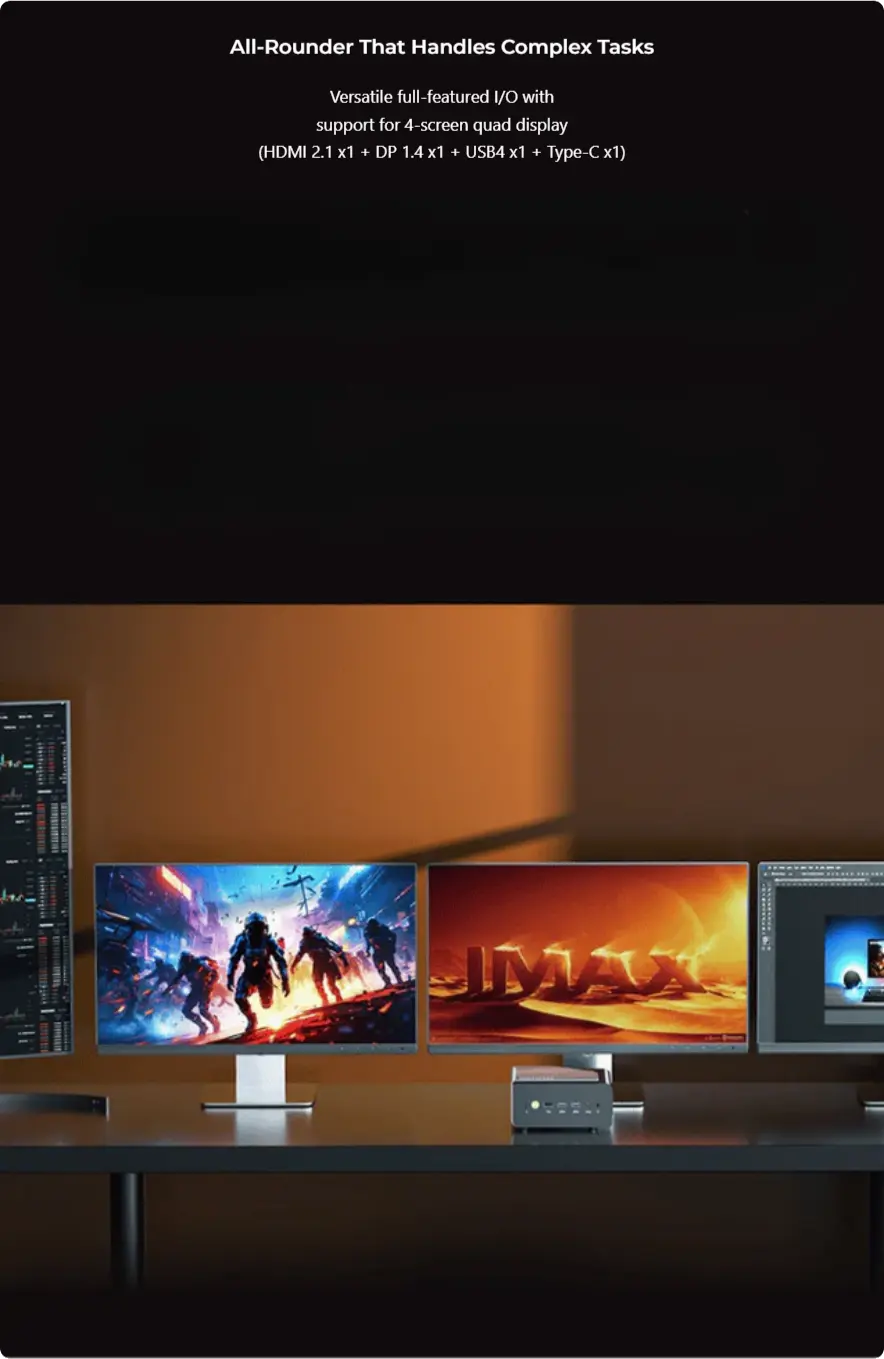
The K12’s connectivity specification is the second area where it significantly outpaces competing mini PCs at its price. The rear-panel USB4 port delivers 40 Gbps with DisplayPort Alt Mode for 8K display output — independent of the OCuLink port, so both can be used simultaneously for different purposes. Dual 2.5 Gigabit Ethernet ports on the rear panel provide simultaneous connection to two separate wired networks — useful for NAS direct-attach at 2.5 Gbps, home lab network isolation, or link aggregation on compatible switches. Wi-Fi 6E with tri-band support including the 6 GHz band covers wireless connectivity. A USB-C 3.2 Gen2 port on the front panel with DisplayPort Alt Mode provides a fourth display output alongside HDMI 2.1, DisplayPort 1.4, and USB4 — enabling quad simultaneous display configurations for multi-monitor productivity or gaming setups.
Design — Red Dot Award 2025, RGB, Built-In Vertical Stand
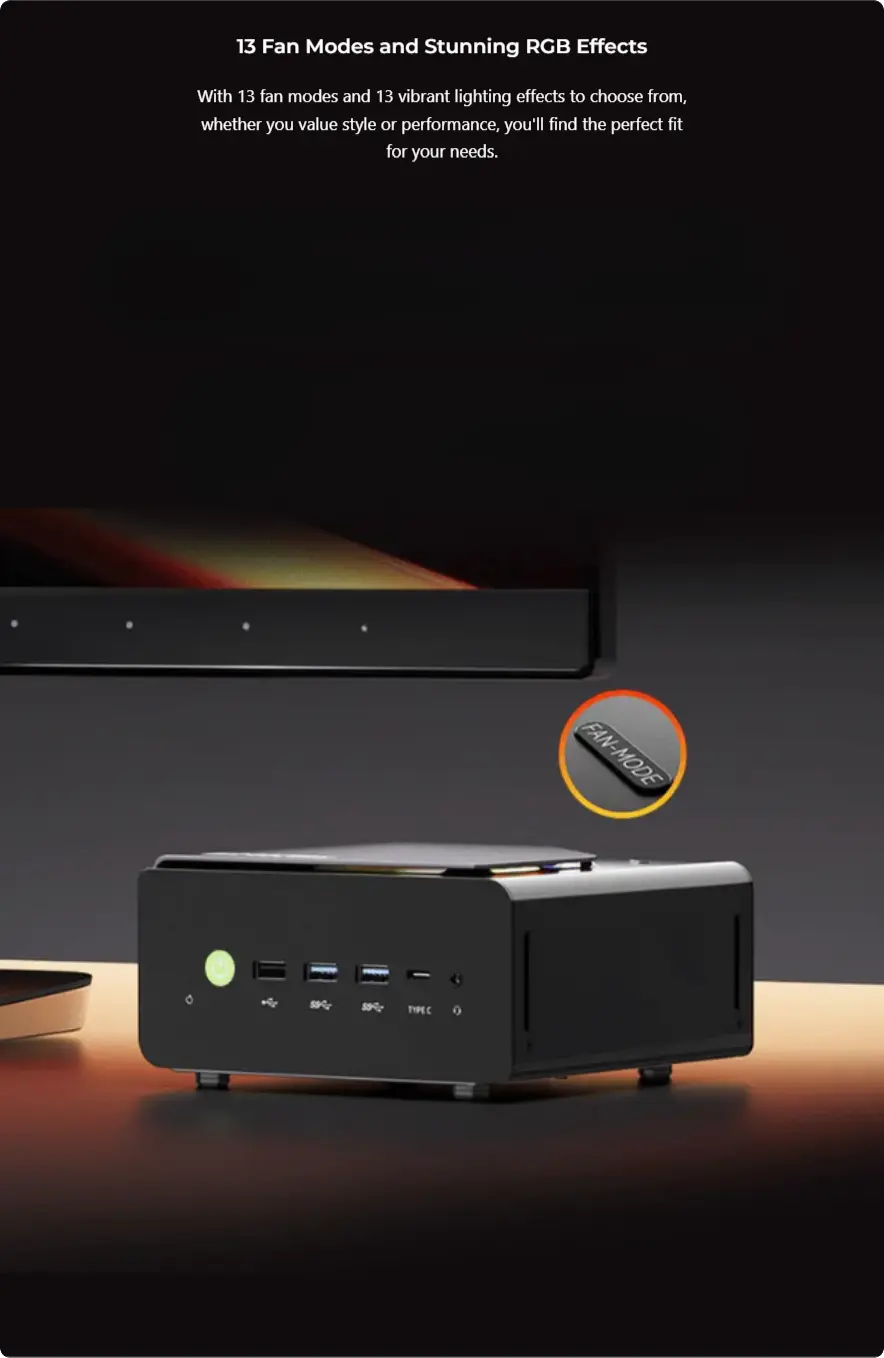
The K12’s chassis design, co-developed with Red Dot Award 2025-winning designers, uses a metal wrap over a reinforced plastic chassis — giving a noticeably more premium tactile feel than GMKtec’s previous all-plastic designs. The dual-tone construction with metallic accents creates a visual distinction from the anonymous boxes that characterise most competing mini PCs. An RGB lighting strip on the front panel can be configured through GMKtec’s companion software. The most practical design innovation is the built-in vertical stand: rubber feet on the right side of the chassis allow it to stand upright without any accessories, improving airflow through the top exhaust vents and reducing the footprint on smaller desks. This eliminates the need for the separate vertical stands that many competing mini PCs require for upright placement. At 195 × 195 × 48 mm and approximately 1.1 kg, the K12 is larger than competing Hawk Point mini PCs — the Beelink SER9 Pro’s 0.82-litre chassis compares to the K12’s 1.58 litres — a trade-off that enables the triple M.2 configuration and larger vapor chamber cooling system.
Complete Port Layout
Front:
- 2× USB 3.2 Gen2 Type-A (10 Gbps)
- 1× USB-C 3.2 Gen2 (10 Gbps)
- 1× USB 2.0 Type-A
- 1× 3.5mm combo audio jack
- Power button · CLR CMOS button · RGB lighting strip
Rear:
- 1× HDMI 2.1 (8K@60Hz)
- 1× DisplayPort 1.4 (4K@60Hz)
- 1× USB4 (40 Gbps, DP Alt Mode / Data)
- 1× USB 3.2 Gen2 Type-A (10 Gbps)
- 1× USB 2.0 Type-A · 2× RJ45 2.5 GbE
- 1× OCuLink PCIe 4.0 ×4
- 1× 3.5mm combo audio jack
- DC power input (19.5V)
Additional information
Specification: GMKtec NucBox K12 Mini PC AMD Ryzen™ 7 H 255
| Configuration Options | ||||||||||||||||||||||||||
|---|---|---|---|---|---|---|---|---|---|---|---|---|---|---|---|---|---|---|---|---|---|---|---|---|---|---|
|
||||||||||||||||||||||||||
| AI Capabilities | ||||||||||||||||||||||||||
|
||||||||||||||||||||||||||
| Processor | ||||||||||||||||||||||||||
|
||||||||||||||||||||||||||
| Ports | ||||||||||||||||||||||||||
|
||||||||||||||||||||||||||
| Network | ||||||||||||||||||||||||||
|
||||||||||||||||||||||||||
| GPU | ||||||||||||||||||||||||||
|
||||||||||||||||||||||||||
| Internal Ports | ||||||||||||||||||||||||||
|
||||||||||||||||||||||||||
| Storage & RAM | ||||||||||||||||||||||||||
|
||||||||||||||||||||||||||
| Power | ||||||||||||||||||||||||||
|
||||||||||||||||||||||||||
| Others Specifications | ||||||||||||||||||||||||||
|
||||||||||||||||||||||||||
| Specification | ||||||||||||||||||||||||||
|
||||||||||||||||||||||||||
Related Products


