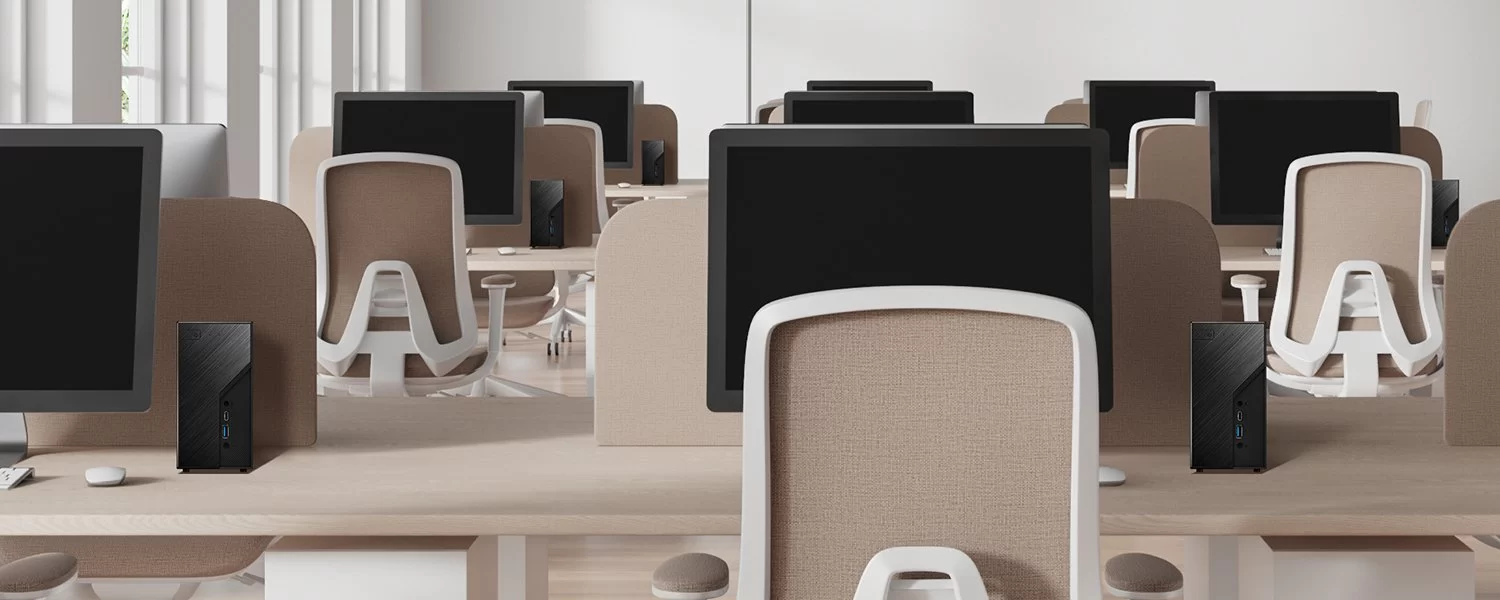

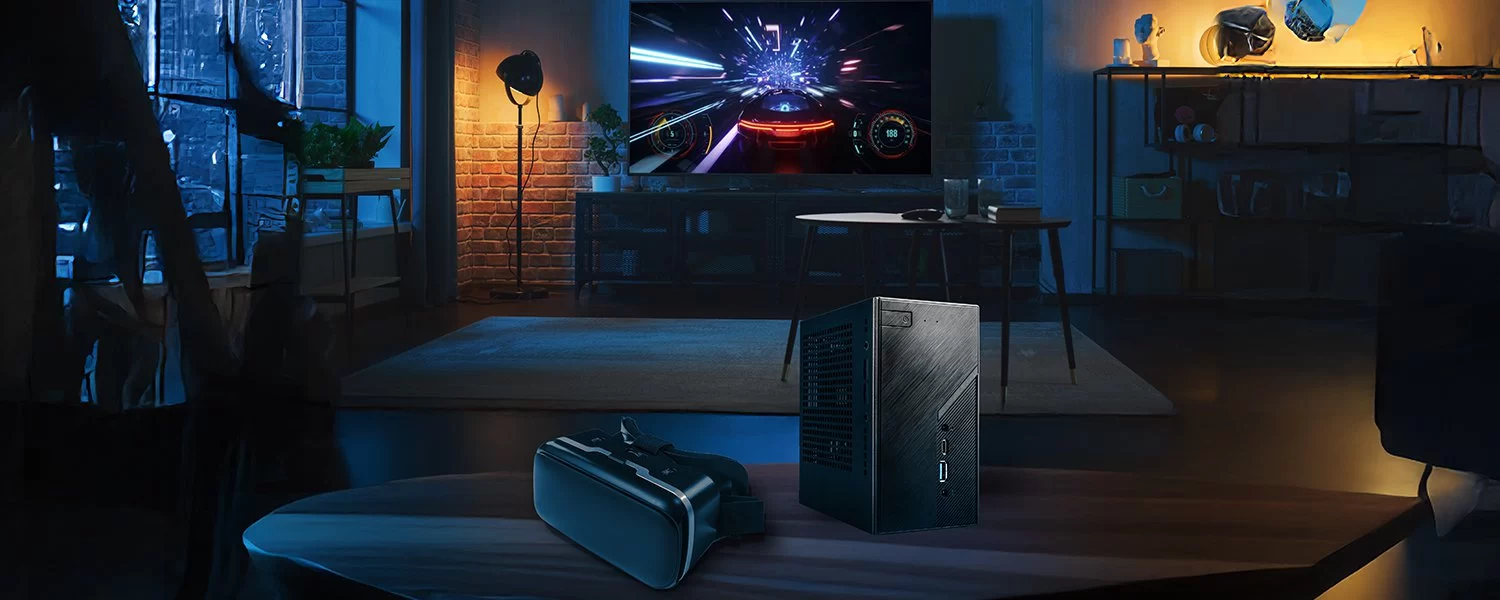
The ASRock DeskMini is one of the few small PCs with a real desktop processor socket. That freedom raises the first question every builder asks: which CPU should I put in it? The answer depends on the model — the DeskMini X600/USB4 uses AMD’s AM5 socket, the DeskMini B860 uses Intel’s LGA1851 — and on what you want to do. This guide explains the limits that matter and recommends the best processors for each use.
| Model | Socket / CPUs | CPU limit | Fast USB-C |
|---|---|---|---|
| ASRock DeskMini X600/USB4 | AMD AM5 (Ryzen 9000 / 8000G / 7000) | Up to 65 W | USB4 with Ryzen 8000G only |
| ASRock DeskMini B860 | Intel LGA1851 (Core Ultra 200S) | Up to 65 W | Thunderbolt 4 with any CPU |
The three rules for both DeskMinis
1. 65 W maximum. ASRock officially supports processors up to 65 W TDP. The cooler must fit under 47 mm and the power adapter is sized accordingly. High-power chips such as the Ryzen 7 9800X3D, Ryzen 9 9950X or Intel’s unlocked “K” models are outside the specification.
2. Integrated graphics are mandatory. There is no slot for a graphics card, so the processor must have an iGPU. Avoid AMD’s “F” models (such as the Ryzen 5 8400F or Ryzen 7 8700F) and Intel’s “F” models: without integrated graphics, the DeskMini has no video output at all.
3. Update the BIOS first. Newer processor generations are added through BIOS updates. If you plan to install a recently released chip, check ASRock’s CPU support list and, if needed, update the BIOS with a supported processor before the swap.
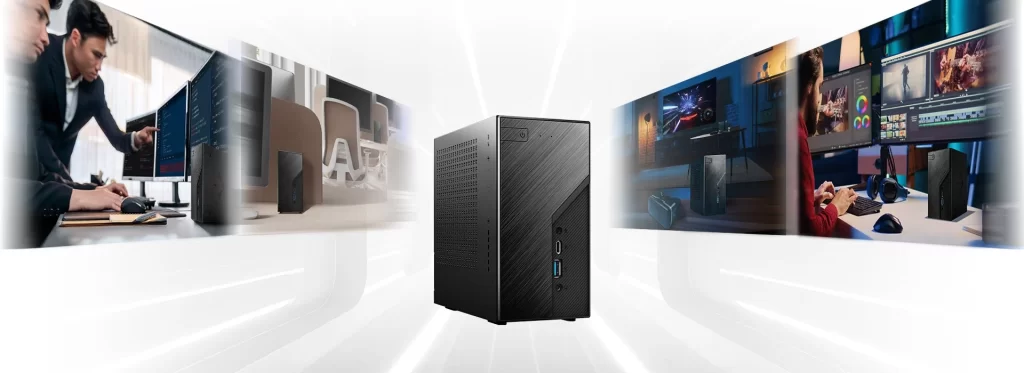
DeskMini X600/USB4: choosing an AM5 Ryzen
| Processor | Cores / threads | Integrated graphics | NPU | Best for |
|---|---|---|---|---|
| Ryzen 5 8500G | 6 / 12 (2 Zen 4 + 4 Zen 4c) | Radeon 740M (4 CU) | No | Cheapest build with USB4 |
| Ryzen 5 8600G | 6 / 12 | Radeon 760M (8 CU) | About 16 TOPS | Balanced office and light gaming build |
| Ryzen 7 8700G | 8 / 16 | Radeon 780M (12 CU) | About 16 TOPS | Best all-rounder: gaming, media and USB4 |
| Ryzen 5 7600 / 9600 | 6 / 12 | Radeon (2 CU) | No | Fast CPU on a budget, basic graphics |
| Ryzen 7 7700 / 9700X | 8 / 16 | Radeon (2 CU) | No | Development, compiling, virtual machines |
| Ryzen 9 7900 / 9900 | 12 / 24 | Radeon (2 CU) | No | Maximum multi-threaded performance at 65 W |
Why the Ryzen 8000G series is the default choice. The 8000G APUs combine Zen 4 cores with much stronger graphics than desktop Ryzen 7000/9000 chips, and on this DeskMini they bring one more benefit: the rear USB4 port only works at 40 Gbps with a Ryzen 8000G. With a Ryzen 7000 or 9000, the same port runs as a 10 Gbps USB 3.2 port. The Ryzen 7 8700G with Radeon 780M is the best all-rounder: it handles 1080p gaming at low to medium settings, video editing and everyday work, and includes a small NPU. The Ryzen 5 8600G is a cheaper option with Radeon 760M graphics.
The trade-off of the 8000G. These APUs support PCIe 4.0 only, so the DeskMini’s first M.2 slot will not run at PCIe 5.0 speeds. In practice, a fast PCIe 4.0 SSD is more than enough for almost everyone.
When to choose a Ryzen 7000 or 9000. If you need maximum CPU performance and do not care about graphics — software development, compiling, virtual machines, number crunching — a Ryzen 9 7900 or 9900 (12 cores at 65 W) turns the DeskMini into a remarkable compact workstation. ASRock notes that PCIe 5.0 on the first M.2 slot requires a Ryzen 7000 processor. Remember that you lose full USB4 and get only basic graphics.
DeskMini B860: choosing a Core Ultra 200S
| Processor | Cores / threads | Integrated graphics | Best for |
|---|---|---|---|
| Core Ultra 5 225 / 225T | 10 / 10 | Intel Graphics | Office, home server, quiet builds (T = 35 W) |
| Core Ultra 5 245 / 245T | 14 / 14 | Intel Graphics | Balanced office and development workstation |
| Core Ultra 7 265 / 265T | 20 / 20 | Intel Graphics | Heavy multitasking, compiling, virtual machines |
| Core Ultra 9 285 / 285T | 24 / 24 | Intel Graphics | Maximum performance; T version recommended for noise |
Intel’s Core Ultra 200S (Arrow Lake) processors do not use Hyper-Threading, so threads equal cores. All 65 W models from the Core Ultra 5 225 to the Core Ultra 9 285 are supported, plus their “T” versions at 35 W. Unlike on the AMD DeskMini, the rear Thunderbolt 4 port and the PCIe 5.0 M.2 slot work with any supported processor.
Our pick for most builds: Core Ultra 5 245 or Core Ultra 7 265. The 245 offers 14 cores at a reasonable price, ideal for office work, development and home servers. The 265, with 20 cores, is the sweet spot for heavy multitasking and virtual machines. The Core Ultra 9 285 is the fastest option, but in a 1.92-litre box with a 47 mm cooler it will run loud and hot under long loads; its 285T version is a better match.
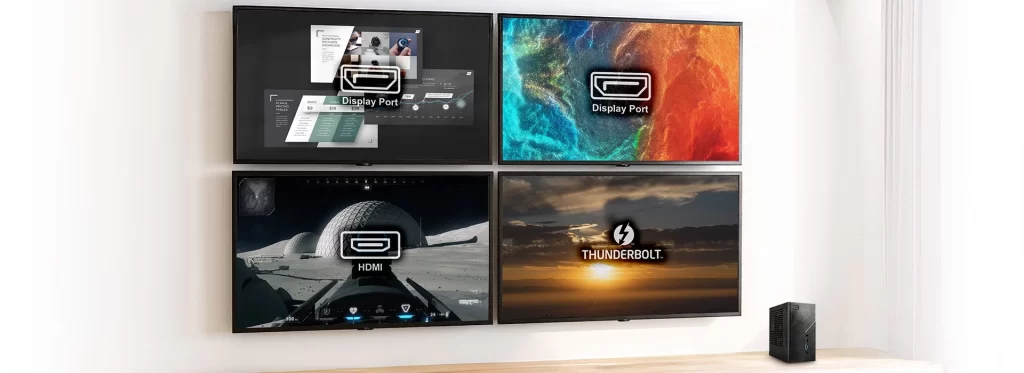
Graphics and AI. Arrow Lake desktop chips have a modest Intel GPU and an NPU of about 13 TOPS — fine for office work, video and four displays, but not for gaming or Copilot+ features. If integrated graphics matter to you, the AMD DeskMini with a Ryzen 7 8700G is the better platform.
Choosing a cooler
Both DeskMinis need a low-profile cooler no taller than 47 mm. Look for coolers designed for mini-ITX and small form factor cases, such as low-profile models around 37 mm tall with a 92 mm fan, and make sure the mounting kit matches your socket (AM5 or LGA1851). A good cooler is the single biggest factor in noise.
Quiet builds: set a power limit
Desktop processors can exceed their nominal TDP in short bursts. In such a small case, setting a lower power limit in the BIOS — AMD’s Eco Mode or Intel’s PL1/PL2 settings — makes a big difference in noise and temperature with only a small loss in performance. For a near-silent office PC, choose a Core Ultra “T” model or run a Ryzen in Eco Mode.
Recommendations by use
- Living room, media and light gaming: DeskMini X600/USB4 + Ryzen 7 8700G.
- Quiet office PC: DeskMini B860 + Core Ultra 5 225T or 245T, or DeskMini X600 + Ryzen 5 8600G in Eco Mode.
- Compact workstation: DeskMini X600 + Ryzen 9 7900/9900, or DeskMini B860 + Core Ultra 7 265.
- Home server: DeskMini X600 + Ryzen 5 7600 or 8500G, or DeskMini B860 + Core Ultra 5 225 — low idle power and four drives.
- Four monitors and Thunderbolt: DeskMini B860 with any Core Ultra 200S.
Memory to pair with your CPU
Both DeskMinis use two DDR5 SO-DIMM modules, up to 128 GB. Always install two identical modules for dual channel — essential for the Ryzen 8000G’s graphics. 32 GB (2 × 16 GB) suits most users; 64 GB or more makes sense for virtual machines and large projects. The DeskMini B860 also supports the newer CSODIMM modules for higher speeds.
Conclusion
For most people, the best DeskMini build is the X600/USB4 with a Ryzen 7 8700G: strong graphics, full USB4 and a long upgrade path on AM5. If you need Thunderbolt 4, four displays or the most cores at 65 W on Intel, the B860 with a Core Ultra 5 245 or Core Ultra 7 265 is the better choice. Whatever you pick, respect the 65 W limit, avoid “F” processors and invest in a good low-profile cooler.
Our 2026 Buying Guides & Deals
Disclaimer: This article is for information purposes only. Specifications, prices, coupons and availability may change at any time or contain errors, so please check them on the manufacturer's official website or store before buying. Some links on this page are affiliate links: if you buy through them we may earn a small commission at no extra cost to you.