
Bosgame M4 Mini PC AMD Ryzen™ 7 8745HS OCuLink

 Amazon.com
| Processor | 7.8 |
|---|---|
| RAM | 7.5 |
| Hard Disk | 8.2 |
| Connectivity | 8.8 |
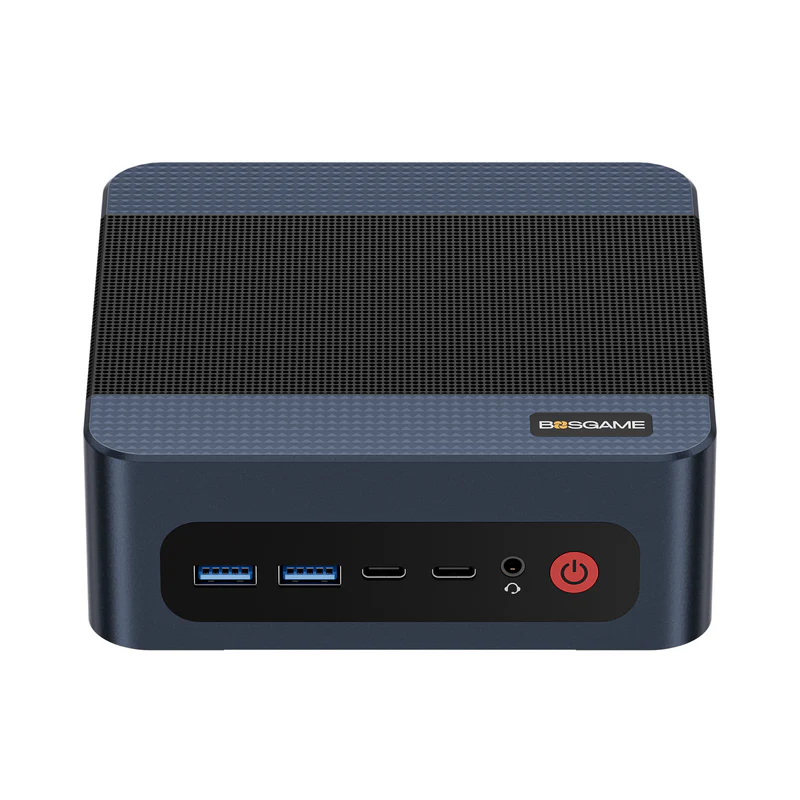
AMD Ryzen™ 7 8745HS (Hawk Point, Zen 4) Mini PC with OCuLink. 8 cores / 16 threads up to 4.9 GHz. AMD Radeon™ 780M — 12 RDNA 3 CUs at 2.7 GHz. No NPU — not a Copilot+ PC. 32 GB DDR5-4800 SO-DIMM UPGRADEABLE (2 slots, up to 64 GB). 2× M.2 2280 PCIe 4.0 — up to 8 TB. OCuLink PCIe 4.0 ×4 (40 Gbps) — eGPU support. 1× USB4 40 Gbps. Triple display (HDMI 2.0 + DP + USB4). Dual 2.5 GbE. Wi-Fi 6E + BT 5.2. Plastic chassis — 129 × 129 × 48 mm. ~500 g. Excellent value for money — OCuLink upgrade path.

Bosgame M4 Mini PC AMD Ryzen™ 7 8745HS OCuLink Prices


Price History
| Price history for BOSGAME M4 Mini PC with Oculink, AMD Ryzen 7 8745HS Tiny Desktop Computers, 32GB DDR5, 1TB SSD, Radeon 780M for Game, Wi-Fi 6, BT 5.2, Dual 2.5GbE LAN, USB 4, 4K Quad Display | |
|---|---|
|
Latest updates:
|
|
Description
Bosgame M4
Value Mini PC with OCuLink — AMD Ryzen™ 7 8745HS
The Bosgame M4 is an aggressively priced compact mini PC that punches well above its cost by combining AMD’s capable Ryzen 7 8745HS Hawk Point APU with a feature set typically reserved for more expensive systems: OCuLink PCIe 4.0 ×4 for external GPU connectivity, USB4 at 40 Gbps, dual 2.5 Gigabit Ethernet, Wi-Fi 6E, and two M.2 PCIe 4.0 SSD slots. Reviewed by TechRadar, WCCFTech, and several independent sites in late 2025, the M4 earned consistent praise for its connectivity breadth and value proposition, with TechRadar concluding that “while it doesn’t have a metal case, the M4 ticks every other box for a successful NUC design — the asking price is low, the performance is good, and it’s a highly flexible solution.” At approximately $479–$500, it positions itself as a compelling alternative to systems like the Beelink SER8 and GEEKOM A8 Max — both of which lack an OCuLink port — for users who want an affordable mini PC with a clear discrete GPU upgrade path.
Two things to be aware of before purchasing: first, the Ryzen 7 8745HS does not include an NPU, meaning the M4 is not a Copilot+ PC and does not support Windows 11 AI features. Second, reviewers noted that thermal performance dips during extended sustained gaming loads, as the compact chassis and plastic build have limited heat dissipation capacity — a characteristic shared by most mini PCs in this price range with this chassis size.
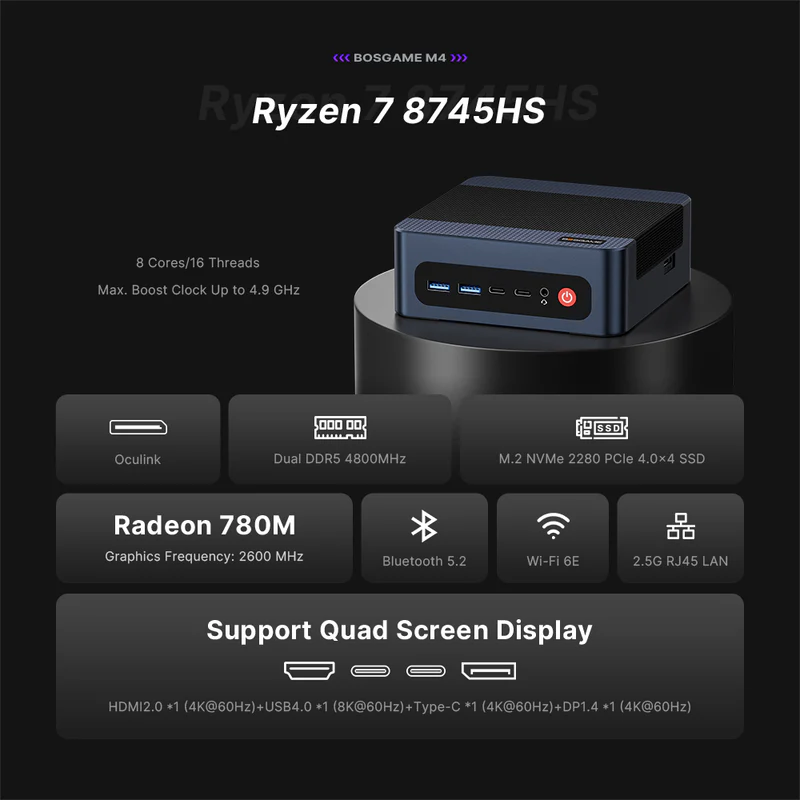
AMD Ryzen™ 7 8745HS — Hawk Point Zen 4, Eight Cores at 4.9 GHz
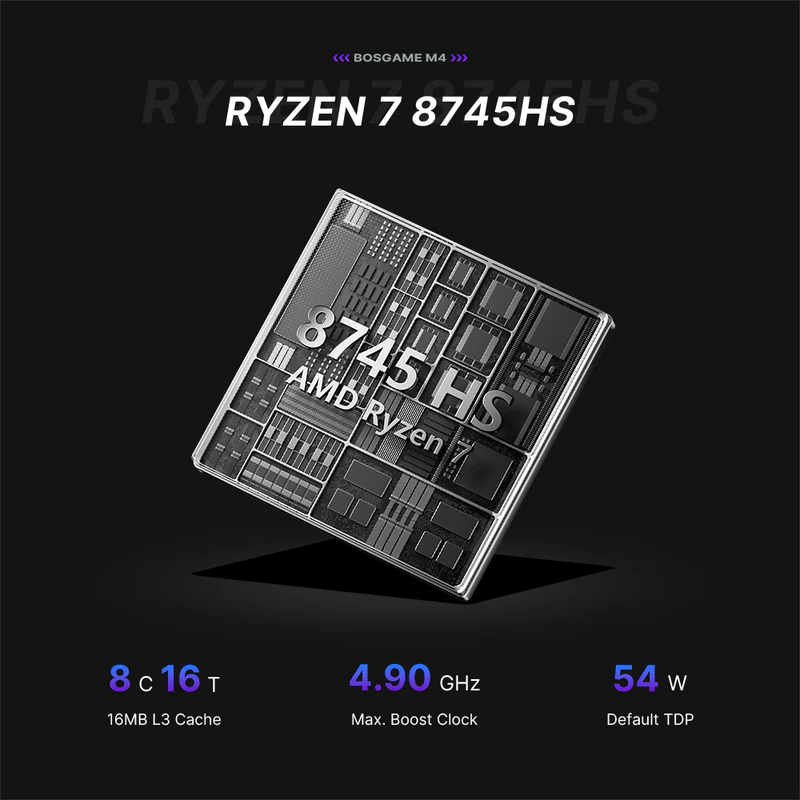
The Ryzen 7 8745HS is an eight-core, sixteen-thread APU based on AMD’s Zen 4 architecture, manufactured on TSMC’s 4 nm process node under the Hawk Point codename. Originally developed for the Chinese market, the chip found broad adoption in compact desktop hardware due to its attractive combination of per-core performance, multi-threaded throughput, and power efficiency. Operating at a default TDP of 45W in the M4 — higher than the 35W default of the GEEKOM A8 Max — it delivers strong burst performance that benefits both CPU-intensive tasks and the integrated Radeon 780M GPU. Boost frequency reaches 4.9 GHz across the P-cores, enabling snappy single-threaded responsiveness in office applications, code compilation, and creative tools. In WCCFTech’s review, the reviewer noted the processor handles “any workload an average consumer would throw at it” without hesitation. In multi-threaded benchmarks, the 8745HS consistently outperforms 12th and 13th generation Intel Core i7 processors in comparable chassis configurations, making the M4 a genuine desktop replacement for productivity users.
- 8 cores / 16 threads (Zen 4 — Hawk Point)
- Base 3.8 GHz — Boost up to 4.9 GHz
- L2 Cache: 8 MB | L3 Cache: 16 MB
- 4 nm TSMC process node
- TDP: 45W default
- No NPU — not a Copilot+ PC
AMD Radeon™ 780M — 12 RDNA 3 CUs, 1080p Gaming Capable
The integrated Radeon 780M GPU provides 12 RDNA 3 compute units running at up to 2.7 GHz. As one reviewer put it, the 780M delivers “smooth everyday graphics and credible 1080p gaming” in the M4’s configuration. eSports titles such as Counter-Strike 2, Valorant, and Apex Legends run comfortably at 1080p medium-to-high settings, while more demanding AAA titles require reduced quality presets to maintain playable frame rates. For everyday creative work, the 780M handles hardware video encode and decode through AMD’s media engine, supporting H.264, H.265, AV1, and VP9 codec acceleration. A dedicated SSD in the primary slot with PCIe 4.0 bandwidth ensures that the GPU’s memory bandwidth is not bottlenecked by storage I/O during intensive workloads. For users who find the 780M insufficient, the OCuLink port provides a direct PCIe 4.0 ×4 pathway to a discrete external GPU — a meaningful upgrade route that distinguishes the M4 from nearly every other mini PC at this price point, including the similarly specified Beelink SER8 and GEEKOM A8 Max.
OCuLink PCIe 4.0 ×4 — The M4’s Defining Feature
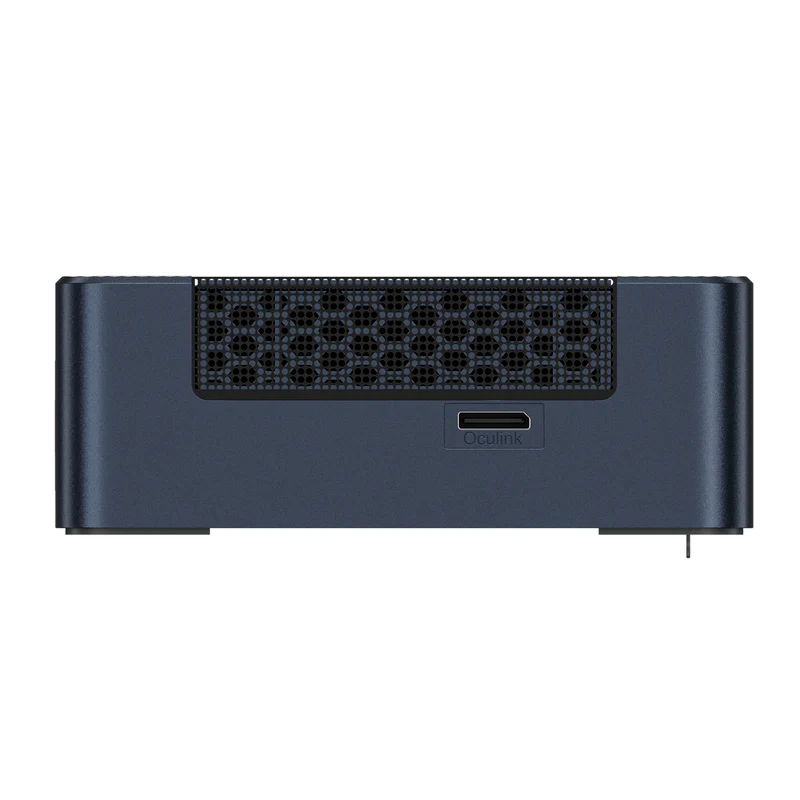
The OCuLink port on the Bosgame M4 delivers PCIe 4.0 ×4 bandwidth at up to 40 Gbps, enabling connection to external GPU enclosures with near-native discrete card performance. Bosgame offers its own compatible dock — the GVP7600 — which combines an AMD Radeon RX 7600M XT GPU with an additional M.2 storage slot. Third-party OCuLink enclosures compatible with nearly any PCIe GPU are also widely available. Unlike USB4-based eGPU solutions, which introduce protocol conversion overhead, OCuLink is a direct electrical PCIe connection that minimises latency and maximises throughput. This transforms the M4 from a capable everyday mini PC into a genuine gaming or rendering workstation when the eGPU is attached, while maintaining its compact and quiet profile for everyday use without it. TechRadar’s reviewer specifically highlighted OCuLink as the M4’s most compelling feature for users planning a future GPU upgrade.
32 GB DDR5 SO-DIMM — Upgradeable to 64 GB
The M4 ships with 32 GB of DDR5-4800 in a dual-channel 2×16 GB SO-DIMM configuration — slightly slower than the DDR5-5600 used in the GEEKOM A8 Max, but fully user-upgradeable through two standard SO-DIMM slots. The maximum supported capacity is 64 GB (2×32 GB). TechRadar’s review included a pointed observation about the importance of dual-channel memory specifically for the Radeon 780M: using a single memory module instead of two cuts GPU bandwidth in half, dramatically reducing integrated graphics performance. The M4’s dual-channel default configuration ensures the 780M operates at full bandwidth out of the box. The SO-DIMM format makes upgrades practical — simply remove the bottom panel and swap modules without specialist tools.
- 2× DDR5 SO-DIMM slots — fully user-accessible
- Standard config: 32 GB DDR5-4800 (2×16 GB dual-channel)
- Maximum supported: 64 GB (2×32 GB DDR5 SO-DIMM)
Dual M.2 2280 PCIe 4.0 — Up to 8 TB of NVMe Storage
Two M.2 2280 PCIe 4.0 ×4 slots provide fast, expandable storage at sequential read speeds exceeding 6,000 MB/s. The primary slot ships with a 1 TB NVMe SSD, leaving the secondary slot free for expansion — or, as some reviewers noted, for use in high-speed NVMe RAID configurations connected through the OCuLink port. Each slot supports drives up to 4 TB, giving a maximum combined storage capacity of 8 TB. This dual-slot configuration is a meaningful advantage over the GEEKOM A8 Max, which provides only a single M.2 slot despite its higher price point. Both slots are user-accessible via the bottom panel.
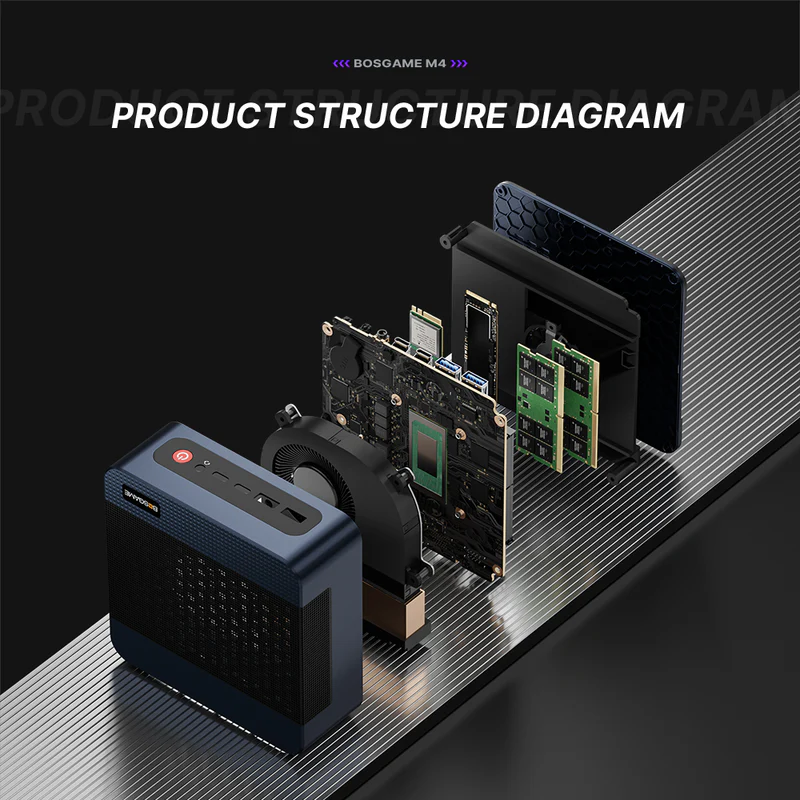
Dual 2.5 GbE + Wi-Fi 6E + USB4 — Strong Connectivity at the Price
Two independent 2.5 Gigabit Ethernet ports enable simultaneous wired connections to separate networks — a feature more commonly found in higher-priced systems. Wi-Fi 6E (802.11ax) with Bluetooth 5.2 covers wireless networking, delivering tri-band operation including the 6 GHz band for lower congestion and higher throughput than standard Wi-Fi 6. A USB4 port (40 Gbps) handles data transfer, DisplayPort Alt Mode video output, and charging simultaneously. Combined with the OCuLink port, this gives the M4 two high-bandwidth external connections that can be used independently for different purposes — OCuLink for the eGPU and USB4 for a high-speed external drive or 8K display — without bandwidth sharing between them.
Triple Display Output — HDMI 2.0 + DisplayPort + USB4
The M4 supports three simultaneous external displays through its combination of HDMI 2.0 (4K@60Hz), a dedicated DisplayPort output (4K@60Hz), and USB4 in DisplayPort Alt Mode (up to 8K@60Hz). This triple-display capability covers the majority of professional multi-monitor scenarios, from a dual-4K productivity setup to a triple-screen trading workstation, without requiring a docking station or USB hub.
Thermal Performance — Capable But With Limitations
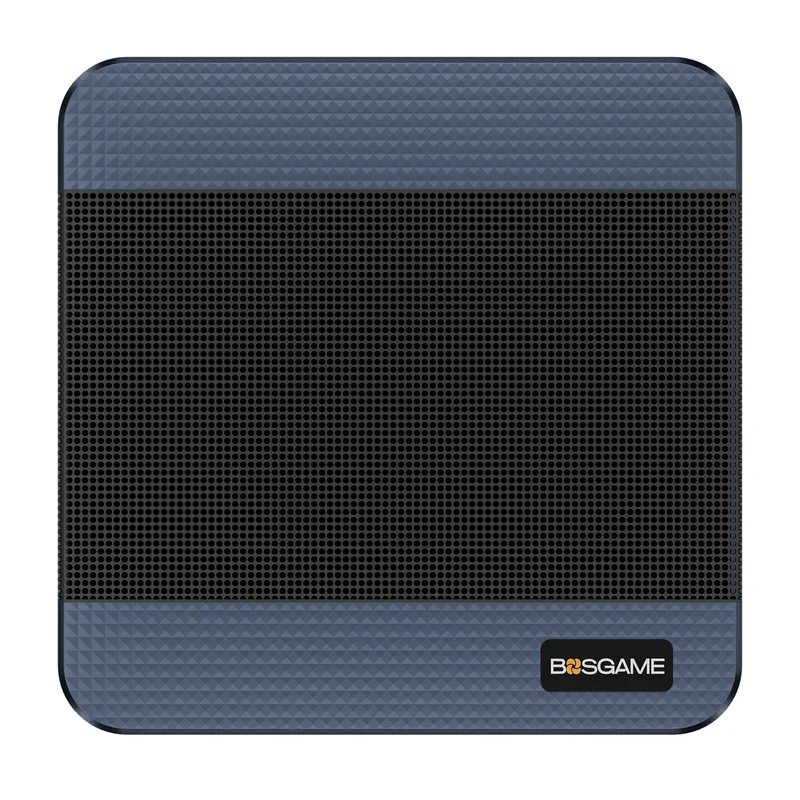
The M4’s plastic chassis houses a cooling solution built around a copper heat pipe, aluminium fin stack, and blower fan drawing air through the bottom intake panel and exhausting through the top perforated surface and rear slots. During normal productivity and light gaming workloads, the system operates quietly and maintains stable clock speeds. Under extended sustained gaming loads — particularly when pushing the Radeon 780M to its limits over periods exceeding 30–45 minutes — reviewers noted a thermal performance dip as the chassis approaches its heat dissipation ceiling. This is a characteristic of the plastic construction and compact dimensions rather than a design flaw, and it is consistent with how most mini PCs at this price and size perform under worst-case continuous GPU stress. For productivity, office, and light creative workloads, thermal performance is entirely adequate.
Design and Build Quality
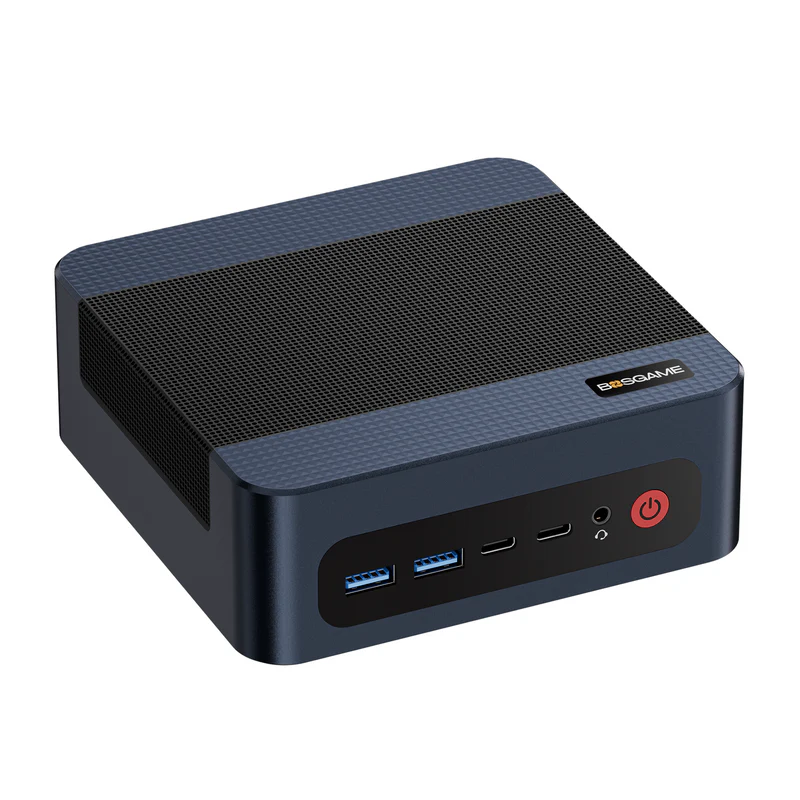
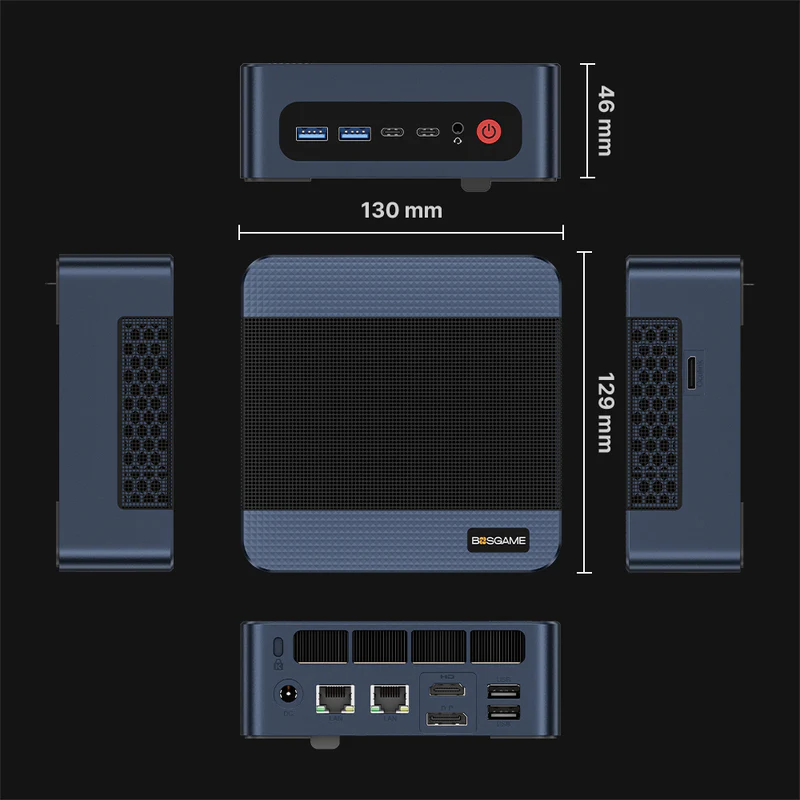
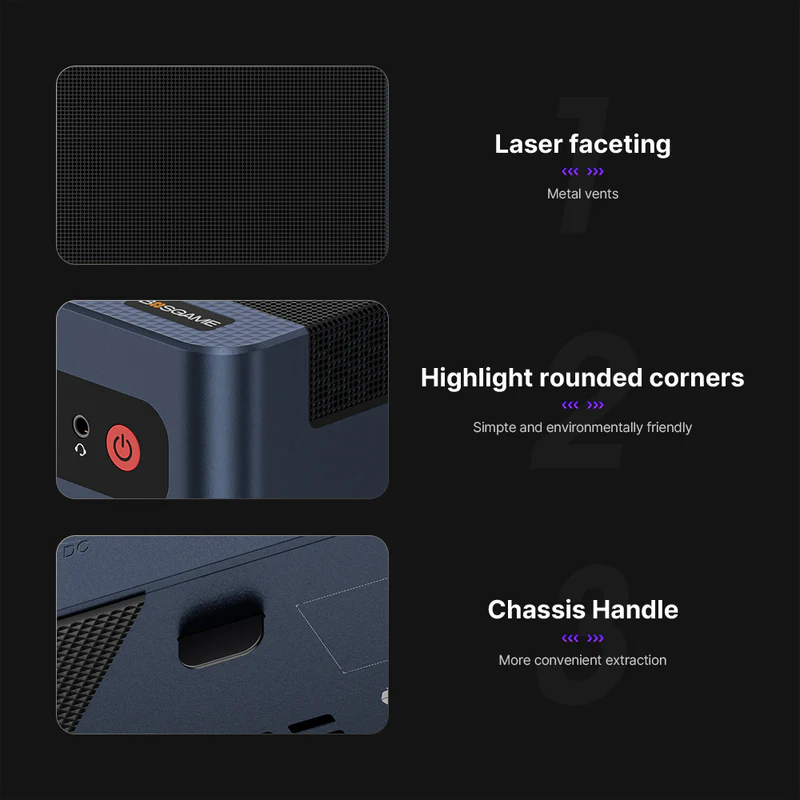
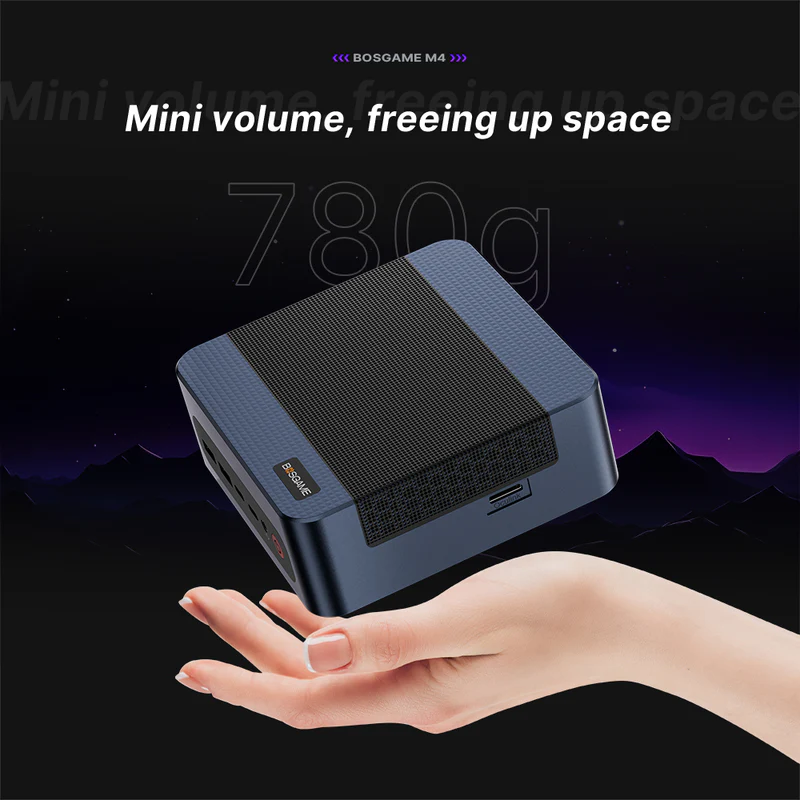
The M4 measures 129 × 129 × 48 mm — marginally smaller in footprint than the GEEKOM A8 Max — and weighs approximately 500 g, making it one of the lightest Ryzen 7 8745HS mini PCs available. The chassis is constructed from reinforced plastic with a matte black finish. TechRadar’s reviewer acknowledged that the plastic build is “adequate for most uses” and noted that the compact NUC-style form factor combined with the feature set makes it an implausibly capable machine for its dimensions. There is no Kensington lock slot and no VESA mount included in the box, though the chassis accepts standard VESA adapters.
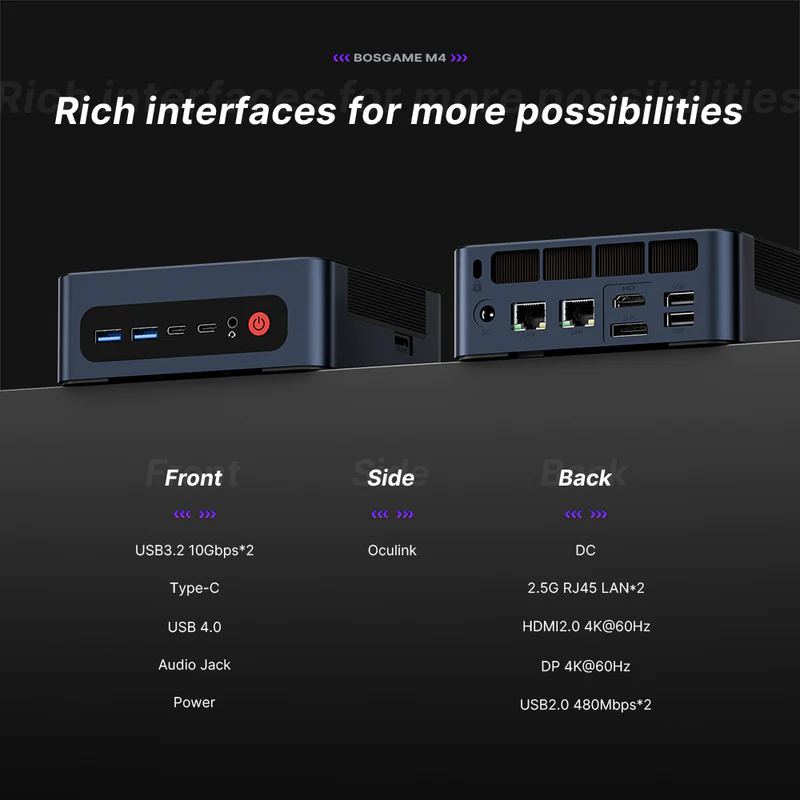
Complete Port Layout
Front:
- 2× USB-A 3.2 Gen2 (10 Gbps)
- 1× 3.5mm combo audio jack · Power button
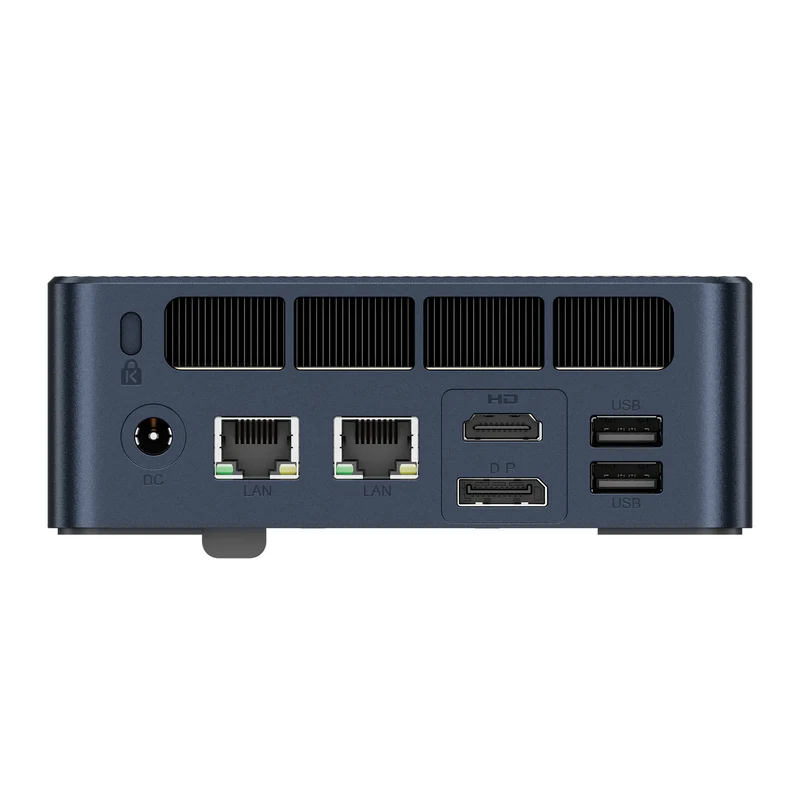
Rear:
1× HDMI 2.0 (4K@60Hz)
1× DisplayPort (4K@60Hz)
1× USB4 (40 Gbps, DP Alt Mode / Data)
1× USB-A 3.2 Gen2 (10 Gbps)
2× RJ45 2.5 Gigabit Ethernet
1× OCuLink PCIe 4.0 ×4 (40 Gbps)
1× DC power input
Additional information
Specification: Bosgame M4 Mini PC AMD Ryzen™ 7 8745HS OCuLink
| Configuration Options | ||||||||||||||||||||||||||
|---|---|---|---|---|---|---|---|---|---|---|---|---|---|---|---|---|---|---|---|---|---|---|---|---|---|---|
|
||||||||||||||||||||||||||
| Processor | ||||||||||||||||||||||||||
|
||||||||||||||||||||||||||
| Ports | ||||||||||||||||||||||||||
|
||||||||||||||||||||||||||
| Network | ||||||||||||||||||||||||||
|
||||||||||||||||||||||||||
| GPU | ||||||||||||||||||||||||||
|
||||||||||||||||||||||||||
| Internal Ports | ||||||||||||||||||||||||||
|
||||||||||||||||||||||||||
| Storage & RAM | ||||||||||||||||||||||||||
|
||||||||||||||||||||||||||
| Power | ||||||||||||||||||||||||||
|
||||||||||||||||||||||||||
| Others Specifications | ||||||||||||||||||||||||||
|
||||||||||||||||||||||||||
| Specification | ||||||||||||||||||||||||||
|
||||||||||||||||||||||||||


