
Beelink SER9 Pro AMD Ryzen™ AI 9 365


 Amazon.com
| Processor | 8.3 |
|---|---|
| RAM | 8.2 |
| Hard Disk | 8.8 |
| Connectivity | 7.8 |
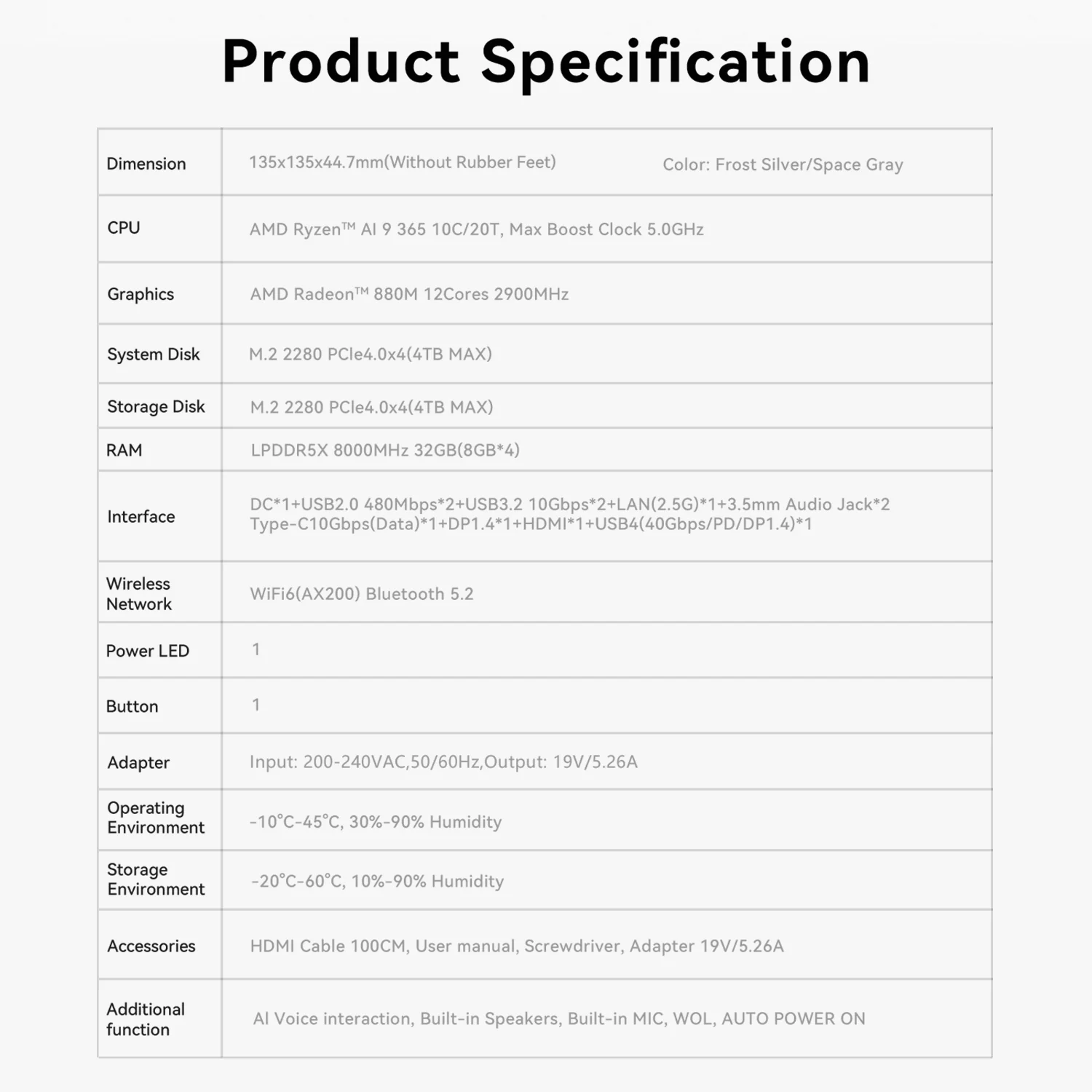
AMD Ryzen™ AI 9 365 (Strix Point) AI Mini PC. 10 Zen 5 / Zen 5c cores / 20 threads up to 5.0 GHz. AMD Radeon™ 880M iGPU — 12 RDNA 3.5 CUs at 2.9 GHz. XDNA 2 NPU — 50 TOPS. 73 TOPS total AI performance. Copilot+ PC certified. 32 GB LPDDR5X-8000 (soldered — non-upgradeable). Dual M.2 2280 PCIe 4.0 — up to 8 TB. Triple display 4K@240Hz. USB4. 1× 2.5 GbE. Wi-Fi 6 + BT 5.2. MSC 2.0 vapor chamber cooling — 32 dB near-silent. Built-in dual speakers + AI DMIC microphone. Dustproof mesh filter. WOL + Auto Power On. 135 × 135 × 44.7 mm. ~780 g.

Beelink SER9 Pro AMD Ryzen™ AI 9 365 Prices

Price History
| Price history for Beelink SER9 Mini PC, AMD Ryzen 7 H 255(8C/16T,4.9GHz), 32G LPDDR5X 1TB PCIe4.0 x4 SSD, Mini Computer AMD Radeon 780M Triple Display/USB4/WiFi6/BT5.2/2.5G/Home/Office/W11 | |
|---|---|
|
Latest updates:
|
|
Description
Beelink SER9 Pro
AI Mini PC — AMD Ryzen™ AI 9 365 (Strix Point)
The Beelink SER9 Pro with AMD Ryzen AI 9 365 is a compact, near-silent mini PC that delivers genuine AI acceleration, strong integrated graphics, and a refined feature set in a chassis smaller than a hardback book. It is the more accessible entry point into Beelink’s SER9 Pro lineup, sitting below the HX 370 and HX 470 variants in terms of raw GPU compute units while offering the same chassis, the same MSC 2.0 thermal system, and the same built-in audio hardware. For users whose workloads are centred on productivity, creative applications, light gaming, and AI-assisted tools, the Ryzen AI 9 365 version hits a compelling balance between performance and price — though prospective buyers should note that the soldered LPDDR5X memory and the Wi-Fi 6 (rather than Wi-Fi 6E or Wi-Fi 7) module represent genuine trade-offs compared to competing systems at a similar price point.
AMD Ryzen™ AI 9 365 — Strix Point with Ten Zen 5 Cores
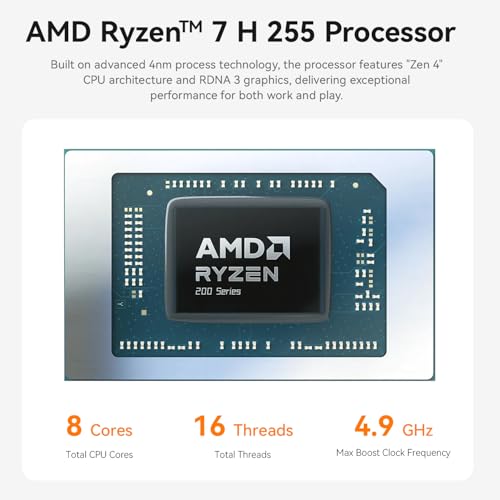
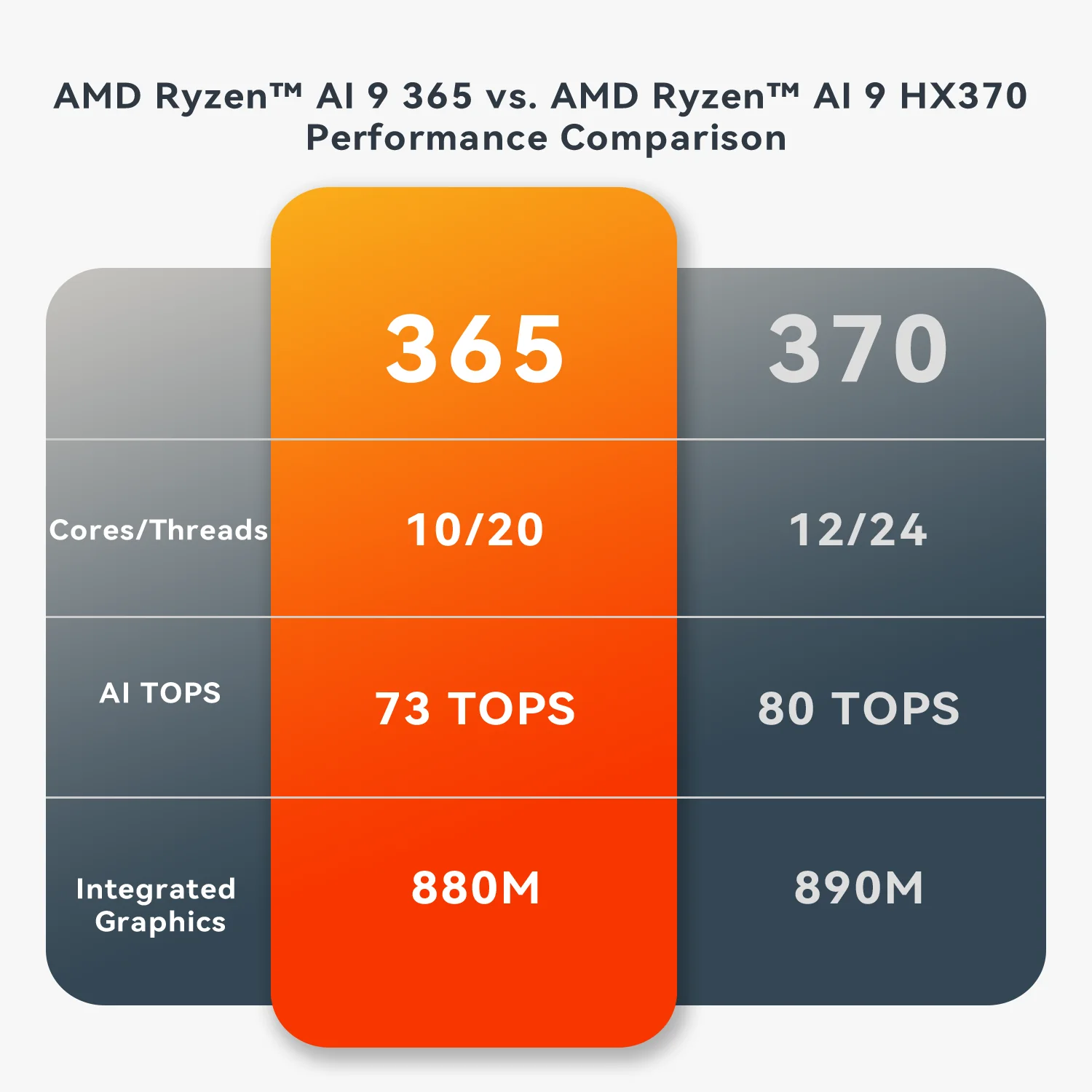
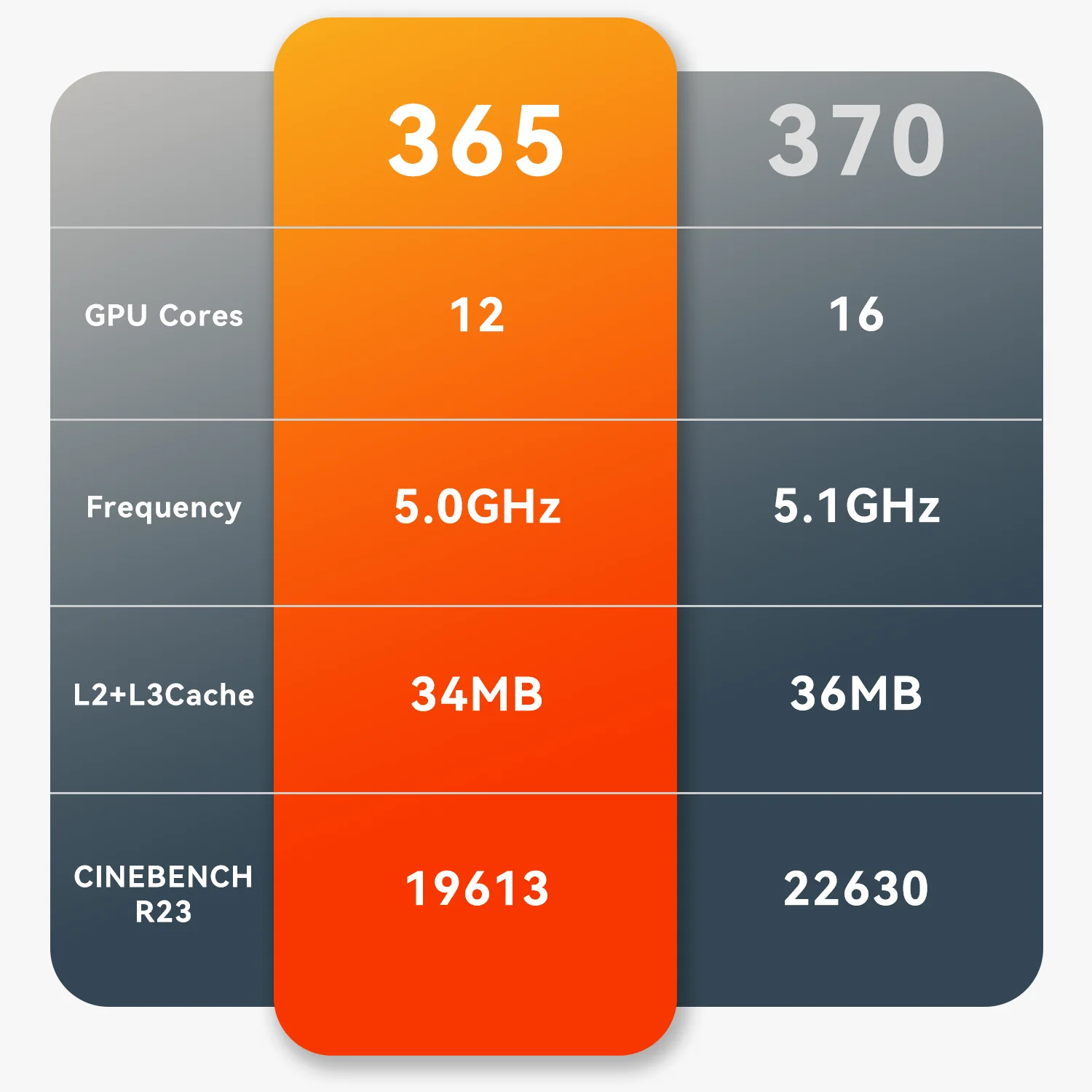
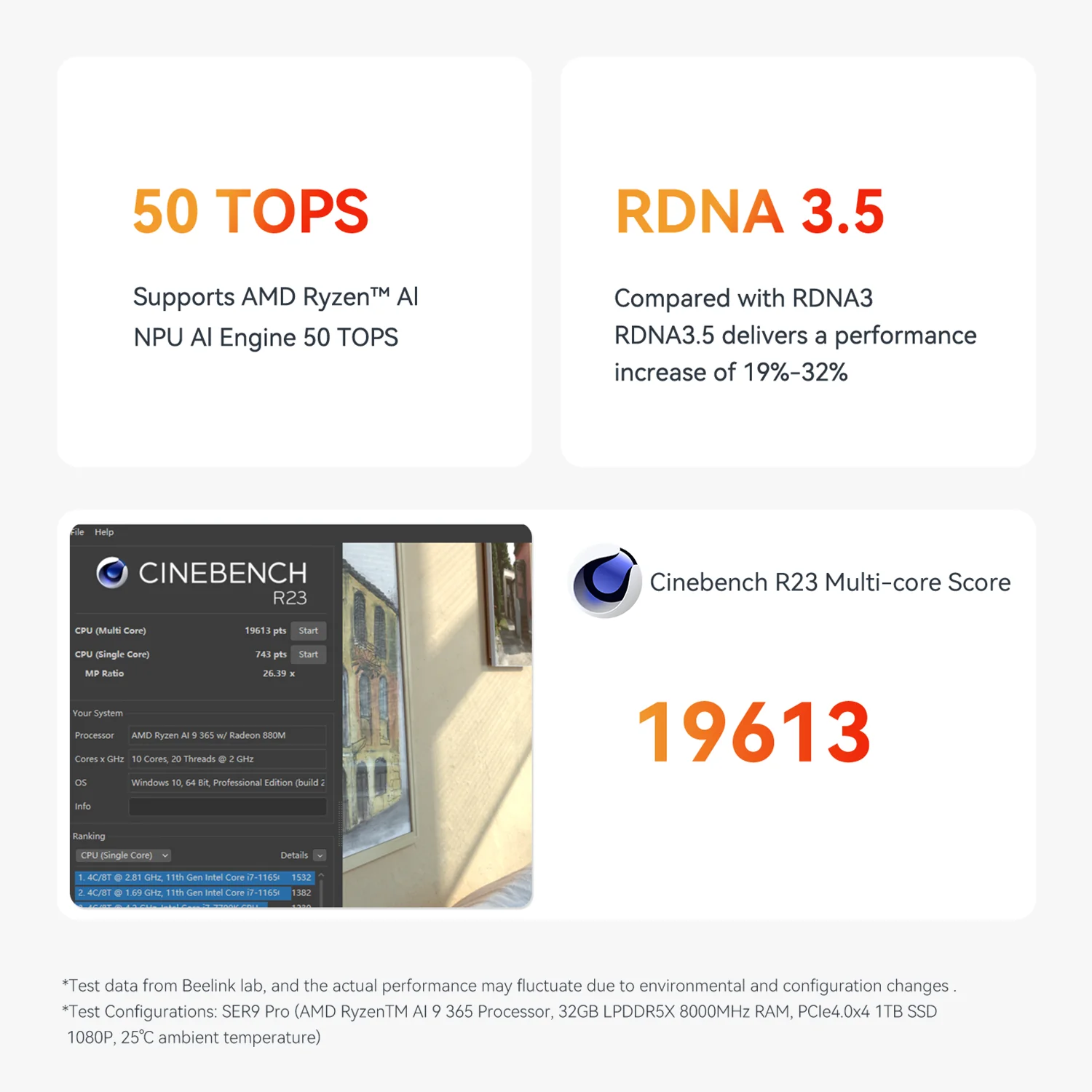
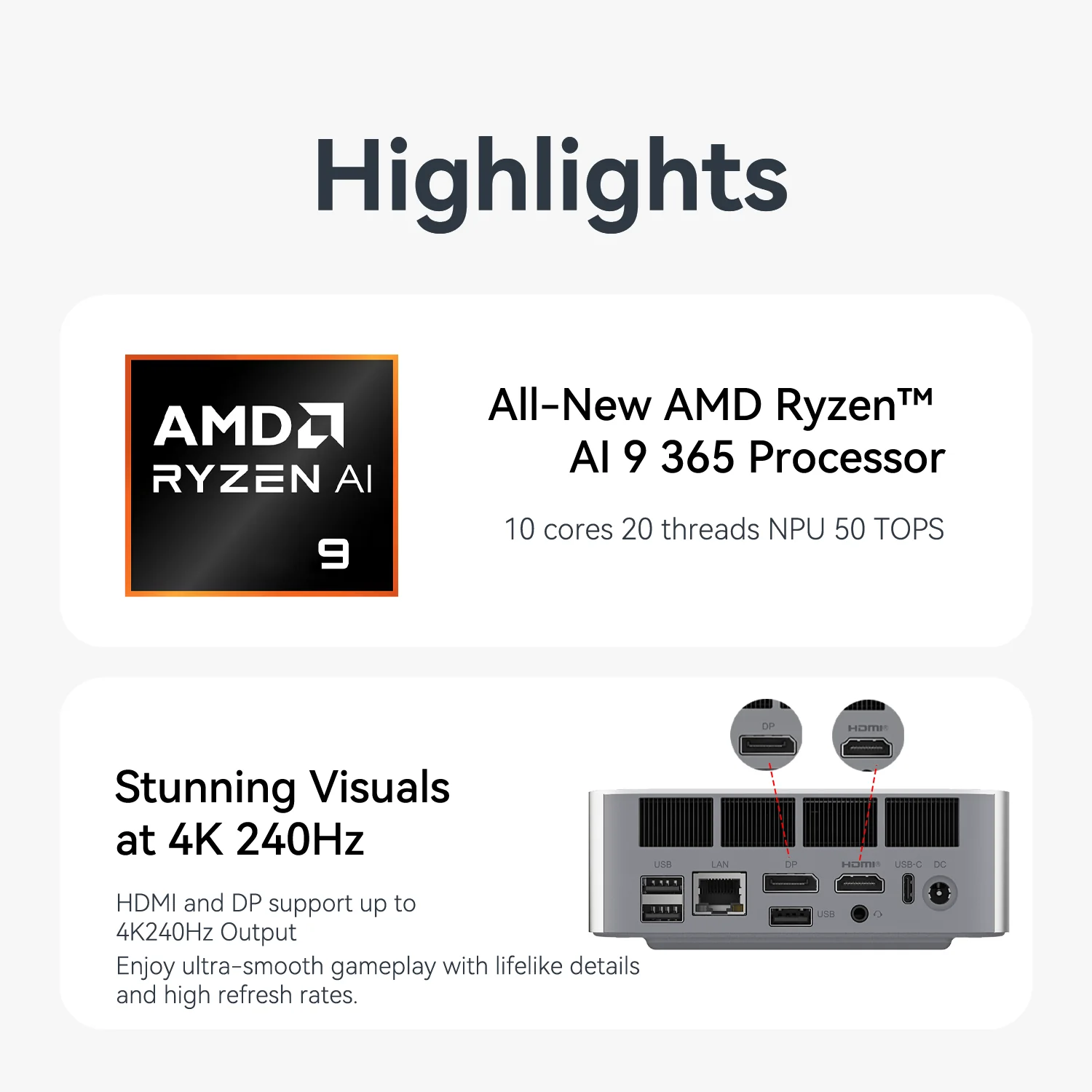
The Ryzen AI 9 365 is a Strix Point APU manufactured on TSMC’s 4 nm process node, combining four full Zen 5 performance cores with six Zen 5c efficiency cores for a total of 10 cores and 20 threads. The chip boosts up to 5.0 GHz, 100 MHz below the HX 370’s maximum, and operates within a configurable TDP range of 28W to 54W — though Beelink has tuned the SER9 Pro to run at an elevated 65W TDP by default, extracting additional sustained performance at the cost of slightly higher thermal output. In practice this means the SER9 Pro’s Ryzen AI 9 365 performs measurably better in multi-threaded workloads than systems running the same chip at its stock 54W limit. Compared to the Ryzen AI 9 HX 370, independent benchmarks place the 365 approximately 18–20% behind in multi-core tasks due to the reduced Zen 5c core count and lower thread ceiling, while single-core performance is closely matched. For everyday productivity, content creation at 1080p or light 4K, and general multitasking, this gap is rarely perceptible.
- 10 cores / 20 threads (4× Zen 5 P-cores + 6× Zen 5c E-cores)
- Base 2.0 GHz — Boost up to 5.0 GHz
- L2 Cache: 10 MB | L3 Cache: 24 MB
- 4 nm TSMC process node (Strix Point platform)
- TDP: 28W–54W stock / 65W as configured by Beelink in SER9 Pro
- Released: Q3 2024 — SER9 Pro launched January 2025

AMD Radeon™ 880M — 12 RDNA 3.5 CUs at 2.9 GHz
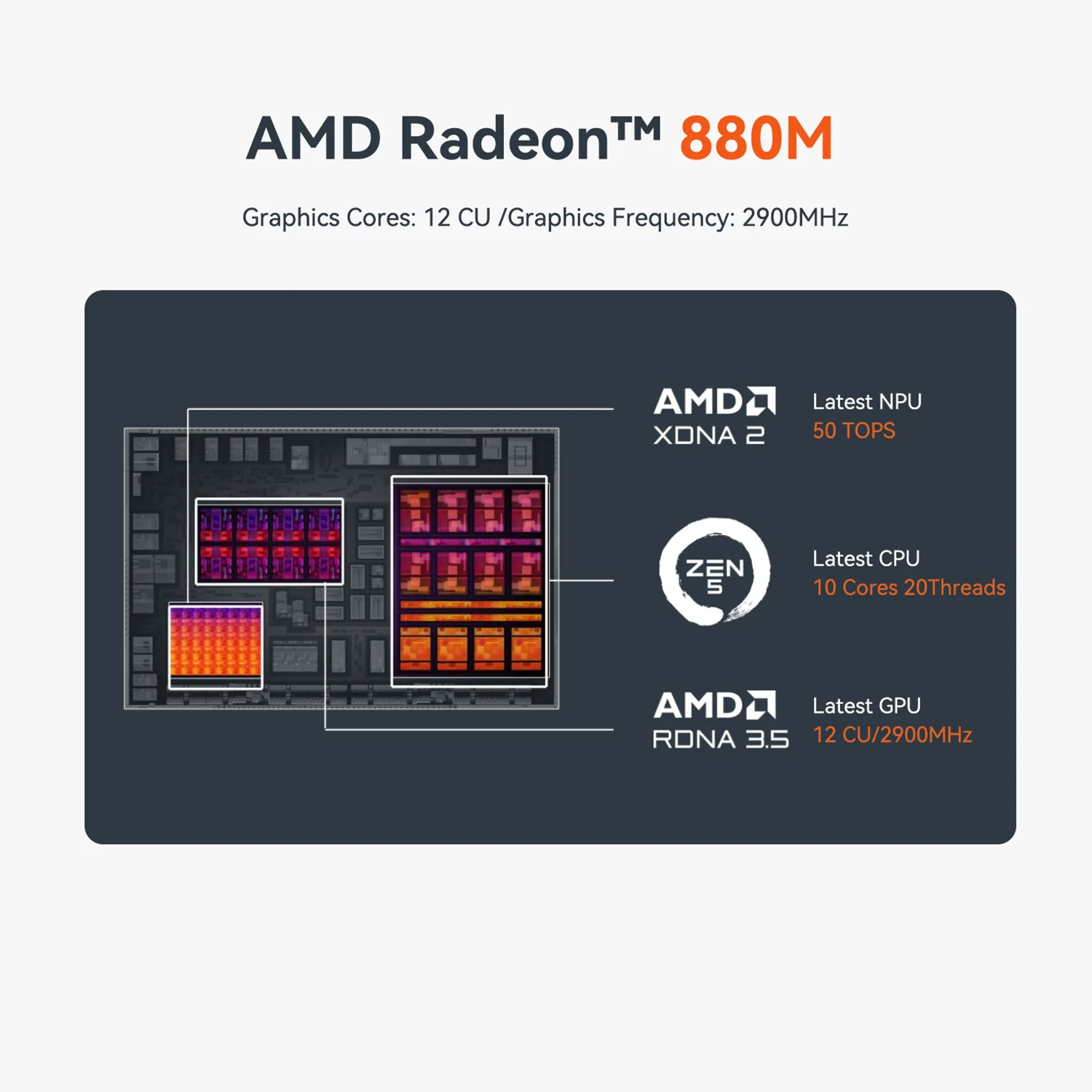
The integrated Radeon 880M GPU includes 12 RDNA 3.5 compute units running at up to 2.9 GHz. While numerically below the 16-CU Radeon 890M found in the HX 370 and HX 470 variants, the 880M is still a capable integrated GPU that comfortably outpaces the previous-generation Radeon 780M found in Ryzen 7000-series chips. In gaming at 1080p, the 880M produces playable frame rates across a broad range of titles: Cyberpunk 2077 at lowest settings approaches 60 fps, while less demanding games such as Forza Horizon 5, CS2, and Black Myth: Wukong run at 36–67 fps depending on settings. For media consumption, video editing in DaVinci Resolve, and AI-accelerated photo tools, the 880M performs well within the SER9 Pro’s target use case. Users who require maximum integrated GPU performance in this chassis should consider the HX 370 variant, which offers roughly 25% more GPU compute headroom.
XDNA 2 NPU — 50 TOPS, Copilot+ PC Certified
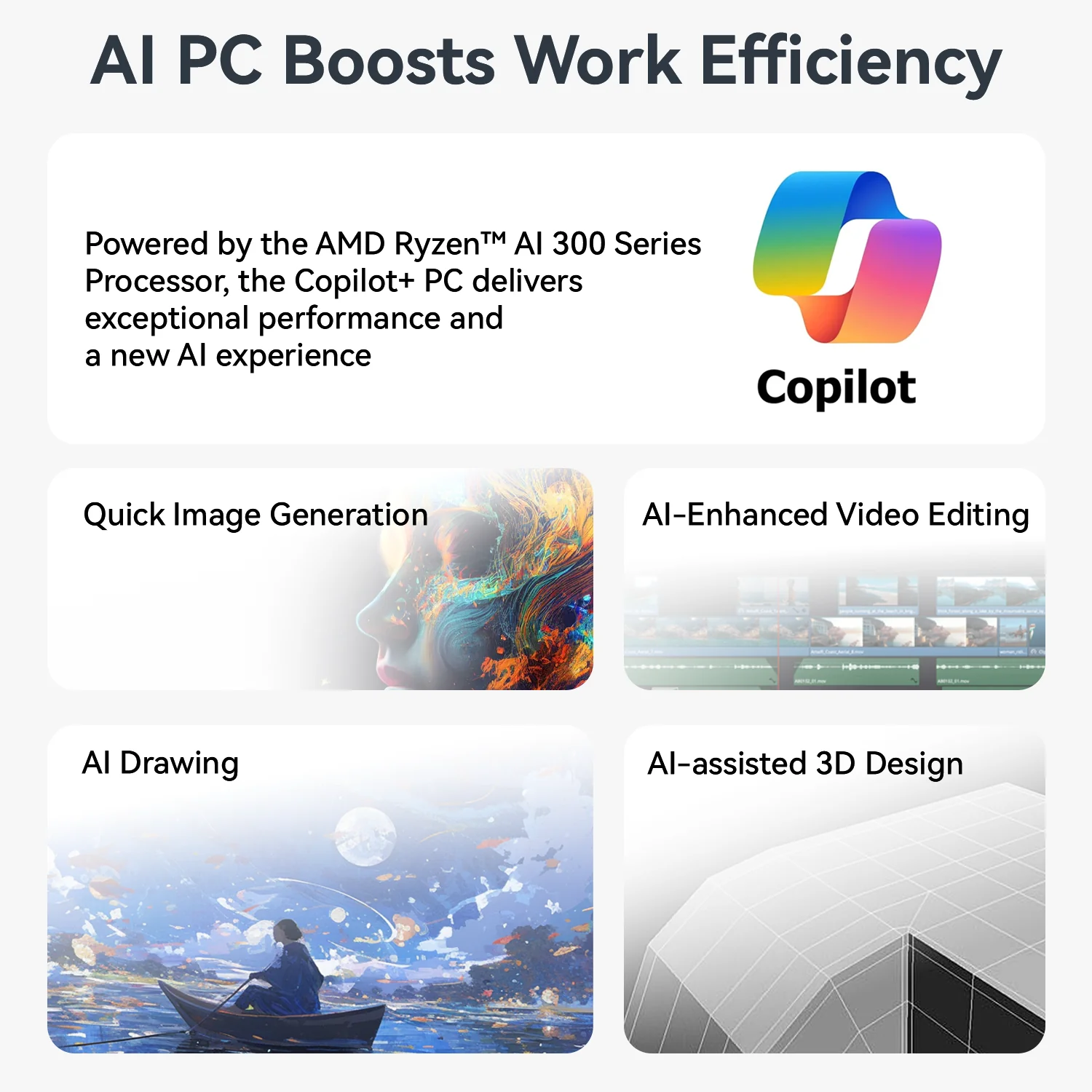
The Ryzen AI 9 365 includes AMD’s XDNA 2 neural processing unit, rated at 50 peak TOPS — the same NPU block as in the HX 370 and HX 470, operating independently of the CPU and GPU. Combined with the CPU’s estimated 12 TOPS and the GPU’s 12 TOPS contribution, total system AI throughput reaches 73 TOPS, satisfying and exceeding the 40 TOPS threshold required for Microsoft Copilot+ PC certification. All Windows 11 Copilot+ AI features — including Recall, live caption translation, generative AI image creation, and AI-assisted studio audio — run locally on the XDNA 2 NPU without cloud dependency or subscription requirements. The SER9 Pro is also fully compatible with local AI model inference through LM Studio and Ollama, though users running large language models will find the 32 GB ceiling — with no upgrade path — a meaningful constraint compared to SO-DIMM based systems capable of 64 or 128 GB.
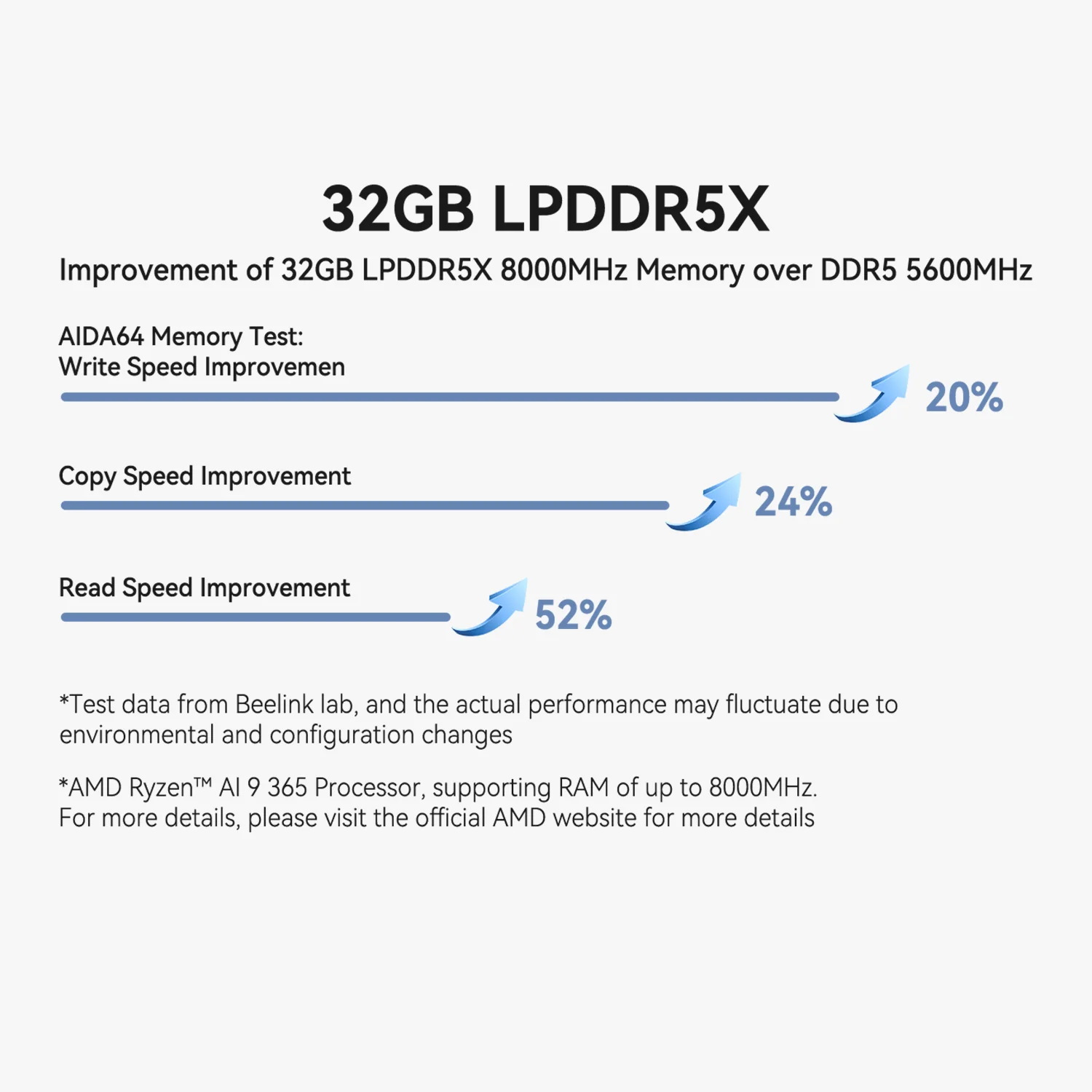
32 GB LPDDR5X-8000 MHz — Fast but Soldered, Non-Upgradeable
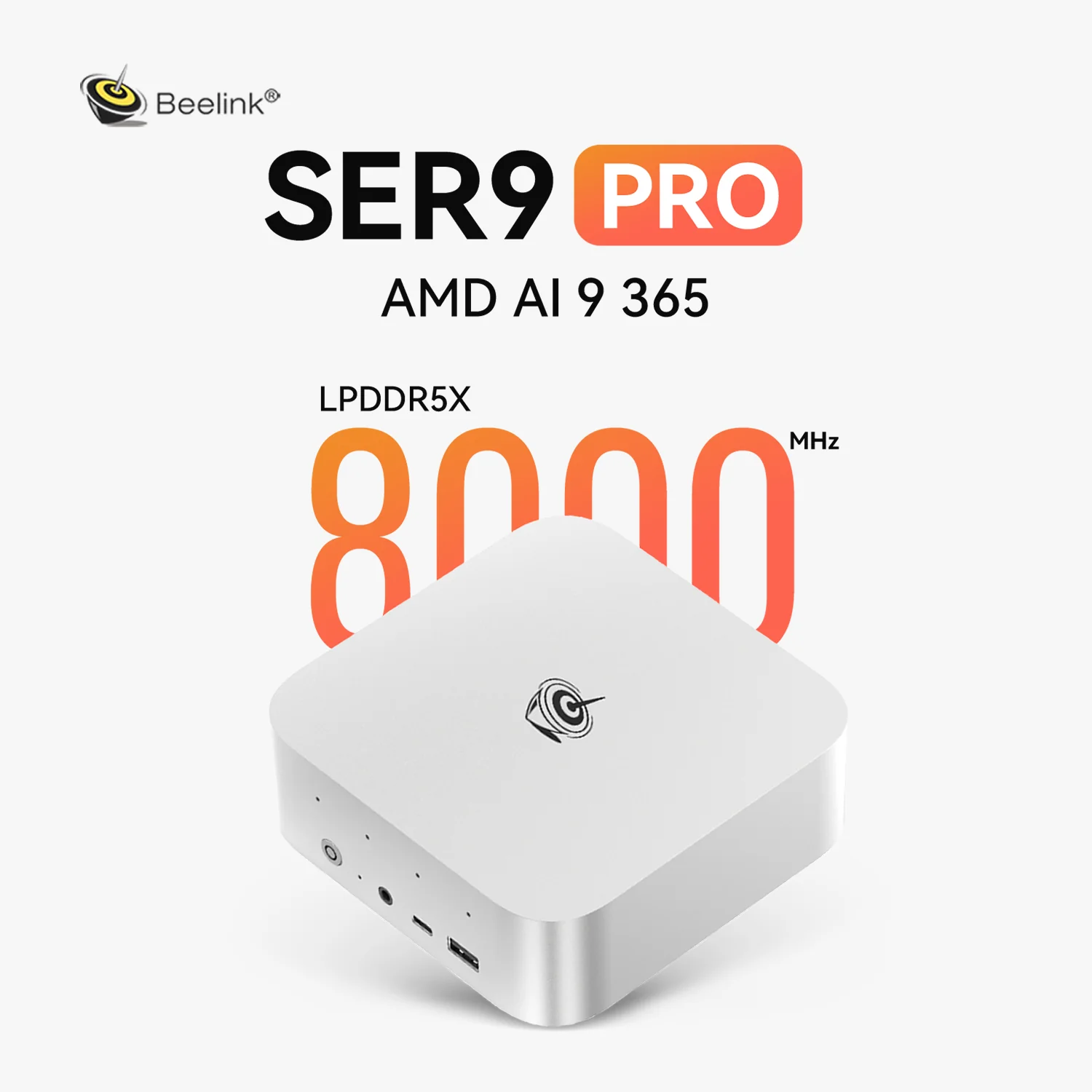
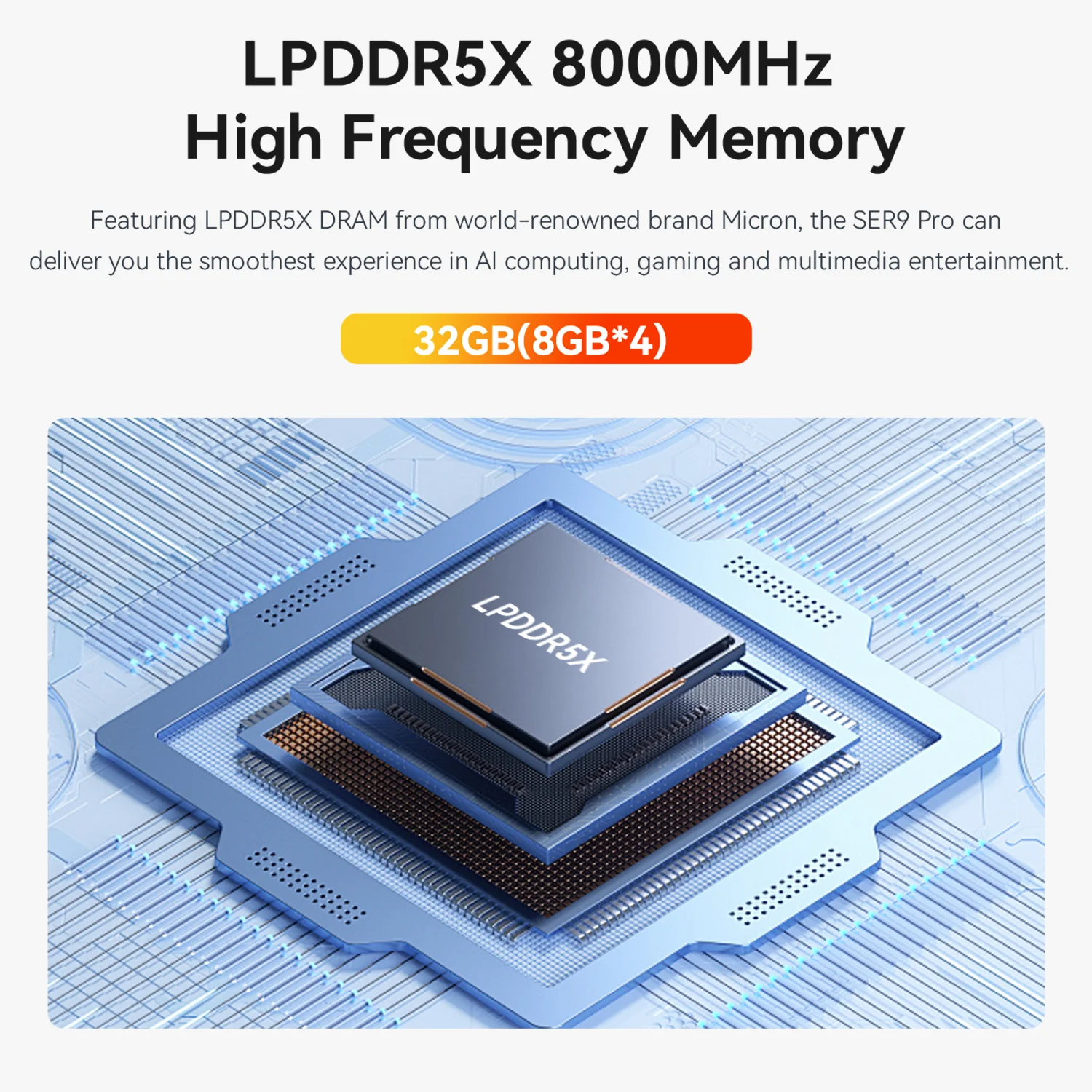
The SER9 Pro ships with 32 GB of LPDDR5X memory clocked at 8,000 MT/s arranged in a quad-channel 8GB×4 configuration — the same ultra-fast, wide-bandwidth memory found in the EVO-X2 and similar Strix Point systems. This memory runs at the same speed as higher-capacity LPDDR5X systems, providing the Radeon 880M GPU with adequate bandwidth for iGPU workloads. However, it is permanently soldered to the motherboard and cannot be upgraded under any circumstances. Users who anticipate needing more than 32 GB of RAM — whether for large AI model inference, heavy virtual machine use, or professional memory-intensive applications — must either accept this ceiling or choose an alternative system with SO-DIMM slots, such as the GEEKOM A9 Max or the Minisforum AI X1 Pro-470. For the majority of everyday workloads the 32 GB figure is ample, but it is an important consideration for future-proofing.
- 32 GB LPDDR5X 8000 MT/s — quad-channel (8GB×4)
- Soldered — non-upgradeable under any circumstances
- Maximum: 32 GB (no expansion path available)
- GPU VRAM allocation: configurable via BIOS up to available system memory
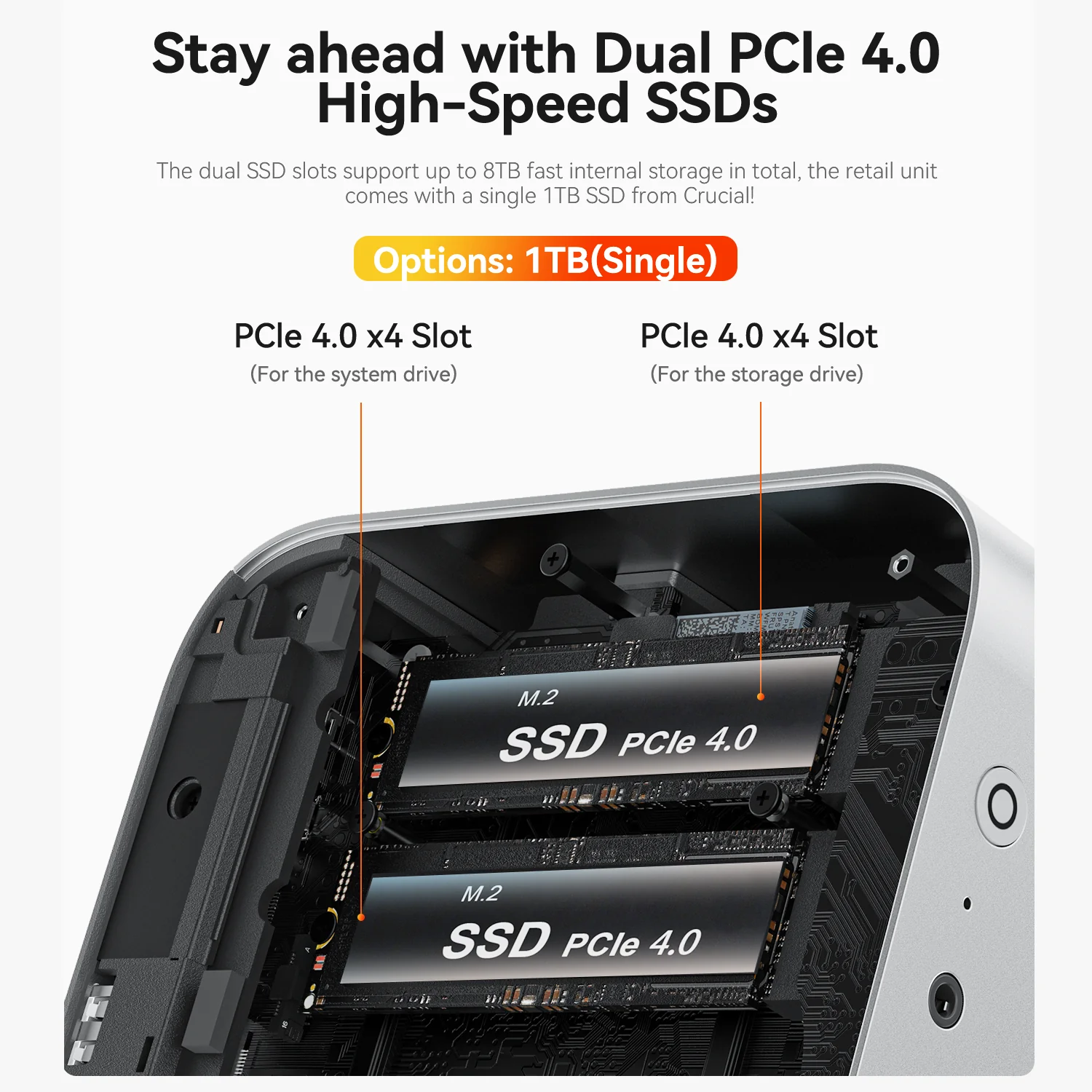
Dual M.2 PCIe 4.0 — Up to 8 TB of NVMe Storage
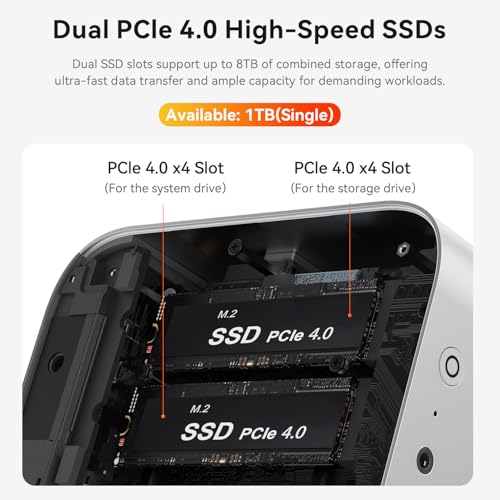
Storage is handled through two M.2 2280 slots, both running at PCIe 4.0 ×4 with sequential read speeds exceeding 6,200 MB/s. The system ships with a 1 TB NVMe SSD pre-installed in the primary slot, leaving the secondary slot free for expansion without requiring drive swaps. Unlike the soldered RAM, both SSD slots are fully user-accessible after removing the bottom panel, making storage upgrades — up to 4 TB per slot for a maximum of 8 TB combined — entirely practical. A dedicated SSD heatsink is part of the MSC 2.0 cooling assembly, keeping drive temperatures in check during sustained transfer workloads. For users who need even more storage capacity, Beelink offers an optional Mate SE docking station accessory that adds two additional M.2 PCIe 4.0 slots via a USB4 connection, expandable up to 16 TB additional capacity.
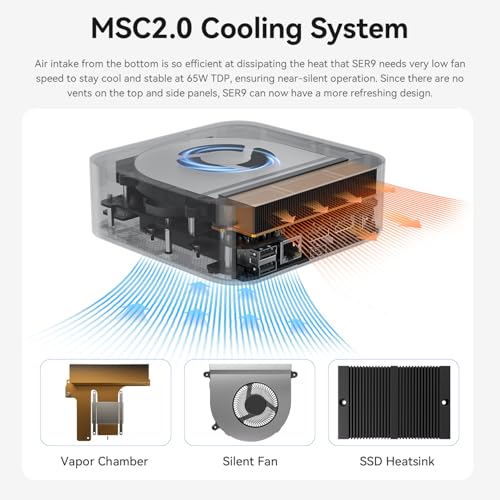
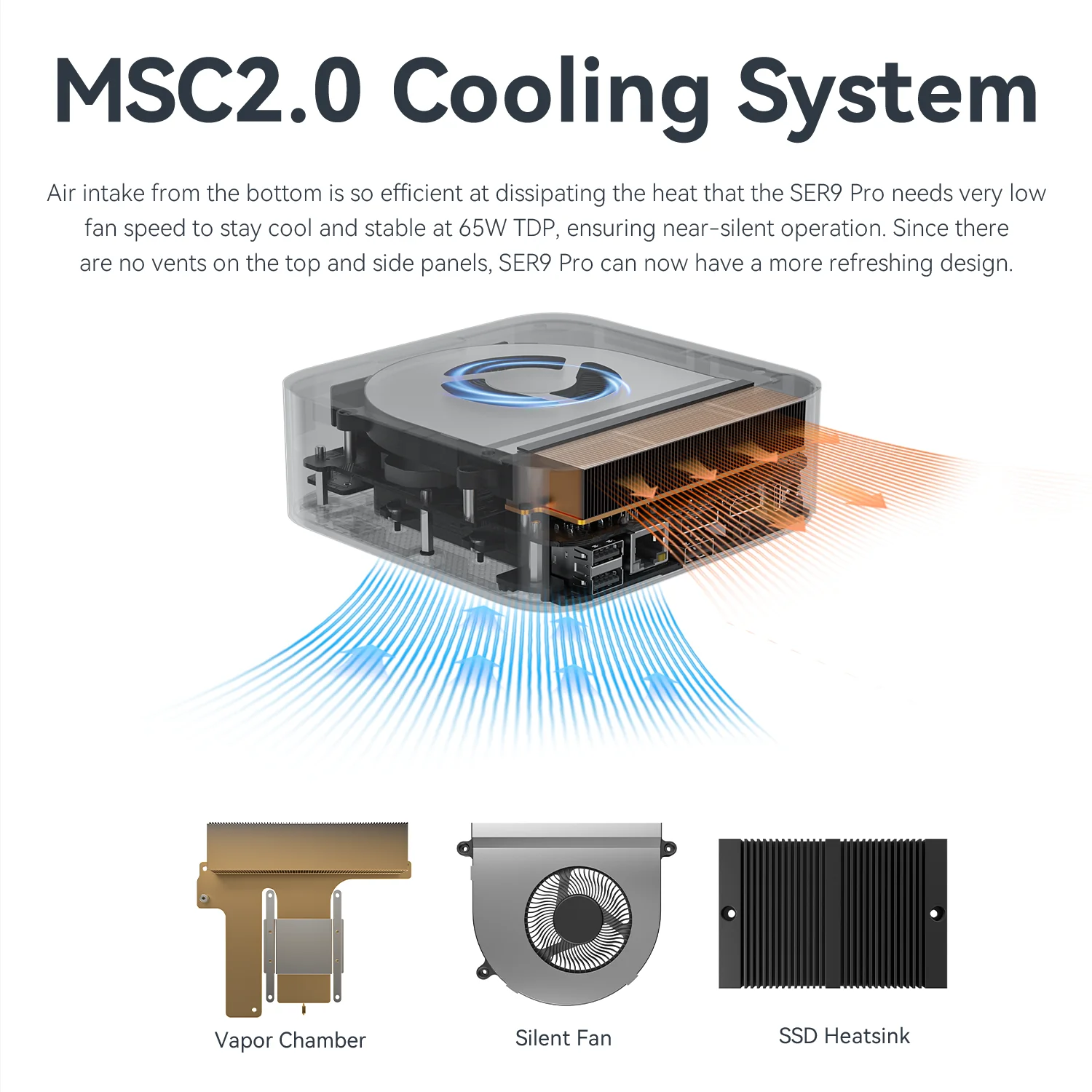
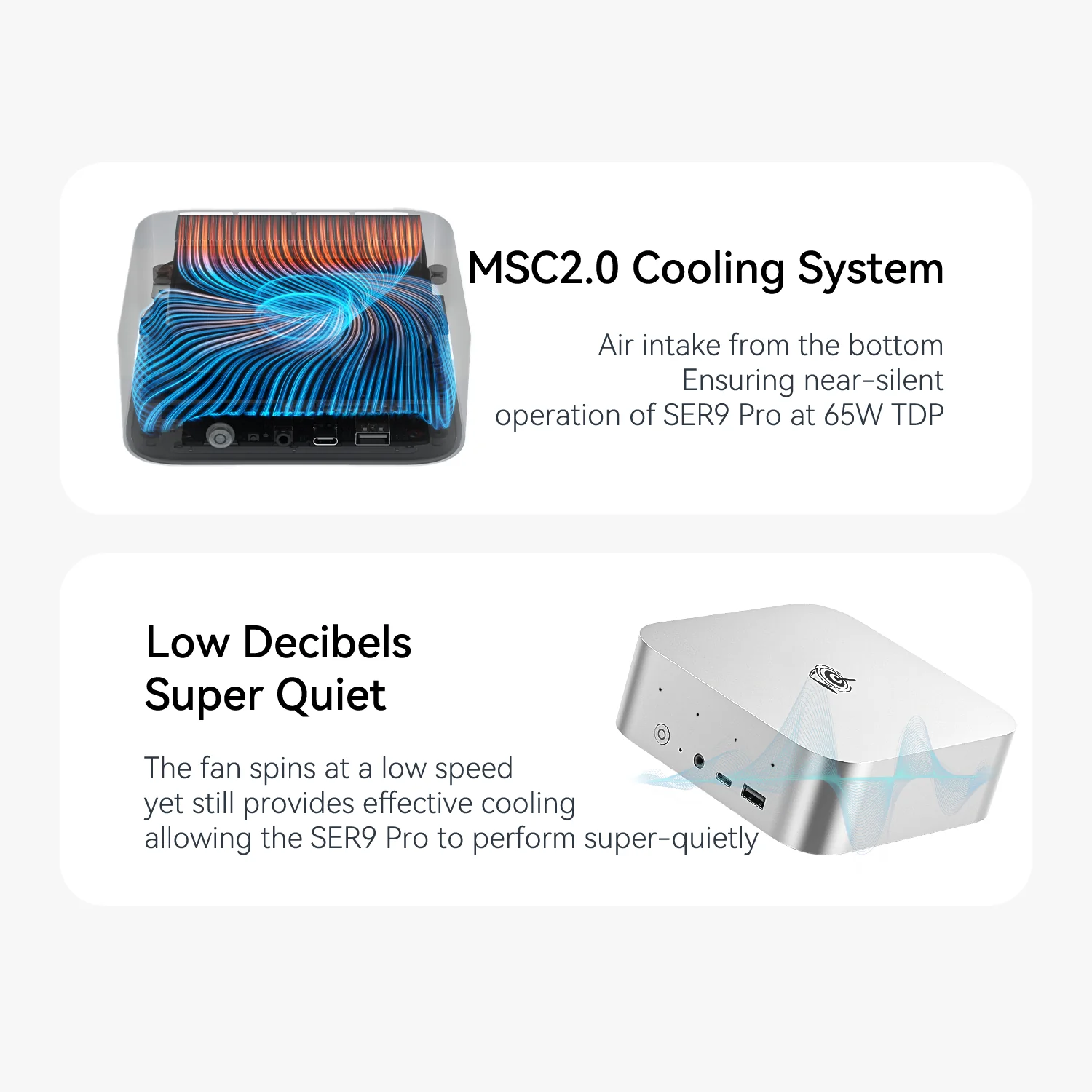
MSC 2.0 Cooling — Vapor Chamber, Silent Fan, Near-Silent at 32 dB
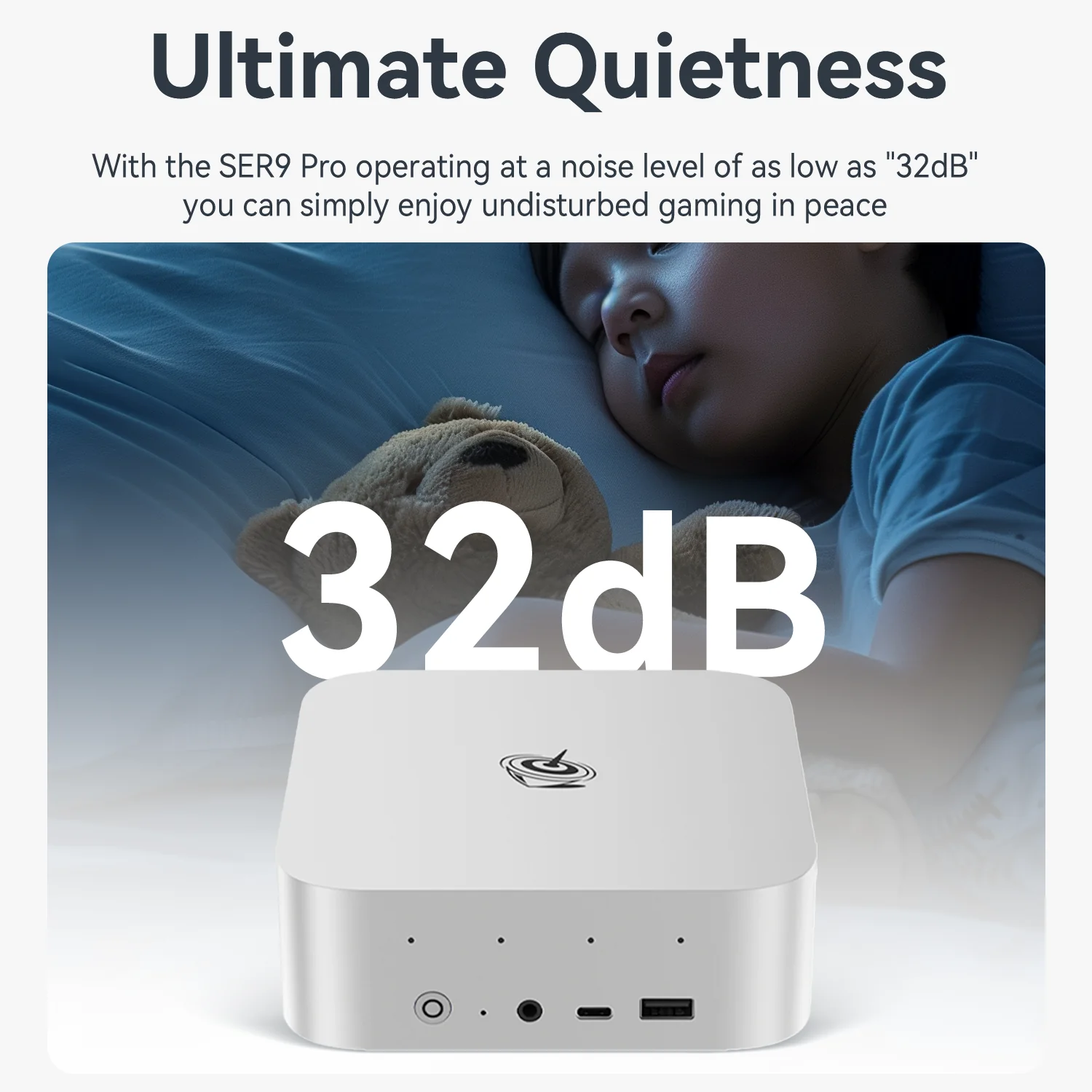
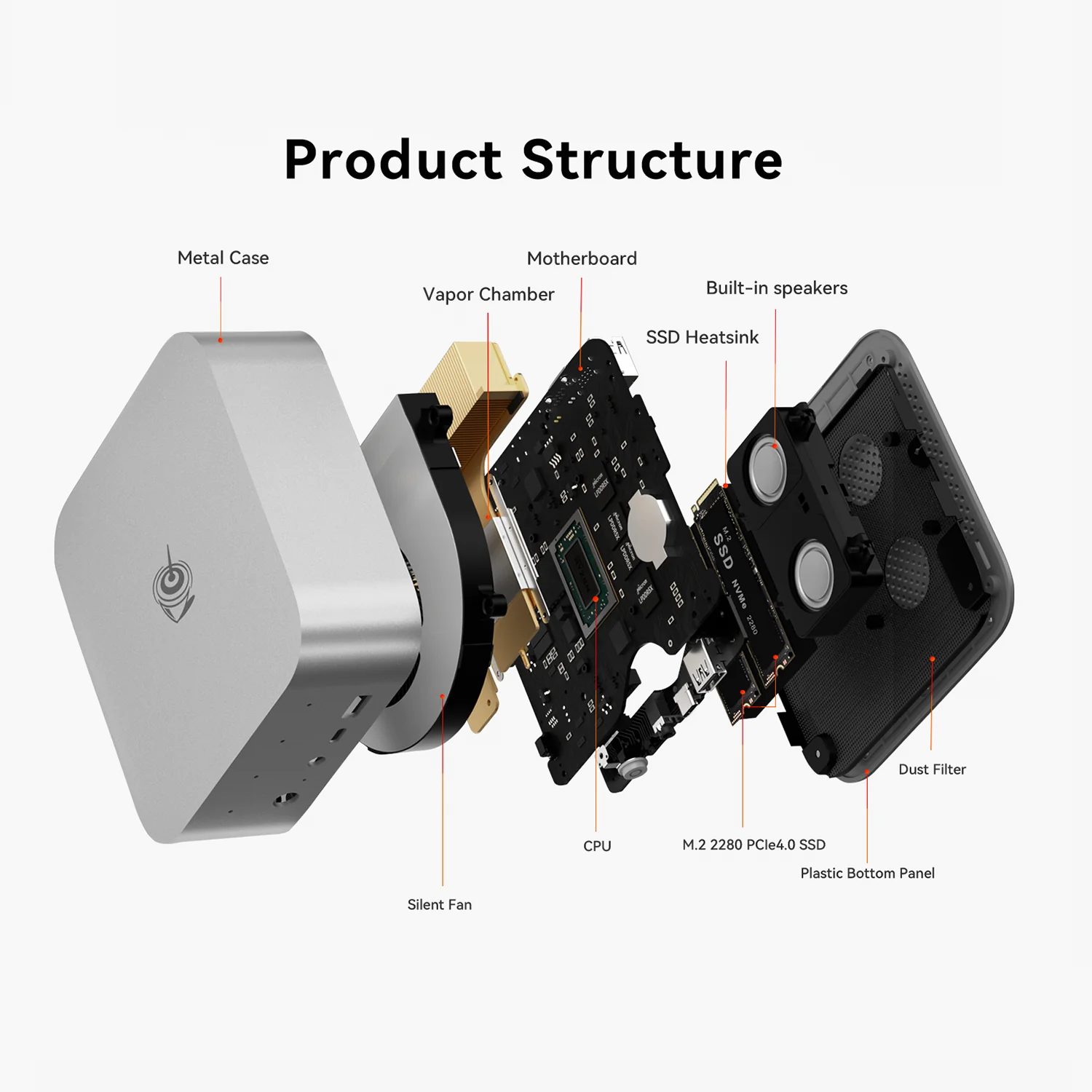
Beelink’s second-generation MSC (Multi-layer Stack Cooling) system combines a large vapor chamber, a high-efficiency blower fan, and a dedicated SSD heatsink in a stacked configuration that draws air exclusively through the bottom panel — an approach that contributes to the clean, vent-free appearance of the top and side panels. Under the 65W sustained load that Beelink configures by default, the system maintains stable CPU and GPU clock speeds with minimal thermal throttling — a 3DMark stress test score of 97% confirms this, placing it ahead of most gaming laptops with comparable thermal envelopes. Fan noise peaks at approximately 32 dB under full load, barely audible at desk distance, and drops to near-inaudible levels during idle and light-load operation. Idle power consumption sits at 10–11W, while peak draw reaches approximately 95W under maximum combined CPU and GPU stress.
Built-in Dual Speakers + AI DMIC Microphone
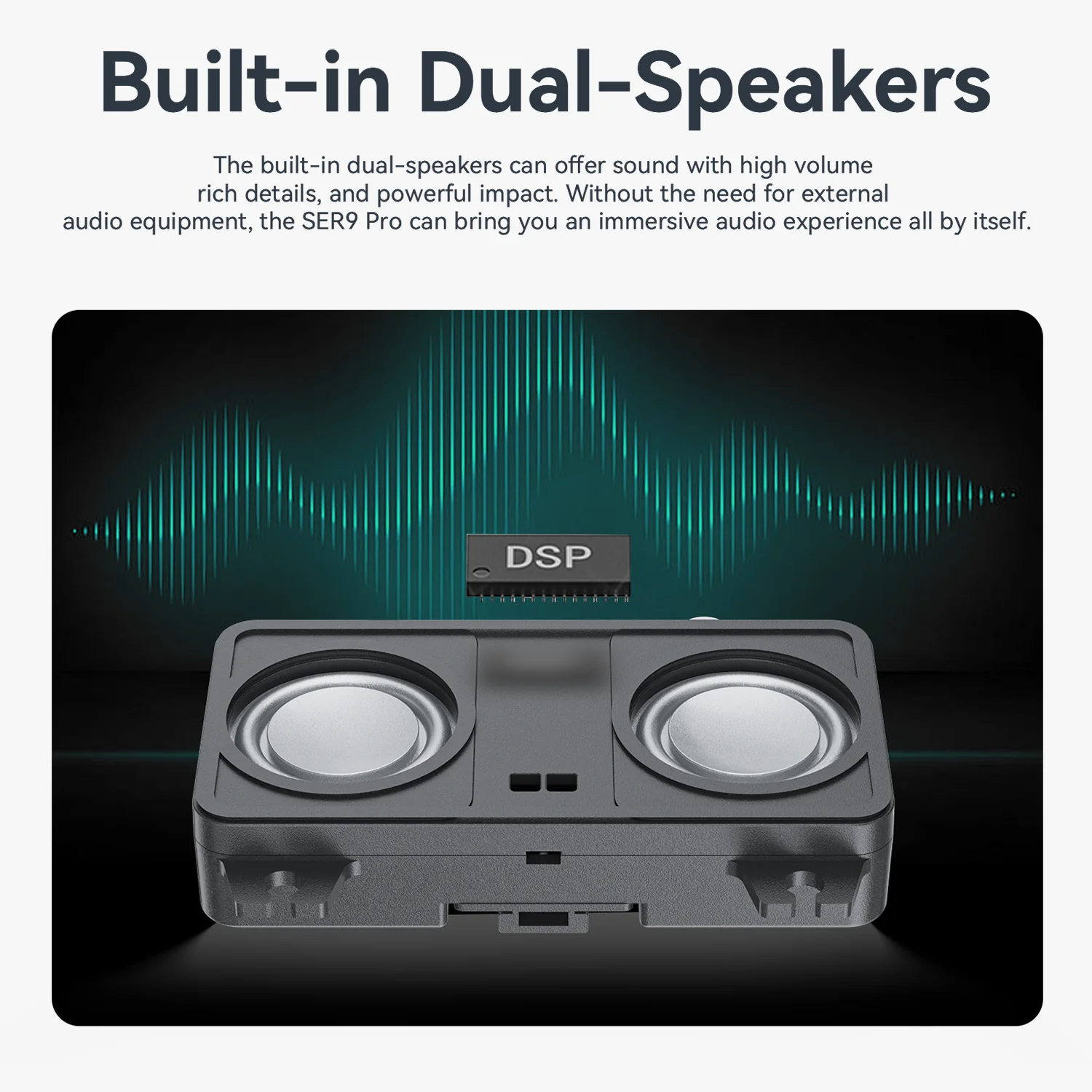
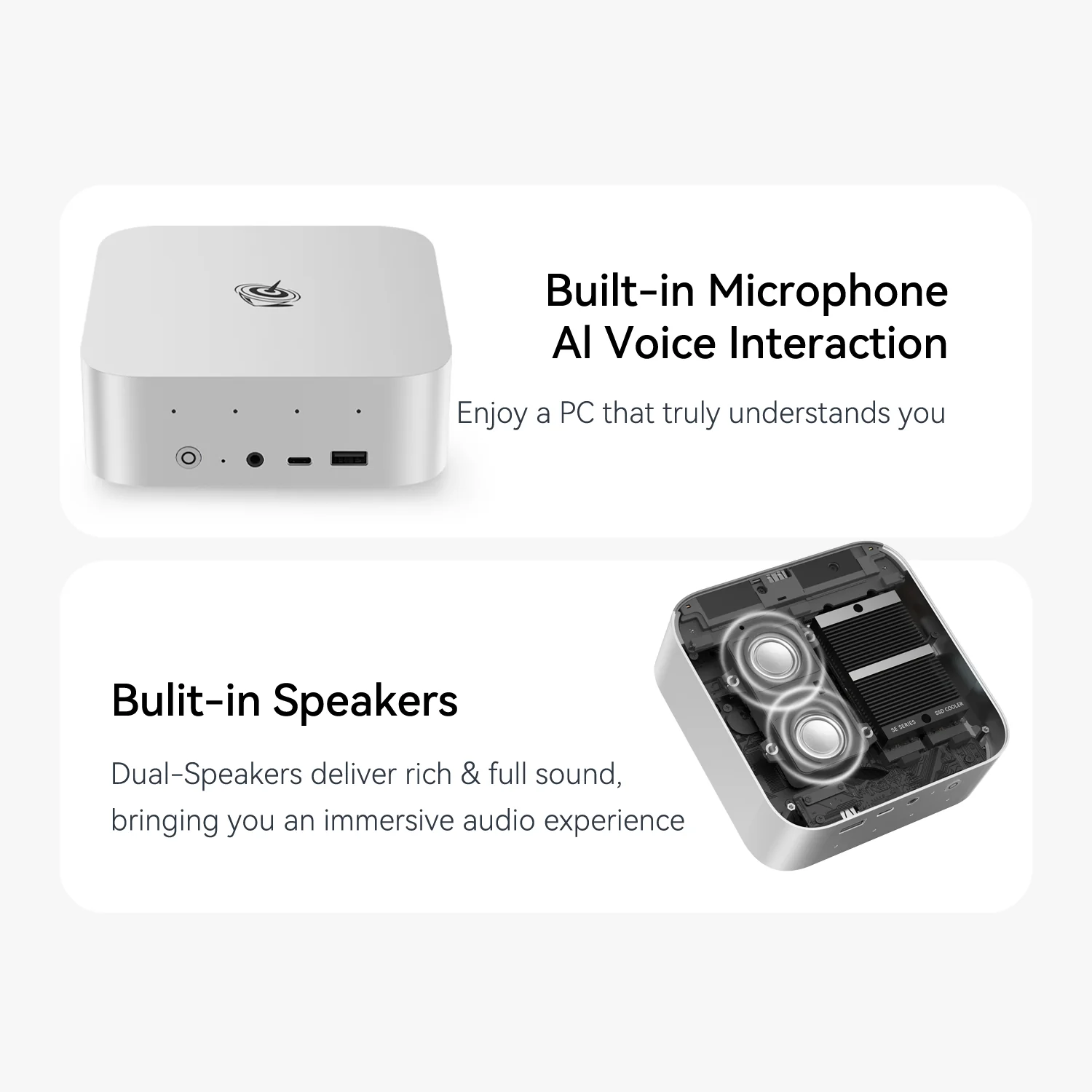
The SER9 Pro includes a pair of built-in stereo speakers capable of high volume output with detailed mid-range and solid low-frequency impact — eliminating the need for external audio equipment in most desktop scenarios. Alongside the speakers, an integrated DMIC microphone array powered by an AI audio processing chip provides 360° voice recognition within approximately five metres, with effective background noise separation that isolates speech from keyboard clicks, fan noise, and ambient room sound. The AI audio chip also processes recordings in real time to produce more natural-sounding vocal output, making the SER9 Pro a capable standalone unit for video conferencing, AI voice assistant interaction, and audio recording without additional peripherals.
Triple 4K@240Hz Display Output
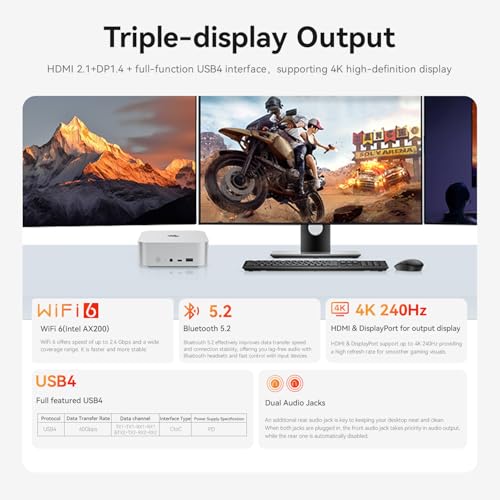
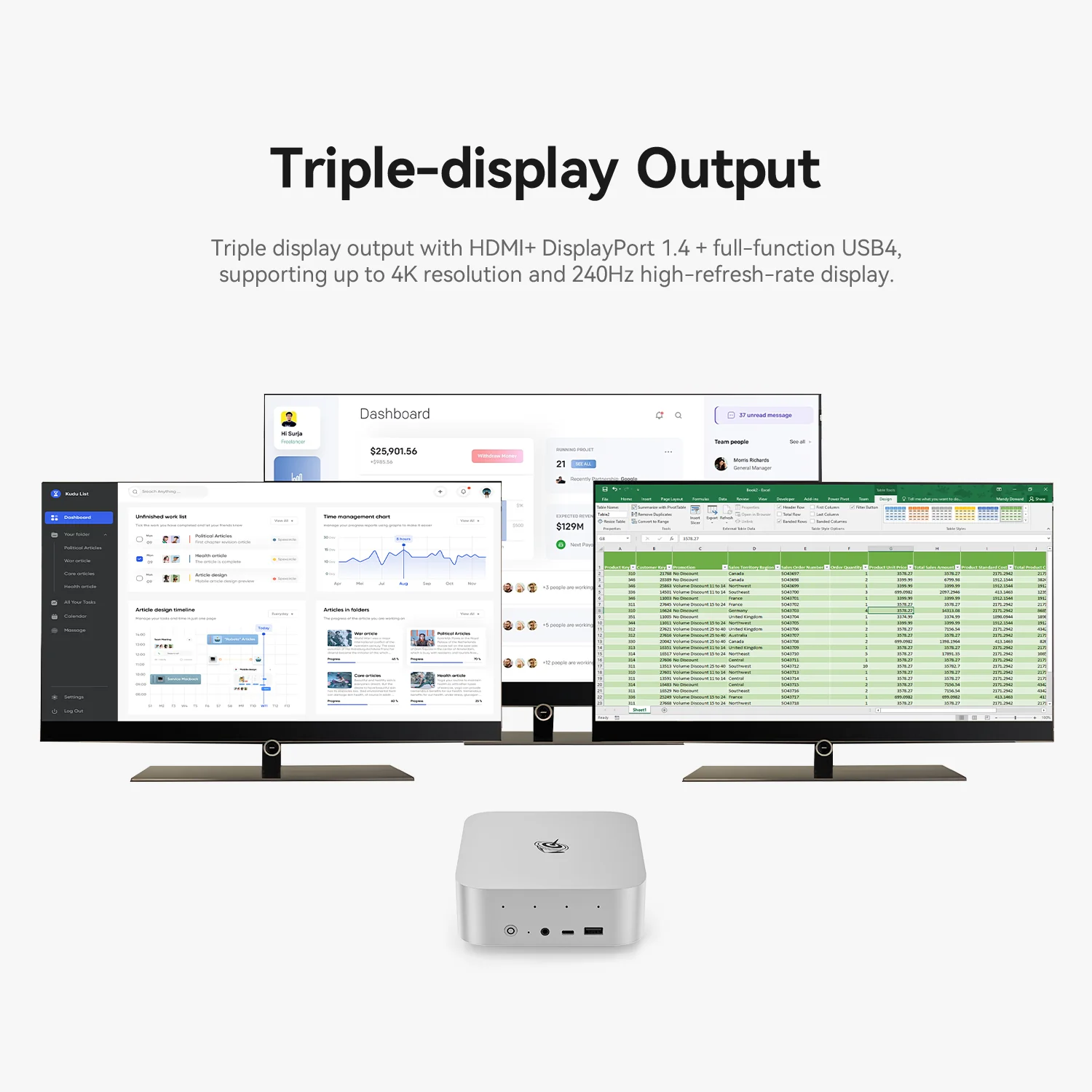
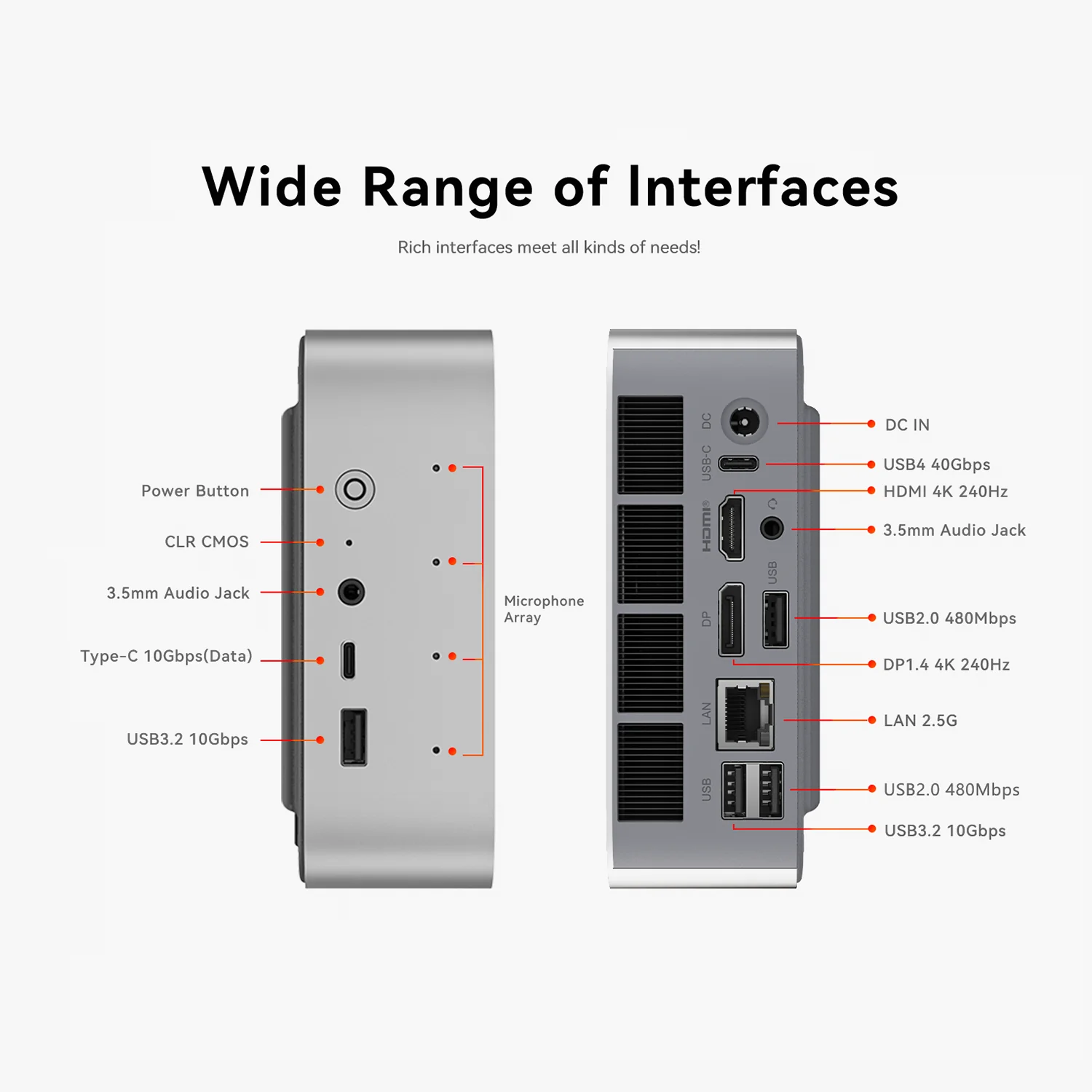
The SER9 Pro supports three simultaneous external displays at up to 4K resolution and 240 Hz refresh rate — a specification that exceeds most competing mini PCs in its price range and is particularly valuable for high-refresh-rate gaming monitors and ultra-smooth desktop workflows. Display outputs are provided through HDMI 2.1 (4K@240Hz), DisplayPort 1.4 (4K@240Hz), and USB4 (4K@240Hz via DisplayPort Alt Mode), all located on the rear panel for clean cable routing. This triple-display setup at 240 Hz is one of the SER9 Pro’s most distinctive competitive advantages over products like the GEEKOM A9 Max, which caps at 144 Hz.

Connectivity — USB4, 2.5 GbE, Wi-Fi 6
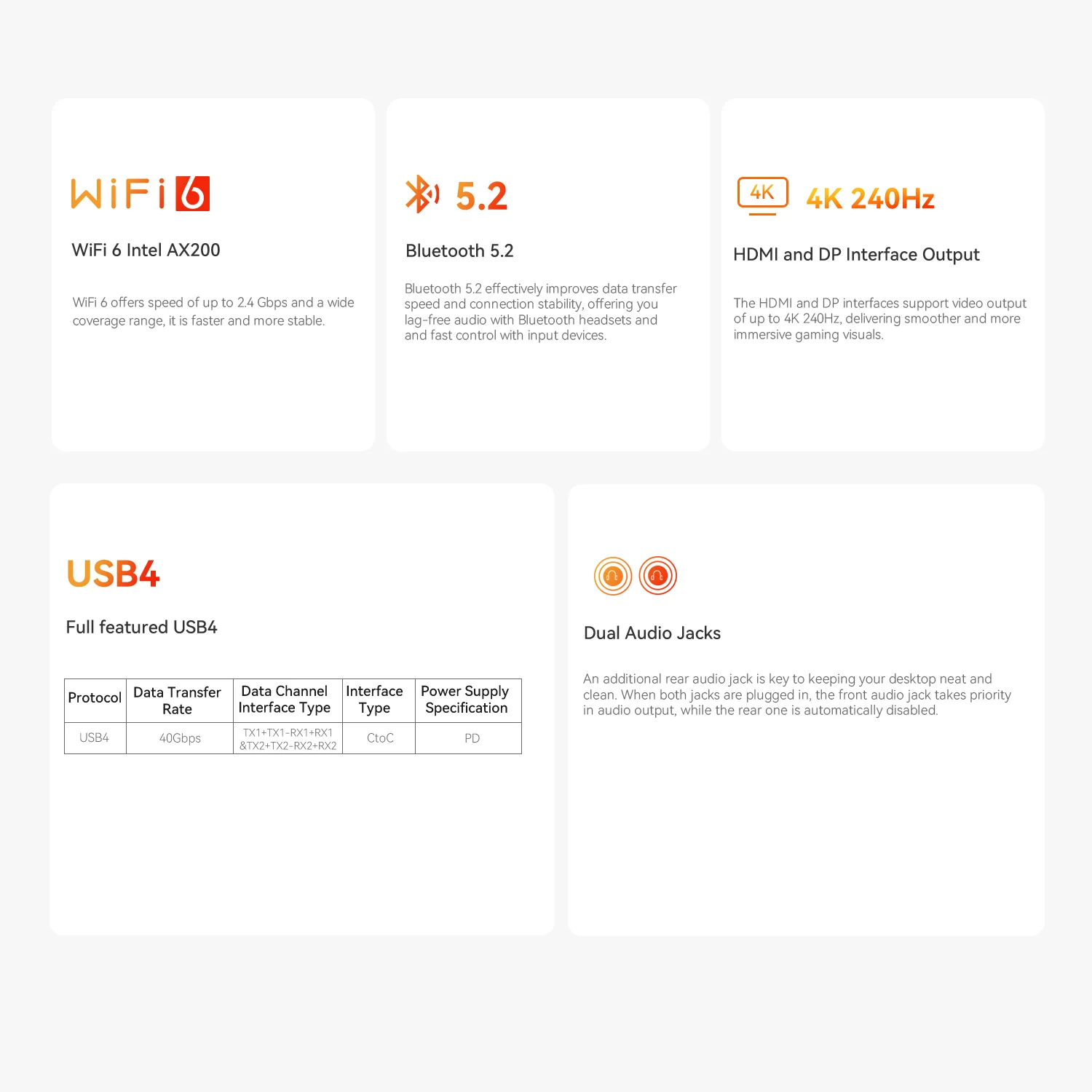
Wired networking is handled by a single 2.5 Gigabit Ethernet port — capable and fast, but notably absent the dual-port setup offered by the GEEKOM A9 Max and Minisforum AI X1 Pro-470. Wireless connectivity is managed by an Intel AX200 Wi-Fi 6 (802.11ax) module with Bluetooth 5.2, which supports dual-band 2.4 GHz and 5 GHz operation but lacks the 6 GHz band available in Wi-Fi 6E and Wi-Fi 7 modules. For the vast majority of users connecting to standard home or office routers, Wi-Fi 6 delivers more than sufficient throughput, but prospective buyers with Wi-Fi 6E or Wi-Fi 7 access points will find the AX200 a limiting factor. A single USB4 port (40 Gbps) supports charging, DisplayPort Alt Mode, and high-speed data transfer simultaneously, complemented by two USB-A 3.2 Gen2 ports on the front and two USB-A 3.2 Gen2 on the rear. Wake-on-LAN and Auto Power On are supported for remote management and scheduled startup scenarios.
Dustproof Design, WOL, Auto Power On
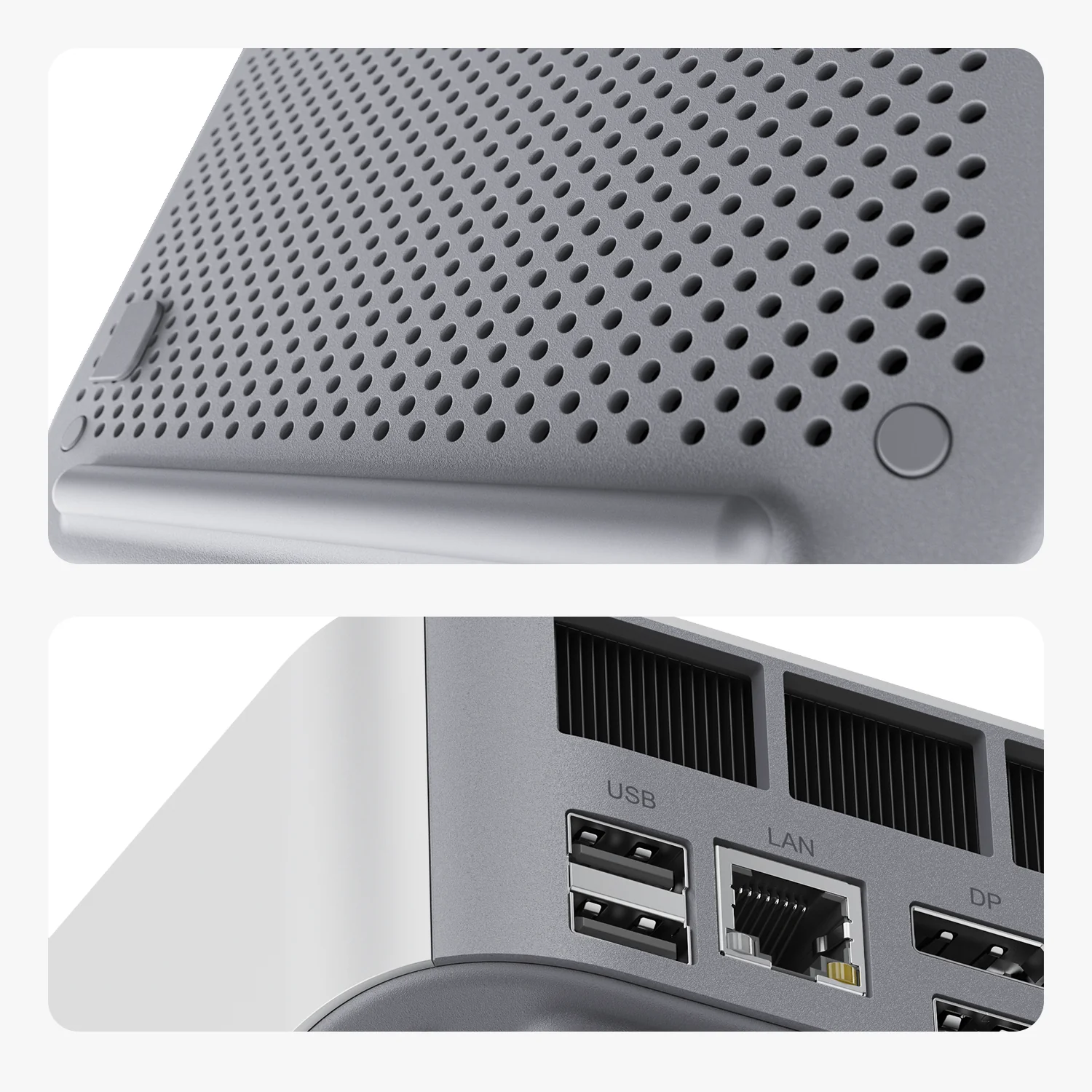
A practical innovation in the SER9 Pro’s design is the integrated mesh dust filter on the bottom panel, positioned directly over the air intake. This filter prevents dust accumulation on the cooling assembly — a common long-term maintenance issue for mini PCs in dusty environments — and can be cleaned by removing and rinsing it without opening the chassis. Combined with Wake-on-LAN support and an Auto Power On feature (which restores the system to its previous power state after an outage), the SER9 Pro is genuinely suitable for always-on or near-always-on deployments such as home servers, media centres, and remote-access workstations.
Build Quality and Design
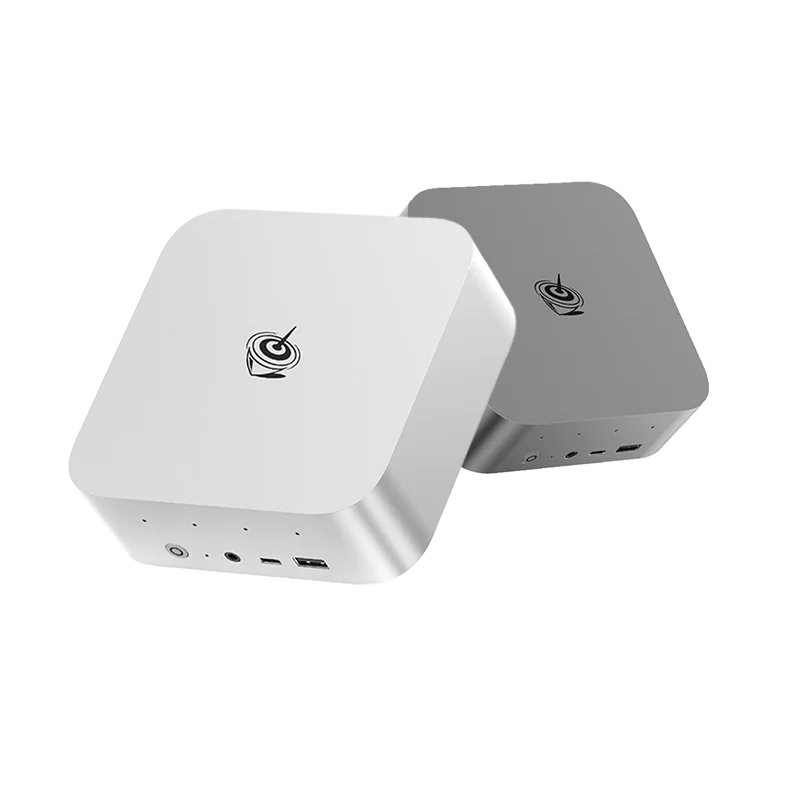
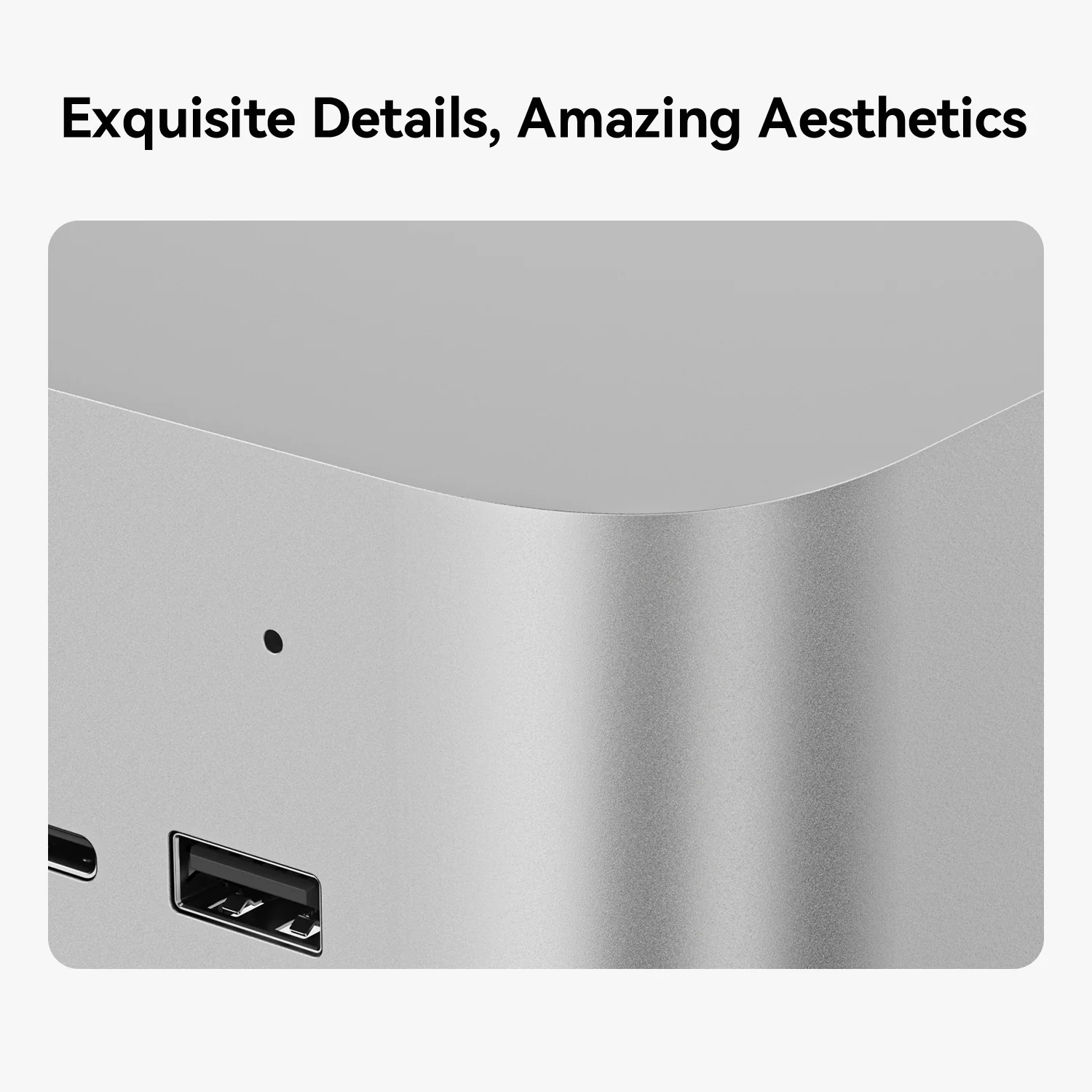
The SER9 Pro chassis measures 135 × 135 × 44.7 mm and weighs approximately 780 g, making it one of the most compact full-featured AI mini PCs in this performance tier. The enclosure uses a combination of plastic and metal panels finished in silver or space grey, with no ventilation openings on the top or side surfaces — a deliberate design choice enabled by the bottom-intake MSC 2.0 system. This clean surface design means the SER9 Pro looks substantially more refined than typical mini PCs with perforated side panels. There is no Kensington lock slot and no VESA mount support.
Complete Port Layout
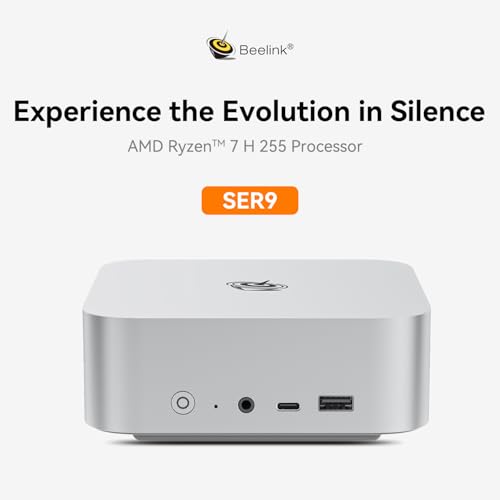
Front: 2× USB-A 3.2 Gen2 (10 Gbps) · 1× USB4 (40 Gbps, PD / DP1.4 / Data) · 1× 3.5mm combo audio jack · Power button
Rear: 1× HDMI 2.1 (4K@240Hz) · 1× DisplayPort 1.4 (4K@240Hz) · 2× USB-A 3.2 Gen2 (10 Gbps) · 1× 3.5mm combo audio jack · 1× 2.5 GbE RJ45 · 1× DC power input (19V/6.32A)


Video
Additional information
Specification: Beelink SER9 Pro AMD Ryzen™ AI 9 365
| Configuration Options | ||||||||||||||||||||||||||
|---|---|---|---|---|---|---|---|---|---|---|---|---|---|---|---|---|---|---|---|---|---|---|---|---|---|---|
|
||||||||||||||||||||||||||
| AI Capabilities | ||||||||||||||||||||||||||
|
||||||||||||||||||||||||||
| Processor | ||||||||||||||||||||||||||
|
||||||||||||||||||||||||||
| Ports | ||||||||||||||||||||||||||
|
||||||||||||||||||||||||||
| Network | ||||||||||||||||||||||||||
|
||||||||||||||||||||||||||
| GPU | ||||||||||||||||||||||||||
|
||||||||||||||||||||||||||
| Internal Ports | ||||||||||||||||||||||||||
|
||||||||||||||||||||||||||
| Storage & RAM | ||||||||||||||||||||||||||
|
||||||||||||||||||||||||||
| Power | ||||||||||||||||||||||||||
|
||||||||||||||||||||||||||
| Others Specifications | ||||||||||||||||||||||||||
|
||||||||||||||||||||||||||
| Specification | ||||||||||||||||||||||||||
|
||||||||||||||||||||||||||
Videos
Videos: Beelink SER9 Pro AMD Ryzen™ AI 9 365


